Author
Books like Lauren Groff
3 books we recommend to Lauren Groff readers, drawn from Matrix — each with the reason why.
If you loved Matrix
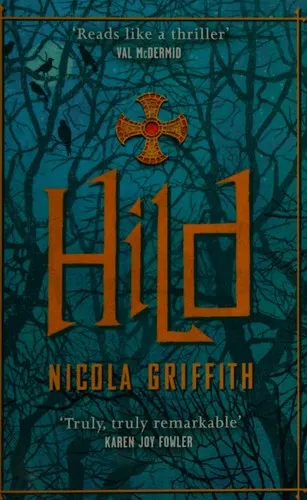
Like Groff, Griffith takes a woman preserved only dimly by history and imagines her into formidable presence. Young Hild survives seventh-century court politics by watching everything—weather, animals, kinship, gestures—and turning attention into influence. Her intelligence feels physical rather than anachronistically modern.
The novel’s sensuous language and unsentimental treatment of power make it an especially close companion to Matrix. Violence, faith, sex, craft, and political calculation belong to the same lived world. A Nebula finalist that inspired a devoted readership and the sequel Menewood, Hild is one of the rare historical novels whose protagonist seems not merely recovered but resurrected.

Warner’s nunnery is not a picturesque retreat but a complicated organism sustained by rents, labor, gossip, ritual, illness, resentment, and compromise. Beginning with the founding of a medieval convent, the novel gradually lets the institution—not any single nun—become its protagonist.
Where Matrix is driven by Marie’s volcanic will, Warner offers the complementary pleasure of seeing how a community absorbs individual ambitions and outlasts them. Her wit is dry, her view of religious life skeptical but never condescending, and her women are neither saints nor symbols. Long underappreciated and now restored to prominence as an NYRB Classic, this is among the sharpest novels ever written about the strange, practical work of making a female world endure.

Matrix readers who thrilled to Marie’s conversion of exclusion into authority should meet Mantel’s Thomas Cromwell. He enters the novel already practiced at reading rooms, recognizing leverage, and making himself indispensable; Mantel renders political intelligence with such intimacy that thought itself becomes dramatic action.
The deeper kinship lies in how both novels abolish the museum glass around the past. Cloth has weight, food has smell, religious belief has real force, and institutions are made anew each day by vulnerable bodies. Winner of the Booker Prize and the opening of Mantel’s landmark trilogy, Wolf Hall changed expectations for historical fiction. Its power games are intricate, but its greatest seduction is the sensation of inhabiting a mind expanding to fill its age.