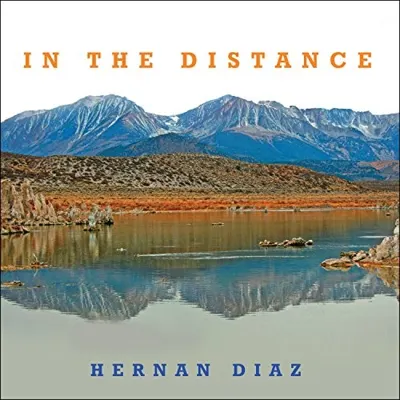
Books like In the Distance
In the Distance turns the American frontier inside out: the farther Håkan travels, the more thoroughly the promised land becomes an emptiness—and the man himself becomes a rumor. These novels share its fascination with hostile landscapes, manufactured legends, and outsiders whom history cannot quite contain.
If you liked In the Distance, you’ll love these
Not lookalikes — kindred books. Each one shares something essential with In the Distance, and we tell you exactly what.
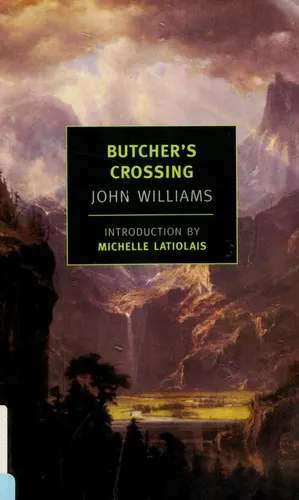
A Harvard dropout arrives in 1870s Kansas seeking an authentic encounter with the wilderness and joins a buffalo-hunting expedition. Williams renders that pursuit without romance: bodily exhaustion, commercial appetite, and sublime beauty become inseparable.
Like Díaz, he dismantles the Western by taking its grandest promises seriously and following them to their bleak conclusions. The landscape is not scenery but a force that exposes every delusion carried into it. Long overshadowed by Williams’s Stoner, this NYRB Classics rediscovery is now rightly regarded as a defining anti-Western—cold, exact, and unforgettable.
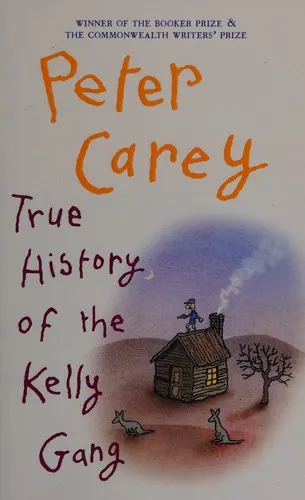
Where Håkan is gradually silenced beneath other people’s stories, Ned Kelly tries to seize control of his own. Carey’s outlaw addresses his life to the daughter he has never seen, writing in a breathless, punctuation-starved voice that feels both rough-hewn and astonishingly intimate.
The kinship lies in the painful gap between a vulnerable person and the monstrous public legend forming around him. Carey shows how poverty, inherited shame, violence, and storytelling manufacture an icon. Winner of the Booker Prize, the novel earns its stature not by polishing folklore but by making a famous silhouette live, plead, boast, and contradict itself.
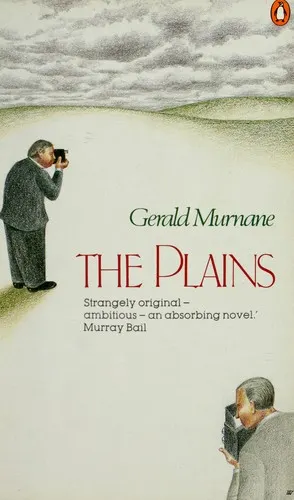
An unnamed filmmaker enters Australia’s interior hoping to persuade wealthy landowners to support a film about the plains. Almost immediately, geography becomes something stranger: a private theology, an artistic obsession, and an endlessly receding object of desire.
Readers who loved the uncanny spaciousness of In the Distance will recognize Murnane’s ability to make distance itself feel metaphysical. His plains are invented as much as explored, just as Díaz’s America is built from fantasies that fail those who inhabit them. This brief cult masterpiece has inspired fierce devotion because no other novel sees landscape quite this way; after reading it, an empty horizon never looks empty again.