Author
Books like László Krasznahorkai
4 books we recommend to László Krasznahorkai readers, drawn from Satantango and The Melancholy of Resistance — each with the reason why.
If you loved Satantango
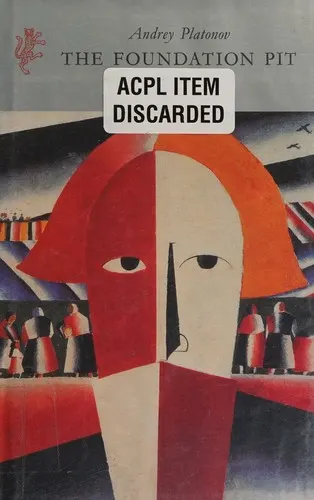
After Voshchev is dismissed from his job for thinking too much, he joins laborers excavating the foundation for an enormous communal building. Yet the harder everyone works toward the radiant future, the more bewildering the project becomes.
Platonov does with Soviet rhetoric what Krasznahorkai does with promises of renewal: he exposes the loneliness, appetite, and violence hiding inside collective hope. Official slogans buckle into metaphysical riddles; comedy arrives deadpan and leaves behind grief. The laborers are absurd without ever becoming objects of contempt, and their longing for meaning gives the novel its bruising tenderness. Written in 1930 and suppressed for decades, it is now regarded as one of the masterpieces of Soviet literature. Few books match Satantango so closely in making futile motion feel at once politically exact and cosmically terrible.
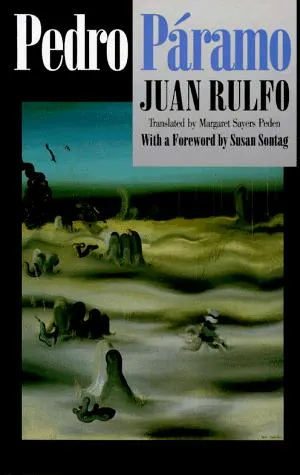
Juan Preciado travels to Comala to find the father he has never known, entering a town whose murmuring voices refuse to stay securely in the present. From that simple opening, Rulfo constructs an entire social order out of fragments: grievances, desires, memories, and half-heard testimony.
Where Krasznahorkai achieves hypnosis through accumulation, Rulfo does it through radical compression. Scenes return altered; speakers emerge before they can be identified; time folds until the reader must assemble the town’s moral history from echoes. Pedro Páramo’s power, like Irimiás’s, exists partly in what other people need him to be. Barely longer than a novella, this foundational work of Latin American modernism exerted a legendary influence on García Márquez and generations after him. It contains no wasted sentence—and somehow leaves behind a whole country of ghosts.
If you loved The Melancholy of Resistance
Peter Kien, a celebrated sinologist, has arranged his life as a sealed kingdom of books. Unfortunately, other people exist. Canetti turns the collision between Kien’s immaculate intellectual system and the appetites outside it into an increasingly savage grotesque.
What connects it to The Melancholy of Resistance is not merely social breakdown but the terrifying solitude of its characters: each inhabits a private language and mistakes obsession for reality. Their encounters become brutal comic set pieces, while the surrounding city feels ready to convert resentment into mass violence. Canetti’s only novel, written before his landmark study Crowds and Power and long before his Nobel Prize, remains one of modernism’s most ferocious black comedies.
Donoso begins among the old women, servants, relics, and whispered legends of a decaying Chilean religious house, then makes the novel’s very architecture unstable. Voices leak into one another; identities become enclosures; stories breed stories until the reader can no longer stand safely outside the nightmare.
Where Krasznahorkai moves through a town like an approaching storm, Donoso creates suffocation: a dense, bodily, feverishly imaginative world governed by shame, privilege, superstition, and fear of deformity. Yet its excess is often horribly funny. Widely considered Donoso’s masterpiece and a summit of the Latin American Boom, it offers the rare experience of a novel inventing its own monstrous physics around you.