Books like The Obscene Bird of Night
Donoso’s novel feels like being sealed inside a crumbling mind: voices trade bodies, rooms breed secret rooms, and every grotesque image seems capable of becoming the world’s governing law. These three books offer similarly perilous transformations of self and reality.
If you liked The Obscene Bird of Night, you’ll love these
Not lookalikes — kindred books. Each one shares something essential with The Obscene Bird of Night, and we tell you exactly what.
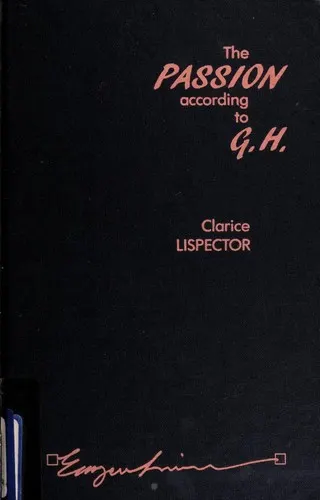
A wealthy woman enters her maid’s vacated room and finds its austere order horrifyingly alien. From that small trespass, Lispector creates one of literature’s most intense descents into abjection and the collapse of identity.
Where Donoso multiplies masks and voices, Lispector strips hers away. Her narrator’s language circles, recoils, contradicts itself, then presses closer to experiences ordinary speech cannot contain. The result is shorter and more concentrated than The Obscene Bird of Night but comparably destabilizing: architecture becomes psychic anatomy, class disgust becomes metaphysical terror, and the self proves to be a fragile social arrangement. Widely regarded as Lispector’s masterpiece, it is the rare companion to Donoso that can make his extremity feel less solitary.
Ninety-two-year-old Marian Leatherby is given a hearing trumpet and discovers that her family intends to send her to an institution for elderly women. What follows begins in wicked comedy and opens into an occult, anarchic cosmology.
Carrington shares Donoso’s fascination with confined old women, monstrous institutions, unstable legends, and grotesquerie as a form of truth—but her energy is mutinous rather than suffocating. The elderly women are not merely decay’s emblems; they become conspirators against the categories imposed on them. Carrington’s cult classic has inspired unusually fierce devotion because it makes surrealism feel lived rather than decorative: funny, dangerous, feminist, and utterly indifferent to respectable reality. It offers the exhilarating possibility that Donoso’s nightmare-house might be escaped by becoming stranger than it is.
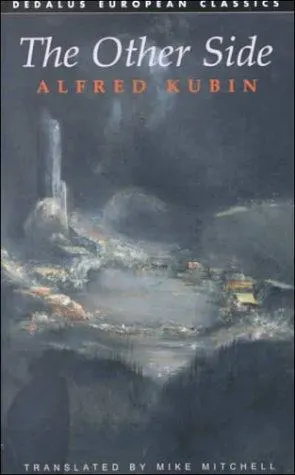
A former schoolmate invites the narrator to the Dream Realm, a secluded state assembled from obsolete buildings, discarded objects, and the absolute authority of its mysterious ruler. The capital seems at first like a refuge from modernity; almost immediately, its atmosphere begins to thicken around the newcomer.
Kubin’s only novel, published in 1909 and illustrated by the author, is a foundational work of modern fantastic fiction. Like Donoso, he makes decay an active intelligence: possessions accumulate histories, buildings acquire temperaments, crowds behave like organisms, and private anxieties spread until they become civic reality. The prose has the inexorable logic of a dream whose symbolism can be felt but never safely decoded. Readers drawn to Donoso’s enclosed worlds, proliferating superstitions, and grotesque metamorphoses will recognize an essential ancestor here—a book still capable of making later nightmare literature look domesticated.