Author
Books like John Boyne
9 books we recommend to John Boyne readers, drawn from The Boy in the Striped Pyjamas, The Heart's Invisible Furies and A Ladder to the Sky — each with the reason why.
If you loved The Boy in the Striped Pyjamas
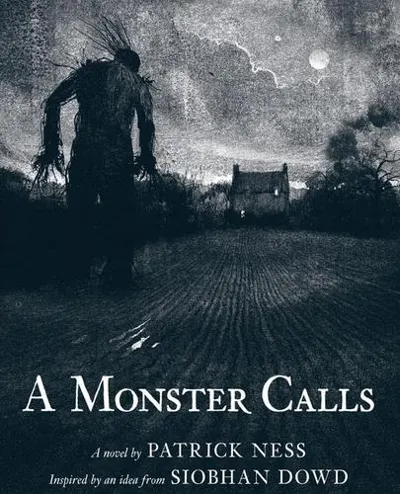
Conor’s mother is seriously ill, and one night a monster appears at his window demanding stories—and, eventually, the truth. Like Boyne, Ness writes with deceptive simplicity, allowing a child’s fear, anger and imperfect understanding to generate the novel’s emotional force.
This is not historical fiction, but it creates the same devastating collision between innocence and knowledge. Jim Kay’s shadowy illustrations deepen its dark-fairytale atmosphere; together, author and illustrator made it the first book to win both the Carnegie and Greenaway Medals. It is brief, beautiful and almost impossible to finish unmoved.
An elderly Mauritian man looks back on the childhood friendship that defined his life. In 1944, nine-year-old Raj discovers that the prison near his home holds refugees, among them a Jewish boy named David. Their friendship offers both boys a refuge from cruelties they only partly comprehend.
Appanah shares Boyne’s gift for placing a small, intimate bond against an immense historical wrong, but her lyrical, memory-soaked narration adds the ache of adult hindsight: Raj understands now what the child he was could not. Shortlisted for the Independent Foreign Fiction Prize, this slender novel has the concentrated power of a confession—and its tenderness lingers long after its final page.
Death narrates the story of Liesel Meminger, a foster child in Nazi Germany who steals books before she can properly read them. Words become her contraband, comfort and means of resistance as the adult world grows steadily more dangerous.
Readers drawn to Bruno’s limited viewpoint will recognize Zusak’s use of dramatic irony: Liesel sees acts of kindness and brutality before she can fully name the system producing them. Yet this internationally beloved modern classic has a voice entirely its own—playful, intrusive, poetic and grimly compassionate. A Printz Honor book, it enlarges the emotional territory Boyne explores, showing why language itself can matter when history is being built from lies.
If you loved The Heart's Invisible Furies
In the Ireland of 1915, shy Jim Mack and charismatic Doyler Doyle make a pact to swim to a distant island. Around that intimate promise, Jamie O’Neill builds a magnificent novel about desire awakening amid religion, class resentment, nationalism, and approaching revolution.
Like Boyne, O’Neill exposes the cruelty inflicted when a country’s heroic self-image leaves no room for private truth. But this is no imitation: its exuberant, Joycean language makes yearning feel almost physical, while its humor keeps the novel alive with mischief and warmth. Since its publication, it has become a deeply cherished landmark of Irish queer fiction. Anyone moved by Cyril Avery’s struggle to claim his own life should not miss Jim and Doyler.
Rebecca Makkai begins in 1980s Chicago, where Yale Tishman watches AIDS tighten its grip on his circle of friends, and in contemporary Paris, where Fiona searches for her estranged daughter. The two strands gradually reveal how grief travels through friendships and families long after the world has turned its attention elsewhere.
What links it to The Heart’s Invisible Furies is not simply queer history, but its refusal to reduce gay lives to suffering. The novel is crowded with jokes, ambitions, quarrels, art, loyalty, and imperfect acts of care. Makkai has Boyne’s gift for making large historical injustice painfully personal without losing narrative momentum. A Pulitzer finalist and winner of the Carnegie Medal, it is one of those acclaimed novels whose emotional reputation is fully deserved: by the end, its absent characters feel as vivid as its living ones.
The Barnes family is coming apart: the car business is failing, the parents are retreating into secrets, and their children are trying to understand the disaster unfolding around them. Paul Murray lets each family member take possession of the story, repeatedly overturning what the reader thought they knew.
Boyne admirers will recognize the exhilarating tonal balance: broad comedy edged with dread, intimate shame connected to Ireland’s larger culture of concealment, and flawed people treated with both merciless clarity and compassion. Murray’s polyphonic storytelling turns misunderstandings into emotional suspense; even punctuation and voice become part of how each character hides from reality. Booker-shortlisted and greeted as a major contemporary Irish novel, The Bee Sting offers the same irresistible experience of laughing through a family epic until the laughter catches in your throat.
If you loved A Ladder to the Sky
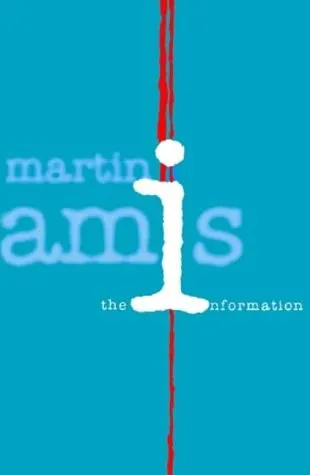
Richard Tull is a failing novelist whose closest friend has become an inexplicably successful one. From that humiliation Amis builds a ferocious comedy of literary envy: reviews feel like physical assaults, sales figures become moral verdicts, and friendship curdles into sabotage.
If you loved Boyne’s merciless view of ambition—the conviction that another writer’s success is something one might be entitled to steal or destroy—this is essential. Amis’s famously electric prose makes every grudge glitter, while his portrait of literary London is both grotesque and painfully recognizable. Few novels have understood so well that writers can turn even failure into a grandiose story about themselves.
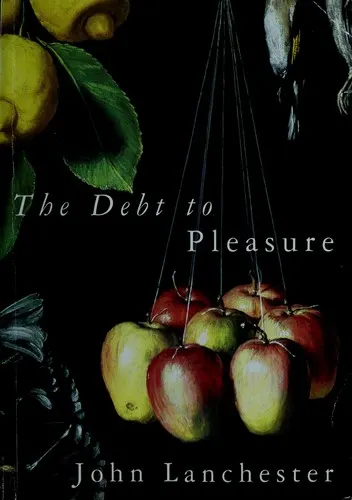
Tarquin Winot proposes to write a gastronomic memoir while travelling through France, dispensing recipes, aesthetic judgments, and exquisitely phrased contempt. Almost immediately, tiny dissonances suggest that his cultivated voice may be concealing something much uglier.
The pleasure here is the same dangerous intimacy Boyne creates around Maurice Swift: you know you should resist the narrator, yet his intelligence and poise keep drawing you closer. Lanchester lets menace accumulate through omissions, digressions, and casual acts of vanity rather than blunt revelation. Winner of the Whitbread First Novel Award, this is a wickedly controlled performance—a book whose sentences flatter you even as its narrator implicates you.
Barbara Covett, a lonely, caustically observant schoolteacher, appoints herself confidante and chronicler of a younger colleague’s public disgrace. But Barbara’s account soon becomes as absorbing for what it reveals about the teller—her hunger, possessiveness, and genius for self-exoneration—as for the scandal itself.
Like A Ladder to the Sky, Heller’s Booker-shortlisted novel understands that predators rarely describe themselves as predators. Barbara converts manipulation into loyalty and appetite into moral concern, all in prose so funny and exact that her company becomes irresistible. This is not merely an unreliable-narrator novel; it is a master class in how language can make need look like virtue.