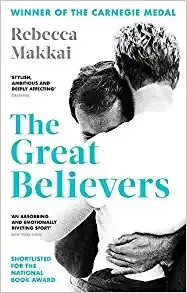
Books like The Great Believers
Shirley Hazzard’s The Transit of Venus lives far from Makkai’s Chicago, yet it creates the same haunting sense that love, chance, and catastrophe continue rearranging a life decades later. These three novels share The Great Believers’ emotional architecture: intimate bonds placed under historical pressure, the burden of surviving, and the struggle to preserve lives that might otherwise disappear.
If you liked The Great Believers, you’ll love these
Not lookalikes — kindred books. Each one shares something essential with The Great Believers, and we tell you exactly what.
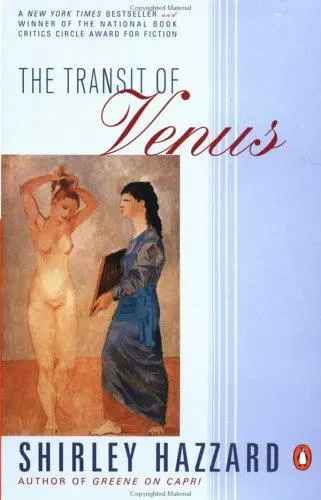
Two Australian sisters arrive in postwar England, where their lives become entangled with love, ambition, and accidents of timing. Hazzard’s narrative moves with extraordinary control: an apparently incidental sentence may acquire devastating significance hundreds of pages later, and time repeatedly changes the meaning of what came before.
That retrospective force is the deepest kinship with The Great Believers. Both novels understand loss not as a single event but as something that keeps revising the survivor’s past. Hazzard is sharper and more elliptical than Makkai, but equally alert to compromised love and the moral weight of memory. Winner of the National Book Critics Circle Award and now widely regarded as Hazzard’s masterpiece, it is the rare novel whose design becomes more astonishing after the final page.
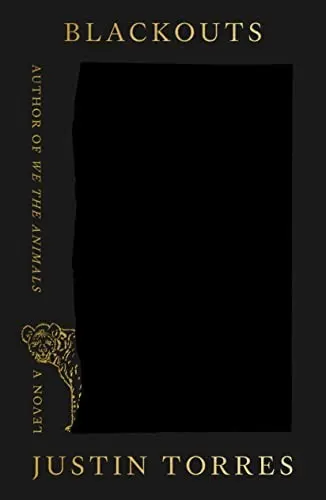
A young man comes to a strange desert institution to care for the dying Juan Gay, who possesses a mutilated historical text about queer lives. Their conversations mingle desire, jokes, photographs, testimony, and pages literally obscured by black ink.
Where The Great Believers asks who carries the stories of the dead, Blackouts asks what happens when those stories were distorted before they could even be remembered. Torres makes archival recovery feel intimate and urgent: history resides in bodies, flirtation, gossip, omissions, and the fragile act of one person telling another. The novel’s formal inventions never cool its tenderness. Its 2023 National Book Award recognized something genuinely singular—a book that turns erasure itself into an unforgettable language.
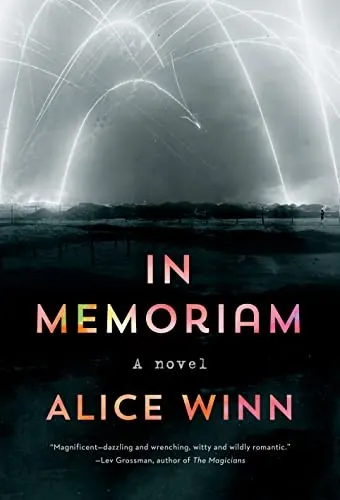
At an English boarding school during the First World War, boys conceal their desires behind teasing, rivalry, and contributions to the school newspaper; meanwhile, its columns of former pupils killed at the front grow steadily longer. When they enlist, private longing and public catastrophe become inseparable.
Winn captures what Makkai does so powerfully: the texture of a whole circle of young people before history begins removing them, and the terrible arbitrariness that determines who remains. Her trench scenes are immediate without becoming spectacle, while the central love story is unsentimental, ardent, and painfully vulnerable to shame. Named Waterstones’ 2023 Novel of the Year, this debut inspired unusual reader devotion for good reason. It does not merely make you mourn its characters; it makes their vanished world feel briefly restored.