Books like The Bee Sting
In The Bee Sting, every joke tightens the trap: the Barnes family’s evasions are hilarious until Murray reveals that each one has been quietly shaping everyone else’s fate.
If you liked The Bee Sting, you’ll love these
Not lookalikes — kindred books. Each one shares something essential with The Bee Sting, and we tell you exactly what.
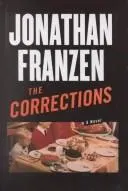
The Lamberts, like the Barneses, are a family of competing explanations. Each member believes they understand what has gone wrong; each is spectacularly blind to the damage visible from another perspective. Franzen moves among them with the same unnerving mixture of mockery and compassion, making financial schemes, professional humiliation and domestic resentment both extremely funny and genuinely painful.
Winner of the National Book Award, The Corrections helped define the modern tragicomic family novel. Its great achievement is that no one becomes merely the villain: every delusion is also a survival strategy. If The Bee Sting left you wanting another large, ferociously intelligent novel in which private dysfunction and a sick economic culture feed each other, this is indispensable.
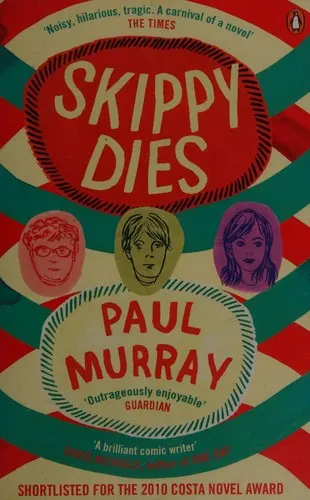
Murray’s earlier novel begins with a schoolboy collapsing during a doughnut-eating contest, then expands outward through his classmates, teachers and Dublin’s Seabrook College. It has the velocity, elaborate comic set pieces and sudden emotional drops that make The Bee Sting so consuming. Ruprecht, Skippy’s brilliant, particle-physics-obsessed roommate, is among Murray’s most lovable creations.
But this is not simply The Bee Sting in school uniform. Its ensemble structure captures adolescence as an entire unstable universe, while the adults’ compromises gradually alter the meaning of the boys’ jokes and obsessions. Longlisted for the Booker Prize and cherished by readers as the novel that established Murray’s singular tragicomic gift, Skippy Dies is the obvious next book—and far too good to dismiss as merely the obvious choice.
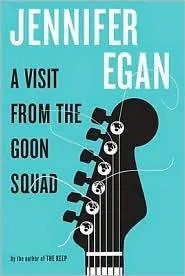
What connects Egan’s Pulitzer Prize winner to The Bee Sting is not its subject but its method of revelation. A character glimpsed from one angle reappears years earlier or later, transformed; an apparent side story becomes the emotional key to something you thought you understood. Egan keeps changing voice, distance and form—including one justly famous chapter told through PowerPoint slides—without sacrificing momentum.
Its musicians, executives, drifters and damaged idealists are caught between the selves they invented and the lives time actually gave them. The result is playful, structurally audacious and increasingly moving: a novel that trusts accumulation rather than explanation. Readers who loved how Murray made separate consciousnesses collide into one devastating design should not miss Egan’s exhilarating proof that a novel can reinvent itself chapter by chapter and still strike with the force of a single story.