Author
Books like J. R. R. Tolkien
10 books we recommend to J. R. R. Tolkien readers, drawn from The Lord of the Rings, The Hobbit, The Silmarillion and The Children of Húrin — each with the reason why.
If you loved The Lord of the Rings
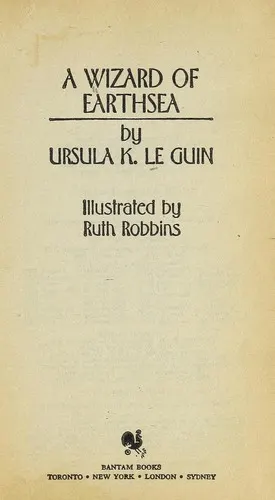
Le Guin matches Tolkien not by imitating Middle-earth, but by giving fantasy comparable moral and metaphysical weight. Ged, a gifted and dangerously proud young wizard, must learn that power cannot be separated from responsibility. His journey across Earthsea’s austere archipelago has the clarity of myth: boats on dark water, true names spoken carefully, and magic governed by balance rather than spectacle.
The novel is much shorter than Tolkien’s epic, yet its silences suggest an equally vast world beyond the page. Its influence on modern fantasy is immense, and generations of readers have found that Ged’s inward struggle grows richer with age. Anyone who treasured Frodo’s courage, Gandalf’s wisdom, and Tolkien’s conviction that the greatest victories are victories over oneself should not miss it.
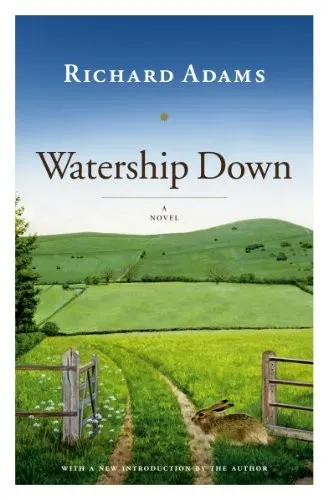
Few novels recreate the emotional force of Tolkien’s fellowship as powerfully as Watership Down. A small band leaves a threatened home and crosses an English countryside transformed by fear, hope, storytelling, and shared hardship. Each traveler matters: the visionary, the skeptic, the strategist, the fighter—and their survival depends less on solitary heroism than on loyalty among radically different temperaments.
Adams gives his rabbits legends, customs, sayings, and a distinctive way of seeing the world, but the deeper kinship lies in how lovingly he renders courage without making it easy. Meadows and hedgerows become as charged with danger and beauty as any road through Middle-earth. A beloved modern classic since its unlikely rise from repeated rejection, it can leave readers grieving and exultant over acts of fellowship they never expected to take so seriously.
Tolkien’s epic is haunted by the knowledge that even a just victory cannot preserve everything beautiful; T. H. White builds an Arthurian masterpiece from the same painful truth. Beginning with the young Wart’s strange education under Merlyn, the novel moves between comedy, enchantment, political argument, and deepening tragedy as it asks whether power can ever be made to serve justice.
White’s characters are not marble figures from legend but vulnerable people whose ideals collide with love, pride, violence, and time. His prose can be playful one moment and devastating the next, and his vision of Camelot has shaped nearly every modern retelling of Arthur. Readers who loved Tolkien’s mingling of nobility and sorrow—the sense that goodness remains worthwhile precisely because it is fragile—will find here another great mythic work to carry for life.
If you loved The Hobbit
Read this for the side of The Hobbit that delights in putting a practical, comfort-loving person amid magical chaos. Sophie, convinced she is destined for an uneventful life, becomes entangled with a vain wizard, a sharp-tongued fire demon, and a castle whose doors open onto different places.
Jones makes domestic irritations—meals, cleaning, quarrels, unreliable housemates—inseparable from enchantment. The result is funny, brisk, and warm, with the same conviction that common sense and decency can be more formidable than heroic posturing. Its devoted readership has made it a modern children’s classic, and the novel is even stranger, wittier, and more intricately mischievous than its famous film adaptation.
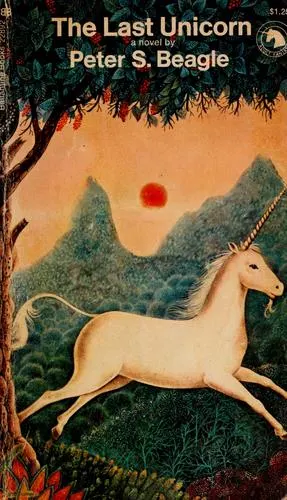
Tolkien’s lighter passages never make Middle-earth feel trivial; Beagle achieves a similarly difficult union of whimsy and sorrow. When a unicorn hears that she may be the last of her kind, she leaves her forest to discover what has happened. The quest soon gathers fallible companions, comic indignities, and a mounting sense that beautiful things are precious because they can be lost.
Beagle’s prose can turn from jokes to piercing lyricism in a sentence, and his characters know enough about stories to question the roles assigned to them. Long cherished as a masterpiece of literary fantasy, The Last Unicorn preserves the wonder of a tale told by firelight while speaking with unusual honesty about love, mortality, and change.
If you loved The Silmarillion
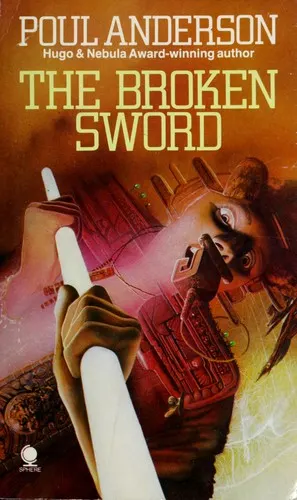
Anderson captures the fierce tragic momentum of Tolkien’s First Age: choices harden into fate, supernatural powers treat mortals as pieces in older contests, and heroism cannot guarantee deliverance. Its opening exchange of a human child for a changeling sets a doom-laden machinery in motion, while Anderson’s taut, archaic prose gives every oath and weapon mythic weight.
Published in 1954, the same year as The Fellowship of the Ring, it became a foundational work in fantasy’s darker tradition. It is far shorter than The Silmarillion, but few novels equal its concentration of grandeur, cruelty, and sorrow.
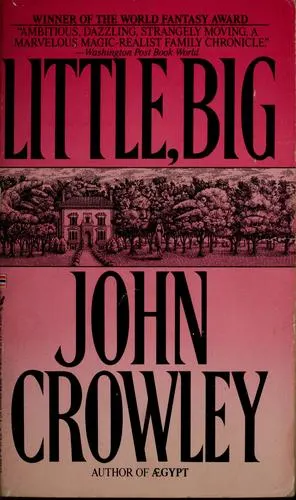
Crowley offers the quieter enchantment hidden inside The Silmarillion’s vastness: the feeling that the visible world borders an immeasurable story whose pattern mortals can only glimpse. At Edgewood, a house built according to several incompatible architectural plans, generations of one family become entangled with Faerie. Recurring tales, objects, and phrases gradually reveal a design larger than any character understands.
Winner of the World Fantasy Award and beloved with unusual intensity by writers and readers, Little, Big possesses Tolkien’s gift for making wonder inseparable from disappearance. Its final effect is not merely magical but elegiac—the ache of having briefly seen beyond the circles of the world.
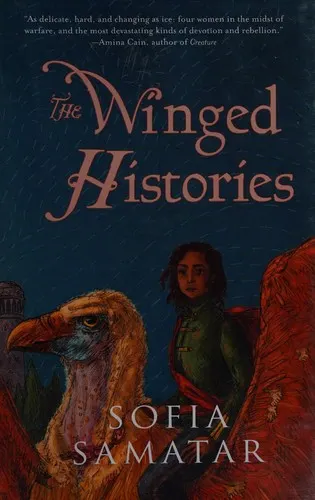
Samatar transforms legendary history into four intimate, competing testimonies. A soldier, a scholar, a poet, and a socialite recount a rebellion in Olondria, each exposing what official chronicles omit. Songs and manuscripts carry political force; old stories inspire people while also imprisoning them; glorious causes acquire a human cost.
Samatar, a World Fantasy Award–winning writer, has one of contemporary fantasy’s most sensuous and exact prose styles. Readers who love Tolkien’s layered texts, contested traditions, and fatal attachment to inherited narratives will recognize the kinship—but here the people pushed to the margins seize the chronicle and rewrite it. It is the rare fantasy novel that feels simultaneously like an epic, an archive, and a lament.
If you loved The Children of Húrin
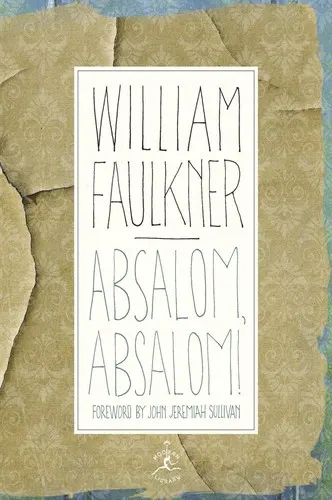
Rosa Coldfield summons young Quentin Compson to hear the history of Thomas Sutpen, a formidable stranger who tried to found a dynasty. From that beginning, Faulkner constructs a family tragedy in which every retelling feels like another turn of the curse.
A lover of Túrin’s story will recognize the terrible momentum: heroic will hardening into pride, children inheriting disasters they did not make, and a great house becoming inseparable from its doom. Yet Faulkner makes the reader reconstruct the legend from conflicting voices, much as ancient calamity survives through chronicles and fragments. Often called his masterpiece, this is one of the few American novels with the weight, darkness, and inexhaustibility of myth.
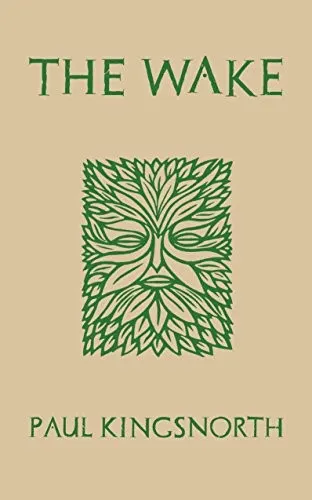
In the aftermath of the Norman Conquest, a Lincolnshire landowner named Buccmaster convinces himself that the old gods have chosen him to resist the new order. He speaks in Kingsnorth’s invented ‘shadow tongue,’ an English stripped of most Latin-derived words; initially strange, it soon becomes hypnotic, intimate, and brutally expressive.
Buccmaster has something of Túrin’s dangerous grandeur: he can read every warning as confirmation of his destiny, while the reader sees pride and self-deception tightening around him. The surrounding world, too, feels like Beleriand after hope has begun to fail—a land where defeat is historical fact but resistance still possesses terrible emotional force. Booker-longlisted and winner of the Gordon Burn Prize, The Wake is not merely an experiment in language; it is a voice you may find lodged in your mind for years.