
Books like The Children of Húrin
Faulkner’s Mississippi belongs beside Tolkien’s Beleriand: both become landscapes haunted by pride, inherited guilt, and stories told after catastrophe. The other two choices approach Tolkien’s tragic power through saga-born fantasy and an audaciously archaic historical voice.
If you liked The Children of Húrin, you’ll love these
Not lookalikes — kindred books. Each one shares something essential with The Children of Húrin, and we tell you exactly what.
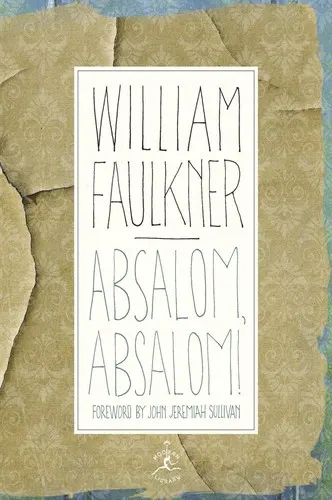
Rosa Coldfield summons young Quentin Compson to hear the history of Thomas Sutpen, a formidable stranger who tried to found a dynasty. From that beginning, Faulkner constructs a family tragedy in which every retelling feels like another turn of the curse.
A lover of Túrin’s story will recognize the terrible momentum: heroic will hardening into pride, children inheriting disasters they did not make, and a great house becoming inseparable from its doom. Yet Faulkner makes the reader reconstruct the legend from conflicting voices, much as ancient calamity survives through chronicles and fragments. Often called his masterpiece, this is one of the few American novels with the weight, darkness, and inexhaustibility of myth.
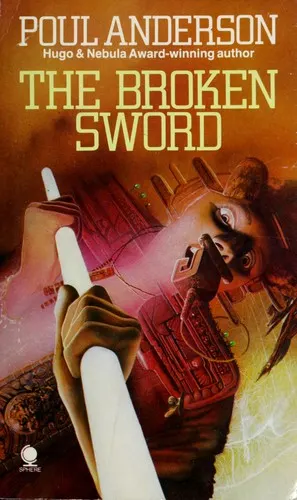
Published in 1954, the same year as The Fellowship of the Ring, Anderson’s novel offers another path modern fantasy might have taken: shorter, fiercer, and steeped in the merciless logic of Norse saga. It begins with a stolen child, a changeling, and a sword whose greatness cannot be separated from ruin.
Its deepest kinship with The Children of Húrin is its refusal to make heroism safe. Courage matters, love matters, and beauty matters precisely because none can bargain away fate. Anderson writes with hard, swift clarity; battles and enchantments feel less invented than remembered from an older, crueler world. Long championed by writers such as Michael Moorcock and cherished as a dark-fantasy classic, it remains shockingly potent.
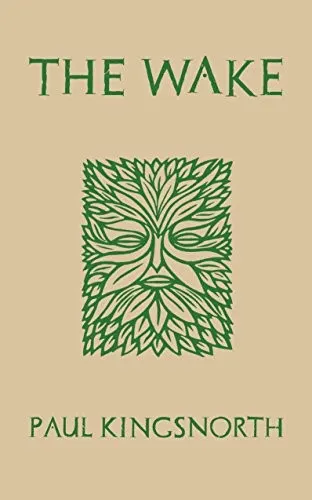
In the aftermath of the Norman Conquest, a Lincolnshire landowner named Buccmaster convinces himself that the old gods have chosen him to resist the new order. He speaks in Kingsnorth’s invented ‘shadow tongue,’ an English stripped of most Latin-derived words; initially strange, it soon becomes hypnotic, intimate, and brutally expressive.
Buccmaster has something of Túrin’s dangerous grandeur: he can read every warning as confirmation of his destiny, while the reader sees pride and self-deception tightening around him. The surrounding world, too, feels like Beleriand after hope has begun to fail—a land where defeat is historical fact but resistance still possesses terrible emotional force. Booker-longlisted and winner of the Gordon Burn Prize, The Wake is not merely an experiment in language; it is a voice you may find lodged in your mind for years.