Author
Books like Imre Kertész
6 books we recommend to Imre Kertész readers, drawn from Fatelessness and Kaddish for an Unborn Child — each with the reason why.
If you loved Fatelessness
Two young brothers, sent to live with their grandmother during wartime, train themselves to endure by recording only what they can verify. Their stripped-down prose turns hunger, violence, and tenderness into equally bare facts.
That disciplined neutrality recalls the unnerving logic of Gyuri’s narration without imitating it. Kristóf shows language itself becoming a survival technique—and asks what a person must amputate inwardly to remain alive. Winner of the Prix du Livre Inter and the opening volume of Kristóf’s celebrated trilogy, this is perhaps the closest match to Fatelessness in its fusion of simplicity, cruelty, and philosophical shock.
Semprún begins inside a crowded railway car bound for Buchenwald, but refuses to make experience obey chronology. The journey continually opens into remembered conversations, earlier selves, and anticipated recollections, as though consciousness were resisting the tidy historical shape later imposed on suffering.
Where Kertész uses a boy’s literal-minded present tense to dismantle retrospective wisdom, Semprún makes memory itself the contested ground. His first novel won the Prix Formentor, and its formal daring still feels urgent: it does not merely bear witness but examines what storytelling does to witness. Missing it would mean missing one of the essential literary answers to the problem Kertész posed.
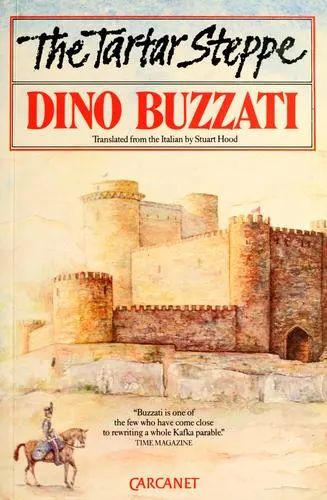
A young officer arrives at a remote fortress expecting a temporary posting. Almost imperceptibly, waiting becomes routine, routine becomes identity, and the possibility of a grand event begins to govern an entire life.
Buzzati’s widely acknowledged masterpiece shares Fatelessness’s deepest and least topical concern: how people accommodate themselves to systems while continuing to experience that accommodation as choice. Its clean, dreamlike prose makes time and obedience feel physically oppressive. The result is both a haunting parable and an intensely recognizable novel about the stories by which we surrender our lives—one of those books whose final force quietly alters how readers understand their own waiting.
If you loved Kaddish for an Unborn Child
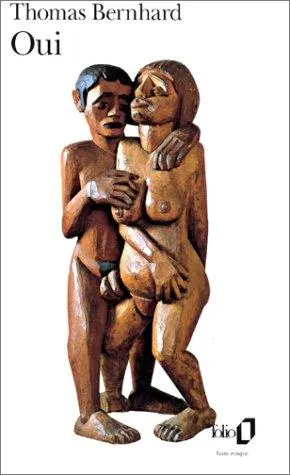
Bernhard’s short novel has the same frightening propulsion: one breathless consciousness worrying at its own history until repetition becomes both diagnosis and trap. Its narrator recounts his encounter with a Persian woman while continually revising motives, apportioning blame, and turning every apparent explanation against himself.
Bernhard, one of the great masters of obsessive monologue, makes syntax enact mental captivity. Yet the book’s bleakness is electrically alive—acerbic, exact, and grimly comic. If Kertész’s sustained act of negation felt less like reading a story than being locked inside an uncompromising intelligence, Yes is indispensable.
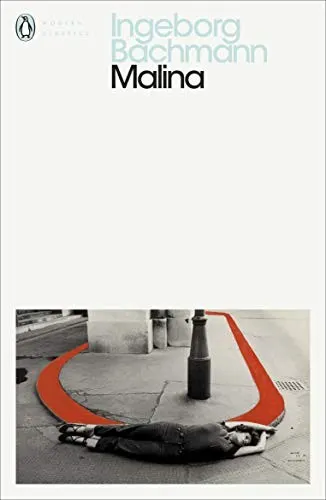
Malina begins with an unnamed woman divided between two men: Ivan, associated with desire and ordinary happiness, and Malina, the cool, controlling figure with whom she shares an apartment. But its real drama occurs inside language, where love, memory, fantasy, and historical violence invade one another.
Bachmann understood that catastrophe does not remain safely in the past; it enters intimacy, identity, and even grammar. The novel’s fractured forms—dialogue, letters, fairy tale, nightmare—make psychic destruction palpable in a way conventional realism could not. The only completed volume of Bachmann’s projected “Ways of Death” cycle, Malina has become a landmark of postwar German-language literature and a fiercely cherished book. It offers the rare sensation of watching a novel invent the form its wound requires.
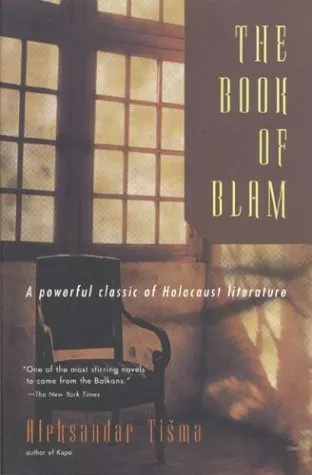
Miroslav Blam walks through postwar Novi Sad among places still inhabited, in his mind, by people who were murdered. He survived largely through circumstance, and Tišma makes that survival feel not triumphant but morally destabilizing: Blam scrutinizes his passivity, estrangement, and good fortune as though they constituted evidence against him.
Where Kertész uses a torrent of speech, Tišma works with chilling restraint. Streets, cafés, and remembered acquaintances accumulate into an indictment that nobody can answer. Widely regarded as Tišma’s masterpiece, The Book of Blam is one of the most penetrating novels about survivor guilt—not because it explains that guilt, but because it gives it a whole city to haunt. Its quietness makes it devastating.