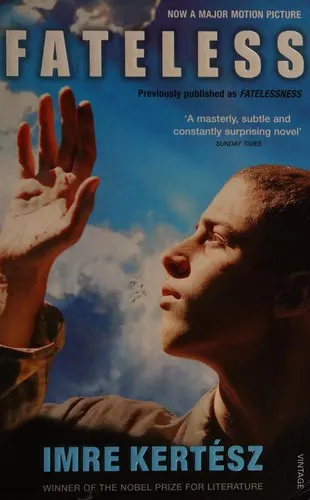
Books like Fatelessness
After Kertész’s eerie composure, one wants more fiction that refuses ready-made moral responses: lucid voices shaped by extremity, and novels in which survival, habit, and freedom become impossible to separate.
If you liked Fatelessness, you’ll love these
Not lookalikes — kindred books. Each one shares something essential with Fatelessness, and we tell you exactly what.
Two young brothers, sent to live with their grandmother during wartime, train themselves to endure by recording only what they can verify. Their stripped-down prose turns hunger, violence, and tenderness into equally bare facts.
That disciplined neutrality recalls the unnerving logic of Gyuri’s narration without imitating it. Kristóf shows language itself becoming a survival technique—and asks what a person must amputate inwardly to remain alive. Winner of the Prix du Livre Inter and the opening volume of Kristóf’s celebrated trilogy, this is perhaps the closest match to Fatelessness in its fusion of simplicity, cruelty, and philosophical shock.
Semprún begins inside a crowded railway car bound for Buchenwald, but refuses to make experience obey chronology. The journey continually opens into remembered conversations, earlier selves, and anticipated recollections, as though consciousness were resisting the tidy historical shape later imposed on suffering.
Where Kertész uses a boy’s literal-minded present tense to dismantle retrospective wisdom, Semprún makes memory itself the contested ground. His first novel won the Prix Formentor, and its formal daring still feels urgent: it does not merely bear witness but examines what storytelling does to witness. Missing it would mean missing one of the essential literary answers to the problem Kertész posed.
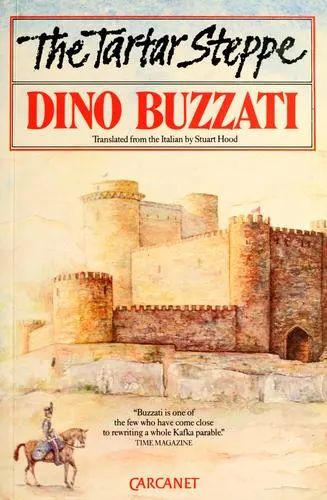
A young officer arrives at a remote fortress expecting a temporary posting. Almost imperceptibly, waiting becomes routine, routine becomes identity, and the possibility of a grand event begins to govern an entire life.
Buzzati’s widely acknowledged masterpiece shares Fatelessness’s deepest and least topical concern: how people accommodate themselves to systems while continuing to experience that accommodation as choice. Its clean, dreamlike prose makes time and obedience feel physically oppressive. The result is both a haunting parable and an intensely recognizable novel about the stories by which we surrender our lives—one of those books whose final force quietly alters how readers understand their own waiting.