Author
Books like Edwin O'Connor
5 books we recommend to Edwin O'Connor readers, drawn from The Last Hurrah and The Edge of Sadness — each with the reason why.
If you loved The Last Hurrah
This linked trio of stories is among the finest American novels about politics as a lived environment rather than a contest of ideas. Its presiding figure, the formidable Texas governor Arthur Fenstemaker, has Lyndon Johnson’s appetite, theatricality, bullying charm, and uncanny instinct for human weakness. Yet Brammer keeps his focus on the aides and legislators caught in the governor’s gravitational field.
Like O’Connor, he understands that political power is made from favors, memories, humiliations, jokes, and the ability to recognize everyone in the room. The prose is supple and rueful, and the comedy never cancels the loneliness beneath it. Long treasured as a cult classic of political fiction, The Gay Place offers the closest equivalent to Skeffington’s crowded, compromised, irresistibly human world.
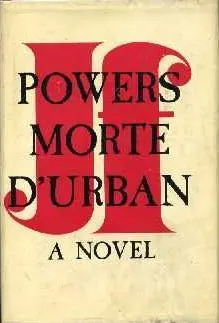
Father Urban is not a politician but a dazzling Catholic operator: a gifted speaker, fundraiser, fixer, and reader of men who finds himself stranded in an obscure Minnesota religious house. Anyone who loved Skeffington’s mixture of vanity, resilience, generosity, and professional genius will recognize Urban immediately—not as a copy, but as a spiritual cousin.
Powers’s comedy is exquisitely dry. Institutional absurdity emerges through bad meals, inconvenient assignments, golf games, petty superiors, and Urban’s tireless attempts to make something workable from mediocrity. Winner of the National Book Award, Morte D’Urban is also a piercing study of what happens when a born public performer confronts age, obedience, and the limits of charm. Few novels are simultaneously this funny, exact, and quietly moving.
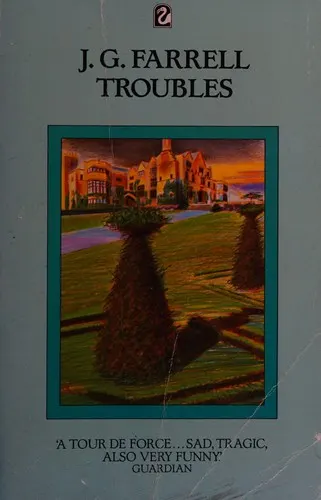
Major Brendan Archer arrives at a once-grand Irish hotel whose rooms, gardens, and inhabitants seem to be drifting into magnificent disorder. Farrell turns the place into a whole social order in miniature: ceremonious, eccentric, absurdly self-confident, and already crumbling.
The kinship with The Last Hurrah lies in the tone. Farrell can mock a doomed establishment without pretending its disappearance is simple progress; affection and judgment remain inseparable. His set pieces grow from drawing-room comedy into something stranger and more haunting, while history presses ever closer at the windows. Troubles later received the retrospective Lost Man Booker Prize, confirming what devoted readers had long known: this is one of the great comic elegies for a world that cannot imagine it is ending.
If you loved The Edge of Sadness
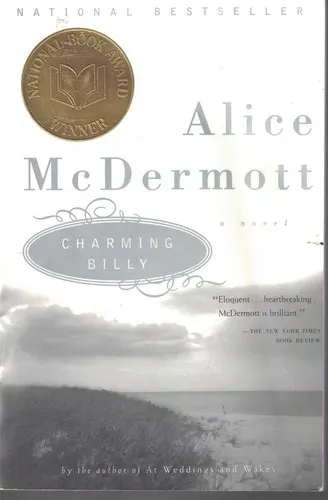
At Billy Lynch’s funeral, family and friends begin assembling the story of a beloved Irish American whose charm, drinking, romantic faith, and evasions shaped everyone around him. McDermott is fascinated not simply by what happened, but by how communities turn a life into anecdote, legend, excuse, and act of mercy.
A lover of O’Connor will recognize the quiet authority with which she handles alcoholism, Catholic belief, family loyalty, and sorrow that has become habitual. Yet Charming Billy has its own luminous, compressed music: every remembered gesture subtly alters the moral picture. Winner of the National Book Award, it is one of the finest modern novels about the dangerous generosity involved in loving someone whose failures cannot be explained away.
Judith Hearne arrives at a Belfast boarding house carrying a few treasured possessions and the fragile hope that a new address might lead to companionship. Moore renders her rituals, social misreadings, thwarted desires, faith, and secret drinking with almost unbearable precision. The comedy is sharp, but never cruel; the loneliness beneath it steadily acquires moral weight.
Where O’Connor finds grace in a weary priest’s self-knowledge, Moore tests what faith means for a woman whom respectable Catholic society barely sees. His celebrated debut established him as a novelist of extraordinary psychological clarity, and Judith remains among his most devotedly read creations. Her hunger for dignity is so vividly realized that overlooking this novel would mean missing one of the great unsentimental portraits of spiritual desolation—and stubborn human hope.