Books like The Gay Place
The devoted Brammer reader likes politics as a human weather system: intoxicating talk, bruised loyalties, private appetites and the melancholy pull of a leader who enlarges everyone around him even as he compromises them.
If you liked The Gay Place, you’ll love these
Not lookalikes — kindred books. Each one shares something essential with The Gay Place, and we tell you exactly what.
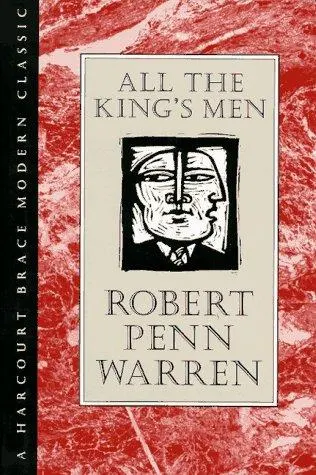
Willie Stark’s rise is not merely a study of power but a gravitational event, witnessed by Jack Burden, an intelligent, evasive young man who keeps discovering that detachment is itself a moral choice. That tension—between the charismatic politician and the gifted subordinate who believes he can stand outside consequences—is central to the spell of The Gay Place.
Warren gives political maneuvering the force of tragedy without sacrificing its comedy, vulgarity or physical excitement. His Pulitzer Prize–winning novel became a defining American book about power because it understands that effective leaders can be both genuinely magnificent and ruinous. Brammer admirers will recognize the dangerous exhilaration; they should read Warren for the deeper shock of seeing every clever compromise acquire weight.
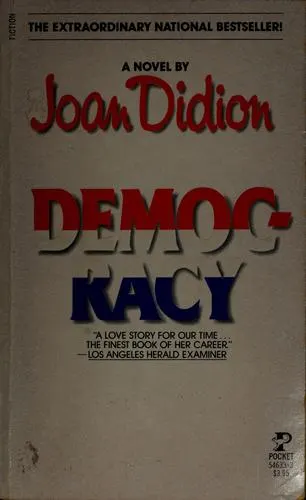
Didion approaches political life through fragments, corrections and charged absences. Her narrator—called Joan Didion—tries to reconstruct the life of Inez Victor, the wife of an ambitious senator, and her connection to the enigmatic fixer Jack Lovett. Campaigns, diplomatic crises and privileged marriages appear not as orderly narratives but as scenes whose real meaning has been deliberately misplaced.
Where Brammer is expansive, rowdy and companionable, Didion is cool and elliptical. Yet both understand politics as performance sustained by lonely people, and both are fascinated by what public mythology does to private memory. Democracy is one of the purest expressions of Didion’s singular style: lean, hypnotic and so exact that a repeated phrase can carry the pressure of an entire failed era.
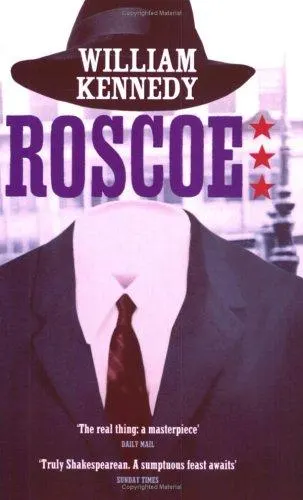
In 1945, after the death of Albany’s political boss, Roscoe Conway announces that he wants to leave the machine he has helped run for decades. Naturally, the machine has other plans. Kennedy plunges the reader into ward loyalties, graft, newspapers, old friendships and favors whose emotional value long ago exceeded their price.
The great pleasure here is that nobody becomes a mere emblem of corruption. Roscoe is witty, cultivated, compromised and loyal; the city’s crooked arrangements are also bonds of affection and memory. Kennedy, the Pulitzer-winning bard of Albany, writes in a lush, swinging prose equal to the book’s hustlers and damaged romantics. A reader who loved Brammer’s mixture of backstage comedy and sorrow will find Roscoe irresistible—and may finish it feeling that political machines are among the strangest families America has invented.