Author
Books like Dan Brown
7 books we recommend to Dan Brown readers, drawn from The Da Vinci Code, The Lost Symbol, Origin and Angels & Demons — each with the reason why.
If you loved The Da Vinci Code
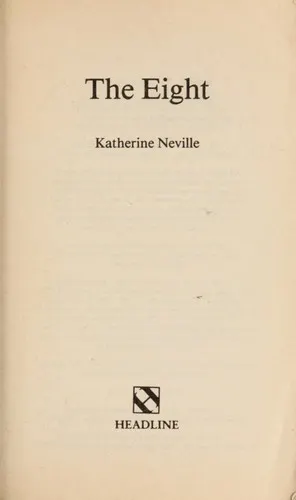
Neville delivers the intoxicating combination of vast stakes, encoded artifacts, historical secrets, and relentless movement that makes Dan Brown so difficult to put down. Its central object is a legendary chess set once owned by Charlemagne, scattered for protection during the French Revolution; two centuries later, a computer expert is drawn into the unfinished struggle surrounding it.
The pleasure lies not merely in solving clues but in watching separate eras and disciplines lock together like pieces of an enormous mechanism. Mathematics, music, politics, and chess all become parts of the chase. Published long before the modern boom in historical conspiracy thrillers, The Eight became an enduring word-of-mouth favorite and remains one of the genre’s most beloved precursors. If The Da Vinci Code made scholarship feel like an extreme sport, this is essential.
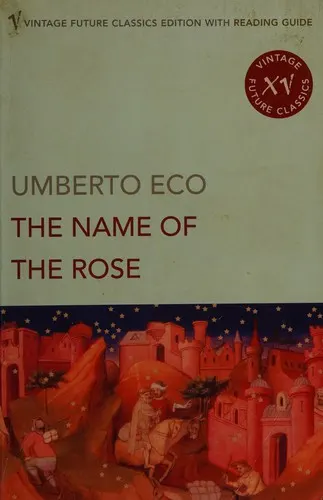
For readers who loved entering churches, libraries, paintings, and manuscripts as though they were crime scenes, Eco offers the magnificent original. In a fourteenth-century abbey, the learned friar William of Baskerville investigates a suspicious death while a major theological dispute approaches. Every architectural detail, disputed text, and apparently trivial sign may carry lethal meaning.
Eco was a distinguished semiotician, and he makes interpretation itself suspenseful: how do we know when a pattern is genuine, and when our hunger for meaning has created it? Yet this is no dry intellectual exercise. It is a gripping murder mystery with a labyrinth at its heart, a worldwide bestseller that also won Italy’s Premio Strega. The Da Vinci Code races through Western history; The Name of the Rose makes you feel its stones, shadows, fears, and forbidden ideas closing around you.
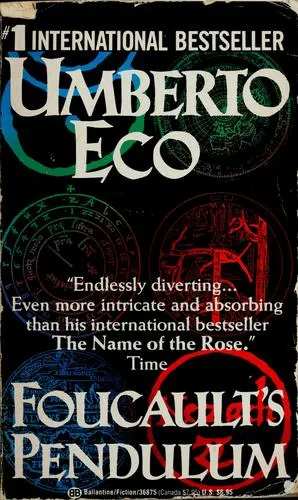
If your favorite part of The Da Vinci Code was the dizzying possibility that secret orders have shaped centuries of history, Foucault’s Pendulum is the daring next step. Three Milanese editors, weary of reading occult manuscripts, begin combining fragments about the Templars, alchemy, mysticism, and hidden power into a grand conspiracy of their own. The game soon acquires an unnerving gravity.
Eco understands exactly why conspiracy theories seduce intelligent people: they transform coincidence into design and make the initiated reader feel that nothing is meaningless. The novel is denser, stranger, and more darkly comic than Brown, but that is its reward. Long celebrated as the great literary novel of conspiracy thinking, it does not merely give you a secret history to decode—it changes the way you look at the human compulsion to invent one.
If you loved The Lost Symbol
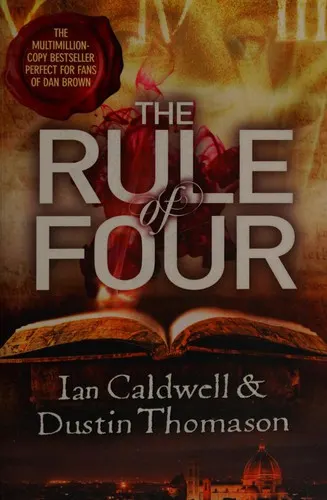
At Princeton, four friends become obsessed with the Hypnerotomachia Poliphili, a real and famously baffling Renaissance book. As graduation approaches, two of them begin to believe its strange text contains a concealed message—and that generations of scholars have misunderstood what kind of secret it protects.
The Rule of Four captures one of The Lost Symbol’s strongest pleasures: the charged moment when an apparently obscure artifact suddenly becomes legible. Yet its puzzles are grounded in friendship, rivalry, ambition, and the personal cost of obsession. This major bestseller is quieter and more intimate than Dan Brown’s novel, making every breakthrough feel earned and every danger close enough to touch.
If you loved Origin
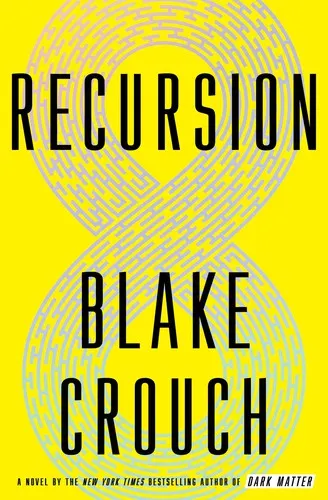
If Origin hooked you by turning speculative science into an urgent threat to ordinary human reality, Recursion delivers that sensation at full velocity. A detective encounters people devastated by memories of lives they never lived, while a neuroscientist pursues a technology capable of changing how memory itself works. Crouch explains the science lucidly, then relentlessly explores its emotional and ethical consequences.
The short chapters and escalating revelations make it ferociously readable, but the novel’s real force comes from its treatment of memory as the foundation of identity, love, and history. It is a thriller you can race through and a thought experiment that keeps unfolding after the final page.
Higashino replaces Brown’s public spectacle with an intimate, exquisitely controlled duel between two brilliant minds. The reader sees a killing and its apparent concealment almost immediately; the mystery is not simply who did what, but how an apparently flawless solution can be dismantled. Every mundane detail may be a clue, and every deduction feels earned.
A winner of Japan’s prestigious Naoki Prize and the novel that established Higashino internationally, it has the clean logic of a mathematical proof and the emotional force of tragedy. Readers drawn to Origin’s contests between exceptional intellects will find something rarer here: a puzzle whose ultimate significance is human rather than merely ingenious.
If you loved Angels & Demons
If what you miss most is the velocity—the feeling that ancient history has suddenly become a present-tense emergency—open Map of Bones. An attack inside Cologne Cathedral launches Sigma Force into a pursuit involving stolen relics, encoded history, and a discovery whose scientific implications are as alarming as its religious ones.
Rollins writes set pieces with muscular clarity, but his real gift is making research produce danger: an archaeological fact becomes a clue, the clue becomes a weapon, and the weapon forces another impossible decision. This bestselling novel helped establish Sigma Force as one of adventure fiction’s most durable series. Few books deliver the Brown-like combination of scholarship, spectacle, and ruthless forward momentum so confidently.