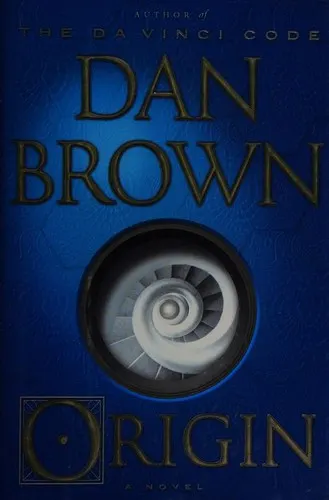
Books like Origin
Dan Brown’s Origin and Umberto Eco’s The Name of the Rose transform murder investigations into gripping battles over knowledge, faith, and the ownership of truth.
If you liked Origin, you’ll love these
Not lookalikes — kindred books. Each one shares something essential with Origin, and we tell you exactly what.
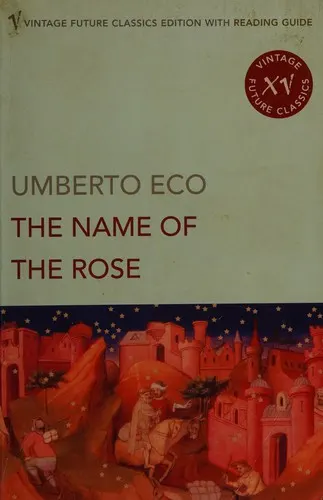
At a fourteenth-century abbey, a visiting friar applies reason, observation, and textual interpretation to a suspicious death. Eco supplies the codes, contested manuscripts, architectural mysteries, and theological disputes that make Origin so pleasurable, but he also asks a more unsettling question: does discovering the truth necessarily set anyone free?
Winner of Italy’s Strega Prize and an international phenomenon, this is the rare erudite novel whose ideas deepen rather than interrupt its suspense. Its abbey feels like an intellectual machine built to conceal secrets, and entering it is a rite of passage for anyone who loves mysteries with civilization-sized stakes.
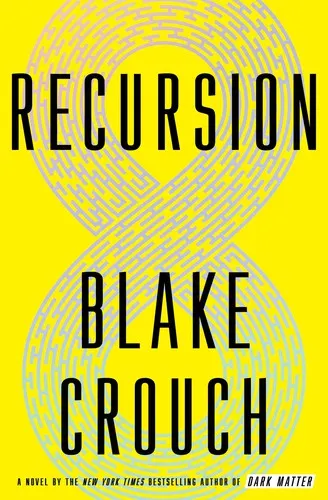
If Origin hooked you by turning speculative science into an urgent threat to ordinary human reality, Recursion delivers that sensation at full velocity. A detective encounters people devastated by memories of lives they never lived, while a neuroscientist pursues a technology capable of changing how memory itself works. Crouch explains the science lucidly, then relentlessly explores its emotional and ethical consequences.
The short chapters and escalating revelations make it ferociously readable, but the novel’s real force comes from its treatment of memory as the foundation of identity, love, and history. It is a thriller you can race through and a thought experiment that keeps unfolding after the final page.
Higashino replaces Brown’s public spectacle with an intimate, exquisitely controlled duel between two brilliant minds. The reader sees a killing and its apparent concealment almost immediately; the mystery is not simply who did what, but how an apparently flawless solution can be dismantled. Every mundane detail may be a clue, and every deduction feels earned.
A winner of Japan’s prestigious Naoki Prize and the novel that established Higashino internationally, it has the clean logic of a mathematical proof and the emotional force of tragedy. Readers drawn to Origin’s contests between exceptional intellects will find something rarer here: a puzzle whose ultimate significance is human rather than merely ingenious.