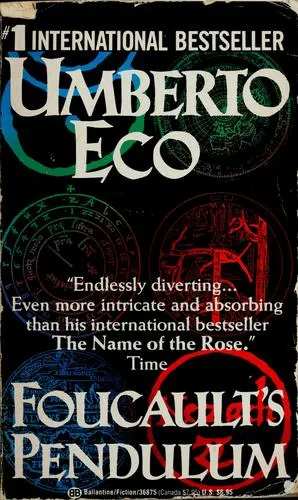
Books like Foucault's Pendulum
Patterns everywhere. These novels share Eco’s fascination with interpretation as both an intellectual pleasure and a dangerous appetite: each makes the reader assemble meanings while quietly asking whether the resulting design was discovered or invented.
If you liked Foucault's Pendulum, you’ll love these
Not lookalikes — kindred books. Each one shares something essential with Foucault's Pendulum, and we tell you exactly what.
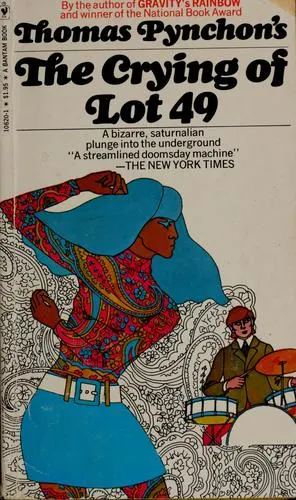
Oedipa Maas begins with an ordinary executor’s errand and encounters signs of a clandestine postal system—or perhaps only signs that can be made to suggest one. Like Eco, Pynchon understands the intoxicating moment when scattered names, symbols, and historical curiosities appear to lock together.
This is the compact, concentrated version of the interpretive vertigo that animates Foucault’s Pendulum. Pynchon is funnier, sadder, and more elusive: every apparent revelation expands uncertainty rather than resolving it. A cult classic and the most approachable entrance to Pynchon’s fiction, it turns reading itself into detective work. Once its muted post horn catches your attention, you will start seeing it everywhere.
Presented as a lexicon compiled from conflicting Christian, Islamic, and Jewish accounts of a vanished people, Pavić’s novel invites you to roam through entries, compare stories, and construct connections for yourself. Its scholarship is largely imaginary, but rendered with such sensuous precision—dream hunters, poisoned books, lives crossing centuries—that fabrication acquires the authority of myth.
Where Eco depicts editors building a grand design from fragments, Pavić hands the fragments directly to the reader. The result is an unusually intimate trap: interpretation becomes authorship. An international literary sensation after its 1984 publication, this novel has retained devoted readers because no two journeys through it feel quite identical. It is less a book you finish than a strange intellectual object you continue turning over in your mind.
Gaddis’s enormous first novel begins with a failed religious calling and moves into a world of painters, counterfeiters, critics, mystics, and fashionable frauds. Its central obsession is authenticity: how to recognize the genuine article when culture rewards imitation, performance, and persuasive nonsense.
A reader who relished Eco’s learned jokes, theological detours, crowded conversations, and merciless portrait of intellectual vanity will find a formidable feast here. Gaddis makes knowledge dramatic: ideas circulate through parties and studios, are misunderstood, stolen, repeated, and converted into status. Initially neglected, The Recognitions gradually became a fiercely admired landmark of American postwar fiction and an influence on later encyclopedic novelists. It demands attention, but that demand is part of its exhilaration—the novel trains you to see the world’s counterfeits more sharply.