Author
Books like Colleen Hoover
8 books we recommend to Colleen Hoover readers, drawn from It Ends with Us, Verity and It Starts with Us — each with the reason why.
If you loved It Ends with Us
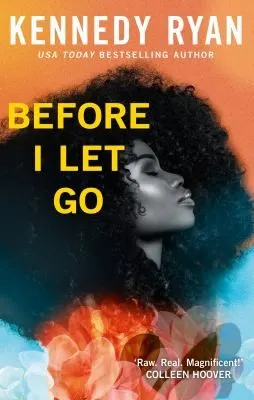
Kennedy Ryan understands the truth that gives It Ends with Us its force: love can be genuine and still fail to make a relationship livable. Yasmen and Josiah remain powerfully drawn to each other after divorce, but grief, depression, parenthood, and hard-won boundaries stand between longing and reconciliation.
Ryan writes romantic chemistry with almost unbearable intensity while refusing easy cures or grand gestures that erase damage. Her fiercely loyal readers come for the heat and stay for the emotional precision. If you loved watching Lily distinguish devotion from self-sacrifice, Yasmen’s struggle to choose both love and herself is unmissable.
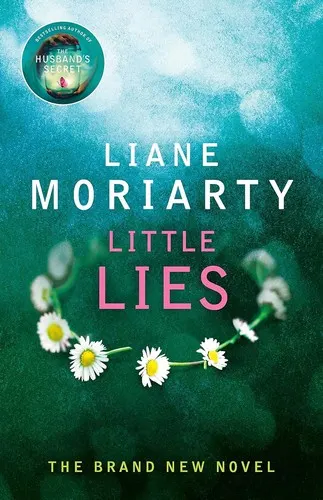
A school fundraiser ends in death; the novel then rewinds through playground feuds, brittle marriages, and friendships forming beneath a glossy coastal surface. Moriarty makes every polished kitchen and cutting joke feel potentially dangerous, using wit not to soften pain but to show how expertly people conceal it.
Like Hoover, she understands that abusive relationships cannot be reduced to simple questions about why someone stays. She also adds something exhilarating: women gradually seeing one another clearly and becoming stronger together. The worldwide bestseller behind the acclaimed television adaptation earns its popularity—it is compassionate, fiercely readable, and nearly impossible to put down.
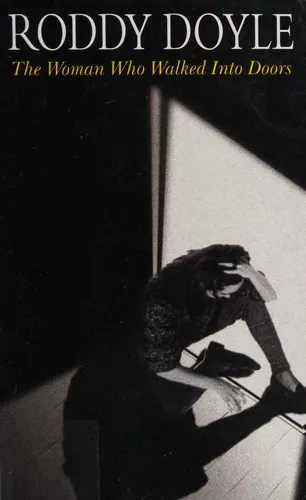
Paula Spencer tells her own story in a voice that is funny, furious, contradictory, and devastatingly alive. Roddy Doyle does not make her a symbol or a lesson; he gives her memories, appetites, pride, blind spots, and the intelligence to begin naming what has happened to her.
Readers moved by It Ends with Us will recognize its deepest concern: how tenderness becomes entangled with fear, and how breaking a pattern requires more than recognizing it. But Doyle’s stripped-down prose brings an even more intimate immediacy—you feel Paula fighting to reclaim the language of her life sentence by sentence. It is one of the most piercing survivor portraits in modern fiction.
If you loved Verity
The great ancestor of Verity’s domestic Gothic unease. A young woman enters the magnificent home of her new husband only to find it dominated by Rebecca, his charismatic dead wife. Du Maurier makes rooms, possessions, and casual remarks feel like traps—and turns romantic longing into a source of profound vulnerability.
Its suspense comes from the same irresistible question that animates Verity: how well can one woman understand another through the traces she leaves behind? Continuously read since 1938 and immortalized by Hitchcock, Rebecca has lost none of its seductive menace. Read it and you will recognize the blueprint—but its psychological force remains inimitable.
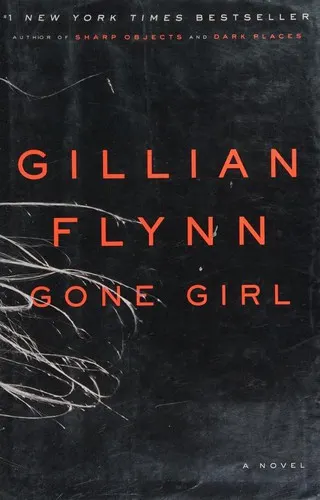
On Nick and Amy Dunne’s fifth wedding anniversary, Amy disappears, leaving Nick under increasingly hostile scrutiny. From there, Gillian Flynn subjects marriage to a merciless forensic examination, using competing narratives, written records, and razor-edged observations to make certainty feel impossible.
If Verity thrilled you by making attraction and revulsion coexist, Gone Girl intensifies that sensation. Flynn’s characters are frightening not because they are unknowable, but because their ugliest impulses are rendered with wicked intelligence. This phenomenon helped redefine the modern domestic thriller, and its voice, structural audacity, and poisonous wit still embarrass most of its imitators.
Blythe wants to be a loving mother, but from the beginning she fears that something is wrong between her and her daughter. Her husband dismisses those fears, and Audrain locks the reader inside Blythe’s account, where maternal instinct, inherited trauma, exhaustion, and possible danger become agonizingly difficult to separate.
The Push trades Verity’s overt sensationalism for a quieter pressure that becomes nearly unbearable. Its clean, intimate prose makes every doubt feel like a confession whispered directly to you, while its moral ambiguity ensures that you keep revising your judgment. Audrain’s bestselling debut earned devoted readers because it delivers the rare ending that sharpens everything before it rather than merely overturning it.
If you loved It Starts with Us
Evvie is preparing to leave an unhappy marriage when her husband dies; afterward, grief becomes tangled with guilt and secrets. Dean, a celebrated baseball pitcher who has inexplicably lost his ability to pitch, rents the apartment attached to her house. Their agreement not to discuss the subjects haunting them lasts about as well as you would expect.
Like It Starts with Us, Linda Holmes’s beloved debut treats starting over as difficult emotional work rather than a romantic slogan. Evvie and Dean offer each other humor, room, and companionship—not rescue. Holmes writes with such warmth and perceptiveness that their smallest moments of trust feel momentous. If you loved seeing Lily claim a future without denying her past, Evvie’s complicated, hopeful reinvention is indispensable.
Tiffy and Leon share a one-bedroom apartment while keeping opposite schedules, so for months their relationship exists through Post-it notes, leftover meals, and glimpses of each other’s lives. The playful premise gradually reveals a more serious achievement: a remarkably clear-eyed portrait of recovery from emotional abuse.
Readers who valued Atlas’s steadiness will recognize the appeal of Leon, whose kindness never becomes possessiveness. O’Leary shows how manipulation can distort someone’s confidence—and how safe love helps restore it without magically erasing the damage. This breakout bestseller is funny, deeply comforting, and quietly fierce about the difference between attention and care.