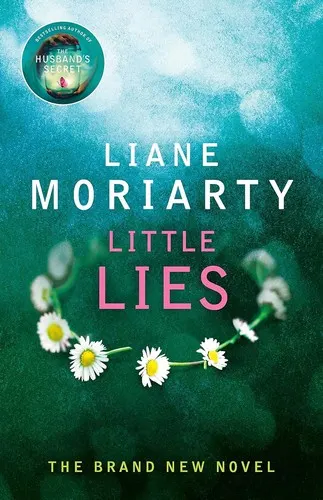
Books like Big Little Lies
—because the real pleasure lies in watching polished adult lives crack under pressure: the wicked social comedy, the shifting loyalties, and the compassion Moriarty extends even to badly behaved people. These three novels recreate that tension in strikingly different ways.
If you liked Big Little Lies, you’ll love these
Not lookalikes — kindred books. Each one shares something essential with Big Little Lies, and we tell you exactly what.
When an elite school opens in an affluent Colorado community, four close-knit families enter a competition that exposes every buried rivalry and self-serving belief they possess. Holsinger understands, as Moriarty does, that school politics are rarely about the children alone: they are arenas for parental vanity, class anxiety, frustrated ambition, and old resentments.
The comedy is sharp, but never weightless. Each parent can diagnose everyone else’s pretensions while remaining gloriously blind to their own, and the escalating pressure gives the novel a thriller’s momentum. If the playground skirmishes and beautifully calibrated hypocrisies of Big Little Lies delighted you, The Gifted School is almost impossible to resist.
The Push isolates Big Little Lies’ darkest question: what happens when a woman tells the truth about family life and nobody wants to believe her? Blythe is determined to become the loving mother she never had, but her relationship with her daughter fills her with a dread that her husband dismisses. Is Blythe perceiving something real, or repeating the damage of her own childhood?
Audrain abandons Moriarty’s buoyant ensemble comedy for something intimate, spare, and claustrophobic. Yet both novelists are fearless about maternal ambivalence, coercive domestic dynamics, and the gulf between a respectable family’s appearance and its private reality. An international bestseller, The Push became a word-of-mouth sensation because its central uncertainty is nearly unbearable—and because readers keep needing someone else to discuss it with.
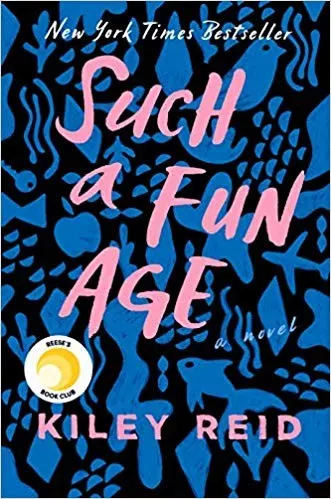
Kiley Reid opens with a scene Moriarty might envy: Emira, a young Black babysitter, is accused of kidnapping the white child she cares for while shopping late at night. The incident binds her more tightly to the child’s mother, Alix, a woman whose eagerness to see herself as enlightened becomes increasingly revealing.
This is not a murder mystery, but it produces suspense from social misjudgment with comparable skill. Reid captures performative friendship, money disguised as generosity, overheard conversations, and the small lies people tell to preserve flattering versions of themselves. Her dialogue is devastatingly natural, and no character remains a simple villain or victim. Longlisted for the Booker Prize, Such a Fun Age offers the same addictive combination of comedy and moral discomfort that makes Big Little Lies far more than a glossy page-turner.