Author
Books like Brian O'Nolan
6 books we recommend to Brian O'Nolan readers, drawn from The Third Policeman and At Swim-Two-Birds — each with the reason why.
If you loved The Third Policeman
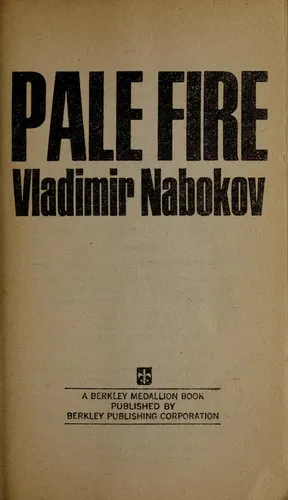
A 999-line poem by the fictional John Shade arrives surrounded by a commentary from Charles Kinbote, an editor whose notes rapidly become more urgent, extravagant, and suspicious than the poem itself.
If de Selby’s footnotes delighted you, Kinbote’s scholarship will feel like discovering an entire novel written in their margins. Nabokov makes interpretation itself a form of madness: cross-references become trapdoors, pedantry becomes autobiography, and apparent explanations only multiply the mystery. Yet the book is also unexpectedly moving beneath its virtuosity. Widely regarded as one of Nabokov’s masterpieces, Pale Fire is that rare canonical puzzle whose devoted readers keep returning not merely to solve it, but to inhabit its dazzling uncertainty.
Ninety-two-year-old Marian Leatherby receives a hearing trumpet and discovers that her family intends to place her in an institution. The institution, however, obeys an architecture, theology, and administrative logic stranger than anything she could have feared.
Carrington gives surrealism O’Nolan’s precious combination of absolute composure and escalating impossibility. Marian accepts each fresh absurdity with practical curiosity, which only makes the surrounding world funnier and more disturbing. The novel’s occult machinery, rebellious old women, sinister authorities, and matter-of-fact transformations create a comic apocalypse unlike anyone else’s. Long cherished as a cult classic and now central to Carrington’s revived reputation, it feels less like a whimsical curiosity than a secret foundational text you cannot believe was ever allowed to slip from view.
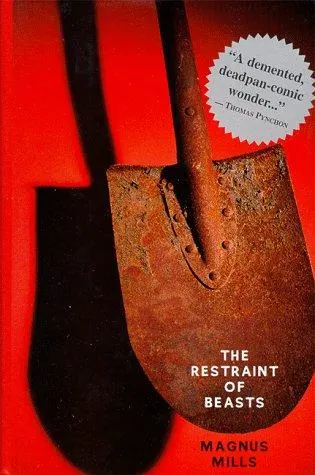
An unnamed Englishman is made foreman of a fencing crew whose members would rather drink than work. From those deliberately drab materials, Magnus Mills constructs a closed moral universe governed by repetition, workplace etiquette, and consequences nobody seems willing to examine.
The kinship lies above all in the voice: calm, literal-minded, and catastrophically incapable of registering how alarming events have become. Like The Third Policeman, it turns routine procedures into cosmic laws and lets horror emerge through the cracks in deadpan comedy. Shortlisted for the Booker Prize, Mills’s debut earned an enduring cult readership because its simplicity is deceptive: every plain sentence tightens the trap. Few novels prove so efficiently that the funniest narrator is sometimes the one who understands least.
If you loved At Swim-Two-Birds
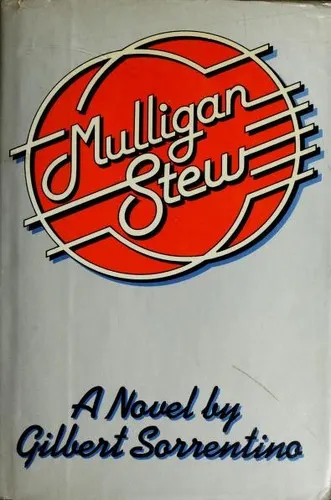
The closest thing to a spiritual sequel without being an imitation. A struggling novelist assembles a dreadful manuscript from borrowed characters, literary clichés and second-hand ambitions; the book then lets letters, notes, rejection slips, lists and mutinous voices pull his creation apart.
Sorrentino shares O’Nolan’s deepest comic instinct: fiction is funniest when authors lose control of it. The title openly salutes At Swim-Two-Birds, but this 1979 cult landmark of American postmodernism has its own savage energy, skewering pretension while luxuriating in verbal invention. It is the rare homage audacious enough to become a companion masterpiece.
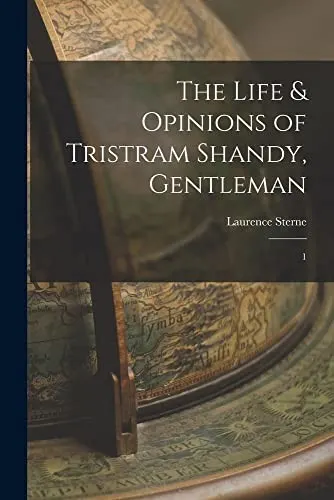
Here is the great unruly ancestor of O’Nolan’s novel. Tristram attempts to tell his life story, but explanations breed digressions, digressions demand diagrams, and the act of narration repeatedly overwhelms the life supposedly being narrated.
Sterne turns delays, blank space, typography and argumentative asides into comedy. The voice is intimate, shameless and wonderfully incapable of proceeding in a straight line. Published in the eighteenth century yet still formally mischievous enough to embarrass many experimental novels, Tristram Shandy reveals that the novel has always contained the means of sabotaging itself.
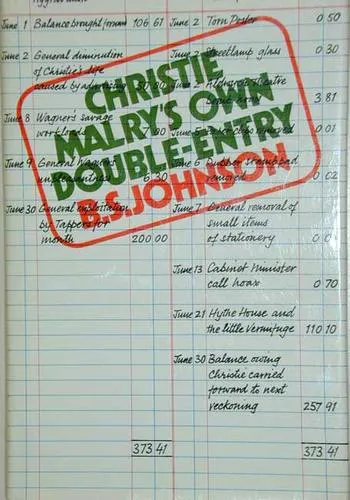
Christie Malry is a clerk who decides to apply double-entry bookkeeping to existence: every insult or inconvenience becomes a debit owed by society, and every act of recompense a credit. The beautifully ridiculous logic is pursued with the straightest possible face.
Johnson’s short, caustic novel has O’Nolan’s gift for making an absurd premise feel more rigorous than ordinary reality. Chapters shrink, narration bares its machinery, and the conventions of social realism are treated as negotiable rather than sacred. A cult classic of British experimental fiction, it delivers more formal insolence and black laughter in roughly 180 pages than most novels manage at twice the length.