Author
Books like B. S. Johnson
6 books we recommend to B. S. Johnson readers, drawn from The Unfortunates and Christie Malry's Own Double-Entry — each with the reason why.
If you loved The Unfortunates

Qiu’s epistolary novel comprises letters sent from Paris, Taipei, and Tokyo—and explicitly permits them to be read in any order. But, as in The Unfortunates, the movable structure is not a stunt. It makes the reader inhabit a consciousness compulsively returning to love, separation, art, and self-destruction, finding altered meanings each time an image or phrase resurfaces.
The voice is startlingly exposed: theatrical one moment, analytically lucid the next, then suddenly defenseless. Published posthumously, the book has become a queer classic and the center of Qiu’s international reputation. Few novels make nonlinear reading feel so emotionally inevitable: rearrange the letters however you like, and grief still finds its way through.
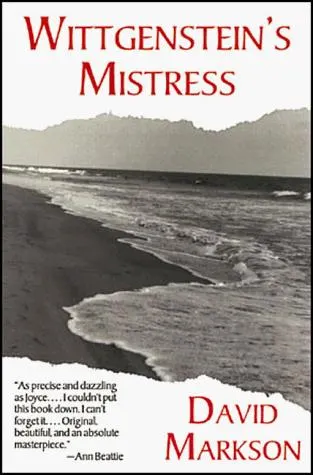
A woman who may be the last person alive types a discontinuous monologue: memories, corrections, quotations, art-historical scraps, jokes, and stubbornly repeated names. Each fragment seems solitary; gradually, their repetitions create an emotional design that is never simply announced. A reader who loved Johnson’s trust in gaps—and his refusal to tidy pain into conventional narrative—will recognize the method immediately.
Markson’s novel is one of American experimental fiction’s genuine cult masterpieces, admired with unusual fervor by writers including David Foster Wallace. Its erudition can be funny and abrasive, but underneath lies devastating loneliness. By the end, punctuation, misremembering, and self-correction have acquired the force that plot carries in other novels.
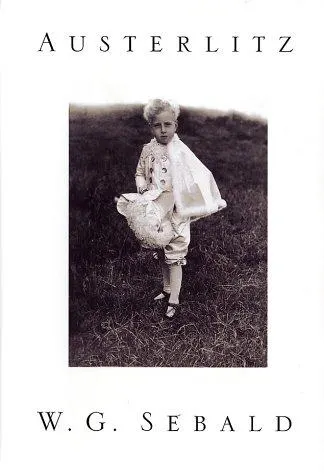
Sebald begins with an encounter in a railway waiting room, then lets conversation open into architecture, photographs, journeys, historical pressure, and the uncertain recovery of a life. His long sentences move as memory actually moves: by association, delay, avoidance, and involuntary return. Like Johnson, he understands that the truest account of loss may be structurally incapable of going straight toward it.
The grainy photographs do not authenticate the story so much as make evidence itself feel haunted. Meanwhile, Sebald’s restraint keeps the novel from soliciting easy emotion; its cumulative power arrives almost imperceptibly. Widely regarded as his masterpiece, Austerlitz offers one of modern fiction’s most profound demonstrations that form can embody remembrance rather than merely describe it.
If you loved Christie Malry's Own Double-Entry
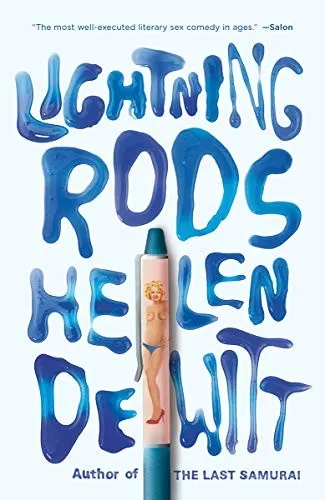
DeWitt takes one appalling business idea and follows it through the language of salesmanship, efficiency, and corporate problem-solving with unwavering composure. Like Johnson, she understands that capitalism becomes funniest—and most damning—when nobody breaks character to explain the satire.
Its failed-salesman protagonist can rationalize almost anything, and DeWitt makes each new refinement sound both grotesque and commercially inevitable. Winner of the Bollinger Everyman Wodehouse Prize, this is a rare comic novel whose conceptual audacity is matched by its immaculate execution. If Christie’s double-entry system delighted you by turning moral injury into procedure, Lightning Rods is indispensable.
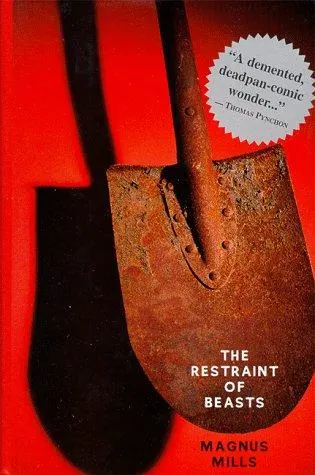
A newly appointed foreman must supervise two spectacularly unhurried fencing workers. From that modest beginning, Mills constructs a workplace world governed by tea breaks, pubs, inadequate materials, tacit rules, and consequences treated with unnerving matter-of-factness.
The kinship lies in the tone: lucid, flat, and so scrupulously reasonable that absurdity acquires the force of natural law. Mills never strains for a joke; his characters simply obey the systems around them until the systems reveal their madness. This Booker-shortlisted debut has earned lasting devotion for its singular deadpan menace. Few novels come closer to Johnson’s trick of making bleakness feel scandalously funny.
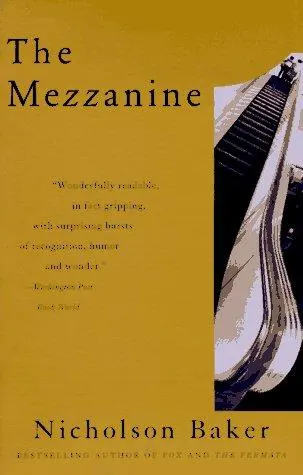
During an office worker’s trip up an escalator after lunch, Baker suspends conventional narrative and opens trapdoors into shoelaces, drinking straws, paper bags, escalator engineering, and the private history of everyday habits. The digressions—many blooming into magnificent footnotes—are the book’s true action.
Where Johnson exposes the arbitrary rules of fiction, Baker asks why fiction usually discards most of conscious life. His obsessive attention turns supposedly trivial objects into sources of comedy, tenderness, and intellectual adventure. The Mezzanine became a touchstone for novelists interested in digression and the overlooked; its apparent slightness conceals a radical proposition about what a novel may consider important. Christie Malry admirers should not miss such joyous formal insubordination.