Author
Books like Arthur Conan Doyle
8 books we recommend to Arthur Conan Doyle readers, drawn from The Hound of the Baskervilles, Canon of Sherlock Holmes and A Study in Scarlet — each with the reason why.
If you loved The Hound of the Baskervilles
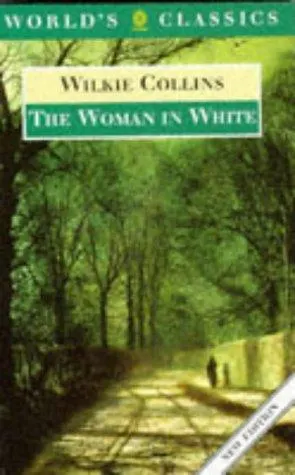
A moonlit encounter with a terrified woman dressed in white draws drawing-master Walter Hartright into the secrets of an English country house. Collins creates the same delicious uncertainty as Doyle: every apparently supernatural disturbance may conceal an all-too-human design, and rational inquiry becomes a defense against terror.
Told through testimony, letters, and diaries, the novel makes detection feel communal; each narrator holds one fragment of the truth, much as Watson records what only Holmes can assemble. Marian Halcombe, formidable and fiercely intelligent, is one of Victorian fiction’s great characters, while Count Fosco remains an irresistibly urbane villain. A sensation-fiction landmark that captivated its first readers, it still has the power to make several hundred pages disappear like a single dark evening.
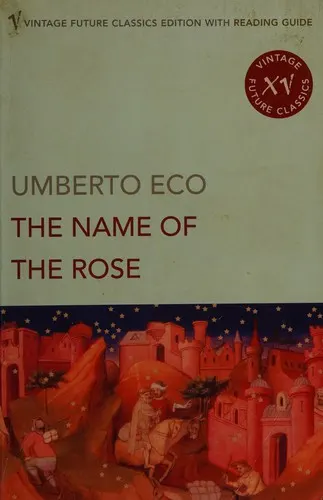
An elderly monk recalls arriving, as a novice, at an isolated medieval abbey with Brother William of Baskerville—whose name is only the first salute to Doyle. William reads footprints, gestures, and human vanity with distinctly Holmesian acuity, while his young companion Adso watches in admiring bewilderment. When the abbey becomes troubled by mysterious deaths, logic must contend with fear, dogma, and apocalyptic rumor.
Eco gives the Holmes–Watson partnership extraordinary philosophical weight without sacrificing suspense. The labyrinthine library and wintry abbey are not decorative scenery: they shape what can be known and who may know it. Winner of Italy’s Strega Prize and an unlikely worldwide bestseller, this is the rare intellectual novel whose arguments about truth are inseparable from the thrill of pursuing it.
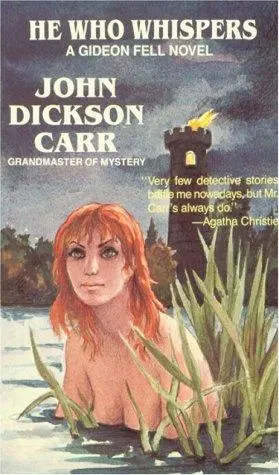
Carr begins with a small gathering expecting to hear the story of an impossible murder: a man was struck down atop a medieval tower, although no one could have approached him unseen. Then the account acquires a whisper of vampirism. Like the Baskerville legend, the supernatural explanation is seductive because the physical facts seem to demand it.
What follows is less a Gothic novel with a puzzle attached than a puzzle engineered to produce Gothic dread. Carr—revered by connoisseurs as the supreme master of the impossible crime—understood that an explanation should not merely cancel fear; it should reveal why the fear felt so convincing. Gideon Fell’s exuberant intelligence provides the Holmesian pleasure, but the novel’s lonely rooms, uncertain loyalties, and gathering unease make it one of Carr’s most haunting achievements.
If you loved Canon of Sherlock Holmes
A sacred diamond disappears from an English country house, and the truth must be assembled from testimony supplied by a wonderfully biased succession of narrators. Like Watson, each tells us more than intended; unlike Watson, none controls the whole story.
Collins helped establish the grammar of detective fiction—telling details, competing hypotheses, professional inquiry—but the novel remains alive because it is funny, psychologically shrewd, and crowded with memorable voices. Holmes readers will recognize the delicious moment when an apparently trivial fact changes the shape of everything. This is not merely an ancestor to admire: it is a foundational mystery that still knows how to outwit its descendants.
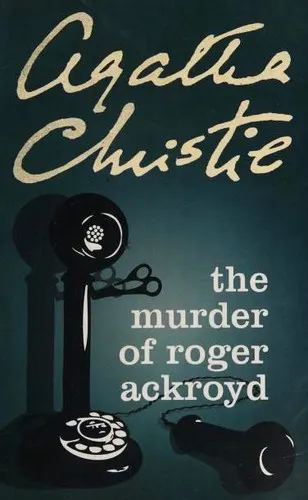
Roger Ackroyd is found murdered soon after receiving a letter containing dangerous information, and the retired Hercule Poirot begins examining a village full of omissions. His fastidiousness may differ from Holmes’s bohemian energy, but both detectives understand that speech, posture, and silence are physical evidence.
Christie conducts an exceptionally fair contest with the reader: nearly everything necessary is visible, yet its significance keeps slipping away. The novel’s audacity permanently expanded what detective fiction could do, and Crime Writers’ Association members later voted it the finest crime novel ever written. To miss it is to miss one of the genre’s great demonstrations of controlled misdirection.
Hospitalized and bored, Inspector Alan Grant becomes fascinated by a portrait of Richard III and begins investigating whether the king’s notorious reputation can withstand scrutiny. There are no footprints to measure or cigar ashes to classify; Grant instead interrogates chronicles, schoolbook certainties, motives, and the suspicious neatness of accepted history.
That stripped-down premise reveals what lies at the heart of Holmes: the exhilaration of watching a first-rate mind refuse inherited assumptions. Tey makes archival reasoning unexpectedly suspenseful, while inviting the reader to test every source alongside Grant. Long cherished as one of crime fiction’s most original achievements, it turns historical inquiry into a case as urgent as any locked-room murder.
If you loved A Study in Scarlet

A grieving crime novelist begins a diary with a blunt declaration: he intends to kill the person responsible for his son’s death. From there, Nicholas Blake—poet laureate Cecil Day-Lewis writing under a pseudonym—brings revenge tragedy and classical detection into a tense, elegant collision.
That fusion makes it an especially strong match for readers gripped by the abrupt widening of A Study in Scarlet from forensic puzzle to passionate history. Private investigator Nigel Strangeways must uncover not only what happened but how guilt, grief, and justice have become entangled. Long admired as one of Blake’s finest mysteries, it has the momentum of a thriller and the bruised moral force of a novel that refuses to treat murder as an abstract game.
If Holmes’s deductions made you want to stop reading, inspect the evidence, and compete with him, Soji Shimada offers an irresistible challenge. The book opens with a dead artist’s grotesque astrological plan for constructing a perfect woman from the bodies of several young women; decades later, the apparently impossible crimes associated with that plan remain unsolved.
Shimada combines macabre theatricality with rigorous fair-play detection, even pausing to assure readers that they possess what they need to solve the mystery. The novel became a foundational work of Japan’s modern honkaku mystery revival, whose devotees prize ingenious, logically recoverable solutions. Its central conceit is extravagant, its clues scrupulous, and its final unmasking has the clean shock of a trap snapping shut.