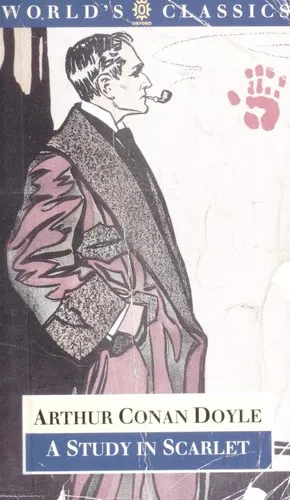
Books like A Study in Scarlet
What endures is the thrill of watching a great fictional partnership spark into life: Watson’s grounded curiosity gives Holmes’s brilliance warmth, while the case expands from a locked-room enigma into something stranger, darker, and morally charged.
If you liked A Study in Scarlet, you’ll love these
Not lookalikes — kindred books. Each one shares something essential with A Study in Scarlet, and we tell you exactly what.
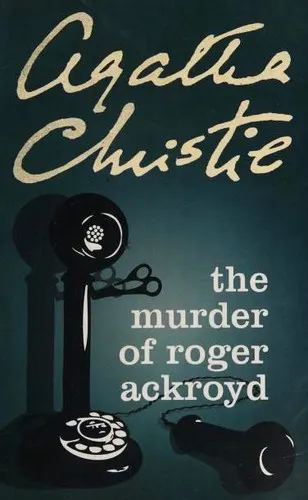
Christie recreates the delicious imbalance between an eccentric genius and the genial local doctor who observes him. Hercule Poirot’s smallest questions and fussiest habits gradually reveal themselves as instruments of formidable intelligence, while Dr Sheppard supplies the skeptical, companionable perspective that makes the deductions pleasurable rather than merely mechanical.
As in A Study in Scarlet, the storytelling itself becomes part of the investigation: what is noticed, recorded, or passed over matters. The result is one of detective fiction’s acknowledged landmarks, still argued over because Christie’s control is so exact. Anyone who loves being courteously outmaneuvered by Holmes should experience Poirot at his most audacious.
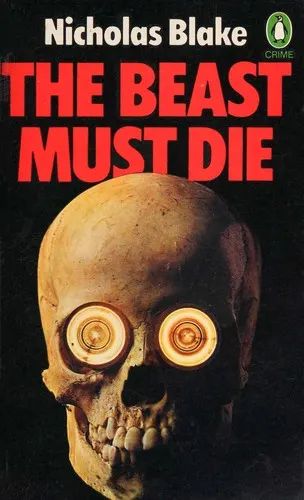
A grieving crime novelist begins a diary with a blunt declaration: he intends to kill the person responsible for his son’s death. From there, Nicholas Blake—poet laureate Cecil Day-Lewis writing under a pseudonym—brings revenge tragedy and classical detection into a tense, elegant collision.
That fusion makes it an especially strong match for readers gripped by the abrupt widening of A Study in Scarlet from forensic puzzle to passionate history. Private investigator Nigel Strangeways must uncover not only what happened but how guilt, grief, and justice have become entangled. Long admired as one of Blake’s finest mysteries, it has the momentum of a thriller and the bruised moral force of a novel that refuses to treat murder as an abstract game.
If Holmes’s deductions made you want to stop reading, inspect the evidence, and compete with him, Soji Shimada offers an irresistible challenge. The book opens with a dead artist’s grotesque astrological plan for constructing a perfect woman from the bodies of several young women; decades later, the apparently impossible crimes associated with that plan remain unsolved.
Shimada combines macabre theatricality with rigorous fair-play detection, even pausing to assure readers that they possess what they need to solve the mystery. The novel became a foundational work of Japan’s modern honkaku mystery revival, whose devotees prize ingenious, logically recoverable solutions. Its central conceit is extravagant, its clues scrupulous, and its final unmasking has the clean shock of a trap snapping shut.