Author
Books like Alexandre Dumas
6 books we recommend to Alexandre Dumas readers, drawn from The Count of Monte Cristo, The Three Musketeers and Twenty Years After — each with the reason why.
If you loved The Count of Monte Cristo
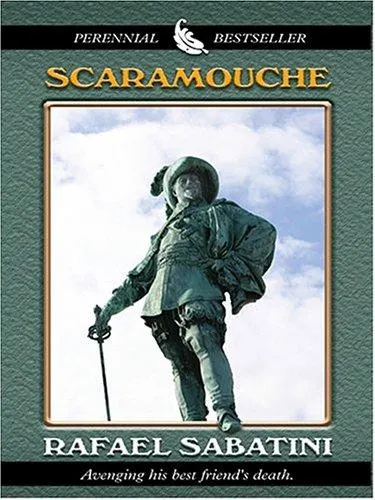
Sabatini offers the closest equivalent to Dumas’s exhilarating blend of personal grievance, historical upheaval, disguise, wit, and virtuoso adventure. After a powerful aristocrat kills his friend, André-Louis Moreau discovers that revenge requires more than courage: he must repeatedly reinvent himself, mastering words, theater, politics, and the sword.
What makes Scaramouche indispensable is the elegance of its momentum. Every new role André-Louis assumes becomes both a weapon and a revelation of character, while the French Revolution gathers force around him. Sabatini’s famous opening sentence—declaring that his hero was “born with a gift of laughter and a sense that the world was mad”—perfectly announces a novel at once romantic, sardonic, and thrilling. Few swashbucklers match its combination of intellectual combat and physical spectacle.
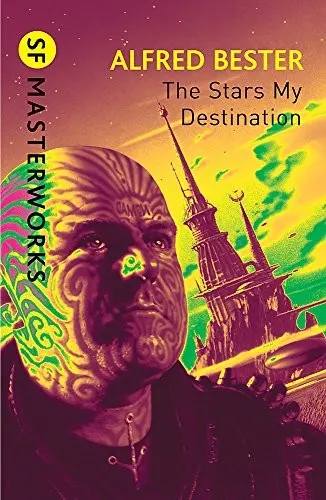
This science-fiction classic takes the engine of Monte Cristo—imprisonment, self-transformation, inexhaustible rage—and rebuilds it as something savage and futuristic. Gully Foyle begins as an abandoned, nearly inarticulate nobody, marooned in space; when rescue deliberately passes him by, vengeance awakens capacities he never knew he possessed.
Bester compresses an enormous revenge epic into a short novel that seems to accelerate as you read. Its hero’s education is thrilling but morally corrosive, and its typography, telepathy, and explosive imagery helped change what science fiction could do on the page. Devoted readers return not merely for the pursuit but for the disturbing question beneath it: if hatred remakes a man completely, who—or what—has won?

For the reader who found more than ingenious revenge in Dumas—who responded to questions of justice, mercy, fate, social cruelty, and whether a human being can truly become someone new—Hugo’s vast masterpiece is essential. It begins with a bishop’s radical compassion and Jean Valjean’s emergence from nineteen brutal years of imprisonment, then expands until private moral choices seem to carry the weight of history.
Hugo builds suspense through pursuit, concealment, coincidence, sacrifice, and spectacular reversals, but his real achievement is emotional magnitude. Paris becomes an entire moral universe, embracing criminals, children, lovers, revolutionaries, and the forgotten poor. Les Misérables has inspired generations of fierce devotion because it does what only the largest novels attempt: it makes individual lives feel both intimate and world-historical. Finishing it can leave ordinary-sized fiction feeling temporarily insufficient.
If you loved The Three Musketeers
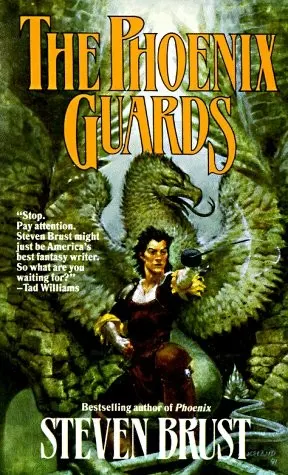
This is the recommendation for readers who loved not only what Dumas tells, but how he tells it. Brust recasts the exuberant architecture of The Three Musketeers in a fantasy empire: young Khaavren arrives in the capital, joins the guards, and acquires companions whose banter, vanity, courage, and loyalty immediately begin generating trouble.
Brust’s ceremonious narrator, comic digressions, intricate court intrigues, and gleefully prolonged conversations form an affectionate, remarkably sustained homage to Dumas’s voice. Yet the novel has its own warmth and timing, and its companions inspire the same desire to remain in their company long after the immediate danger has passed. A cult favorite within modern fantasy, it proves that the true musketeer spirit belongs less to historical France than to friendship conducted at sword point.
If you loved Twenty Years After
Captain Diego Alatriste is the sort of swordsman Dumas might have created after losing his illusions: laconic, financially precarious, lethally competent, and governed by an honor that the powerful exploit without sharing. Narrated by his young page Íñigo, the novel looks back on dangerous commissions in seventeenth-century Madrid with admiration sharpened by foreknowledge and regret.
Pérez-Reverte writes sword fights as ugly tests of nerve rather than decorative spectacle, yet he preserves the essential swashbuckling pleasures—secret errands, tavern comrades, political traps, and enemies who command respect. The novel launched a hugely popular series because Alatriste inspires the same attachment as Athos: you feel the cost of his principles even while longing to see him draw his blade again.
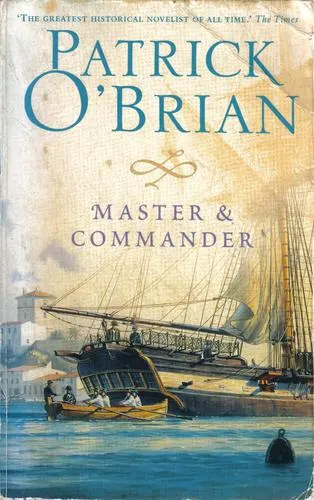
Jack Aubrey and Stephen Maturin first encounter each other at a concert and nearly quarrel; soon one commands a small naval vessel and the other serves as its surgeon. From that unlikely beginning, O’Brian builds one of historical fiction’s most beloved friendships—affectionate, argumentative, funny, and repeatedly strained by incompatible duties.
What connects it to Twenty Years After is not merely adventure but companionship under pressure. O’Brian makes institutions, war, money, and rank matter, while allowing sudden action to emerge from meticulously lived history. His dialogue has the pleasure of watching unlike temperaments parry; his characters remain fallible even when heroic. This is the entrance to a twenty-novel sequence whose readers famously finish it and begin again—a long voyage worthy of anyone who misses riding beside D’Artagnan and his friends.