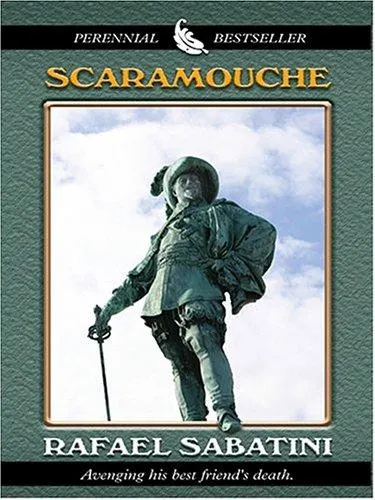
Books like Scaramouche
—because the real exhilaration lies in watching intelligence become action: rhetoric, disguise, nerve, and swordsmanship all serving the same audacious ascent. These three novels preserve that pleasure while taking it in distinct directions.
If you liked Scaramouche, you’ll love these
Not lookalikes — kindred books. Each one shares something essential with Scaramouche, and we tell you exactly what.
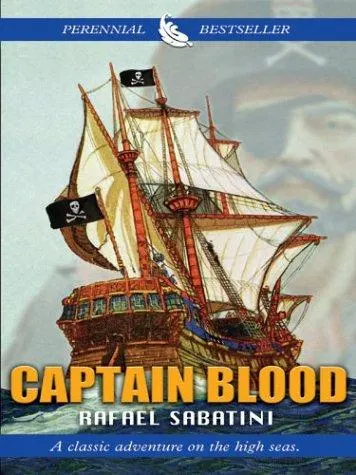
Sabatini again begins with an articulate, civilized man caught in history’s machinery. Peter Blood is a physician whose cool reason and sardonic tongue prove as formidable as his eventual command under pressure. Like André-Louis, he is driven into a succession of identities by injustice, yet refuses to surrender his private moral code.
The novel has the same elegant velocity as Scaramouche: reversals arrive cleanly, confrontations sparkle with irony, and heroic competence never becomes solemn. One of Sabatini’s defining and most frequently adapted works, Captain Blood is not a lesser repetition but a superb variation—saltier, more expansive, and crowned by one of adventure fiction’s most irresistible heroes.
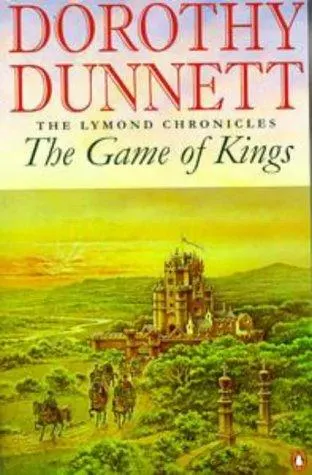
Francis Crawford of Lymond is the hero to meet if André-Louis’s dangerous eloquence was your chief delight. Returning to sixteenth-century Scotland as a disgraced outlaw, Lymond treats politics as theatre and language as a weapon. He improvises roles, orchestrates bewildering schemes, quotes in several languages, and keeps allies and enemies equally unsure of his intentions.
Dunnett demands closer attention than Sabatini, but she repays it lavishly: jokes become clues, flamboyant gestures acquire unexpected weight, and seemingly chaotic adventures reveal intricate design. This opening volume of the six-book Lymond Chronicles inspired an exceptionally devoted readership. Skip it and you miss one of historical fiction’s few protagonists who can genuinely rival Scaramouche in brilliance, showmanship, and nerve.
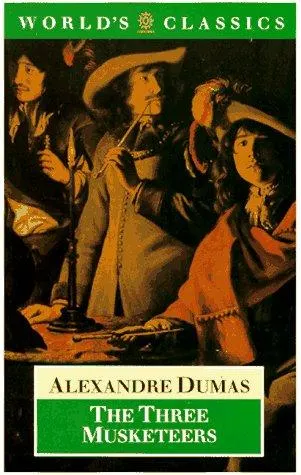
D’Artagnan arrives in Paris with a poor horse, a quick temper, and an extravagant confidence in his own destiny. From that comic entrance, Dumas turns ambition into propulsion: every insult creates an appointment, every appointment opens another intrigue, and personality itself becomes a survival skill.
What links the novel to Scaramouche is not simply fencing but its buoyant movement between wit and danger. Dumas’s heroes talk, quarrel, boast, perform, and act with equal gusto, while private loyalties collide with public power. The characters became universal archetypes, but the original novel remains funnier, sharper, and more morally complicated than its adaptations suggest. It is one of the foundational swashbucklers because it still feels joyously alive, not because later books learned to imitate it.