Author
Books like Akwaeke Emezi
8 books we recommend to Akwaeke Emezi readers, drawn from Freshwater, The Death of Vivek Oji and Pet — each with the reason why.
If you loved Freshwater
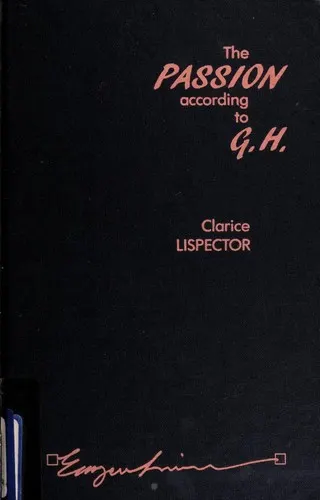
A woman enters her former maid’s room, encounters a cockroach, and finds the boundaries of her self beginning to fail. From that stark opening, Lispector turns consciousness into an ordeal: thought circles, recoils, contradicts itself, then pushes beyond ordinary ideas of the human.
A lover of Freshwater will recognize the unsettling intimacy of a voice speaking from somewhere beneath personality, where spiritual revelation and bodily disgust become inseparable. Lispector’s sentences do not merely describe transformation; they enact it. Widely regarded as one of her masterpieces, this is the rare novel radical enough to make Emezi’s metaphysical daring feel part of a larger, secret literary tradition.
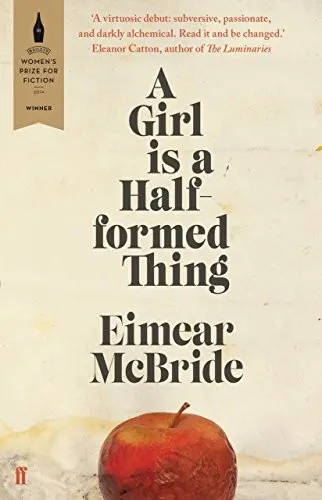
McBride gives an unnamed Irish girl a language broken open by experience: clipped phrases, mangled syntax, flashes of sensation that arrive before thought can make them respectable. The result is not decorative experimentation but consciousness written at nerve level.
Where Freshwater lets trauma fracture the speaking self into multiple presences, McBride makes fracture audible inside every sentence. The novel is brutal, intimate, and astonishingly controlled; tenderness survives in it without ever becoming consolation. Its victories at both the Baileys Women’s Prize and the formally adventurous Goldsmiths Prize confirmed what readers had already discovered: this was a debut that changed what the contemporary novel could sound like.
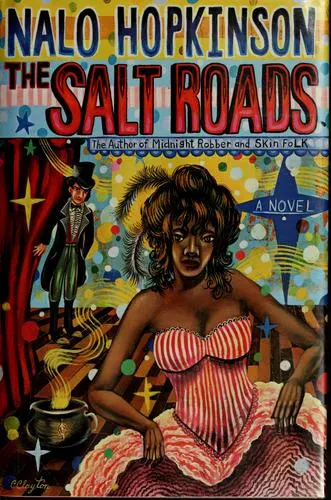
In The Salt Roads, divinity is not distant or abstract. It inhabits appetite, blood, labor, sex, memory, and the lives of Black women scattered across history. Hopkinson’s shifting voices create a world in which the spiritual and material continually enter one another, without asking permission from Western realism.
Freshwater readers will especially value the novel’s insistence that possession can be intimacy, power, inheritance, and danger at once. Yet Hopkinson’s sensibility is distinctly her own: lush, sensual, historically expansive, and alive to communal survival. A foundational figure in speculative fiction, she writes here with such imaginative authority that the novel feels less like invented mythology than recovered knowledge.
If you loved The Death of Vivek Oji
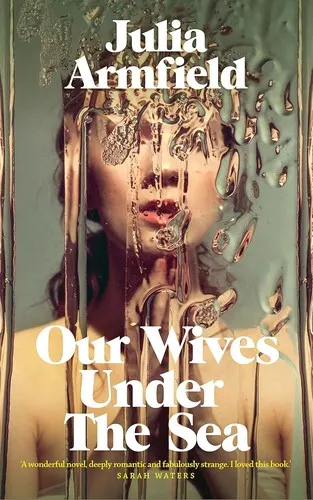
Armfield’s haunting debut follows Miri after her marine-biologist wife, Leah, returns from a deep-sea expedition profoundly changed. Its kinship with The Death of Vivek Oji lies in the terrible distance between loving someone and understanding what is happening inside them.
Armfield alternates the women’s voices, gradually turning ordinary domestic details—bathwater, groceries, shared jokes—uncanny. Like Emezi, she writes about bodily transformation without reducing it to a puzzle to be solved. The result is a queer love story and a grief novel at once: restrained, strange, and emotionally devastating. Winner of the Polari Book Prize, it has inspired the kind of readerly devotion reserved for short novels whose final resonance is much larger than their size.
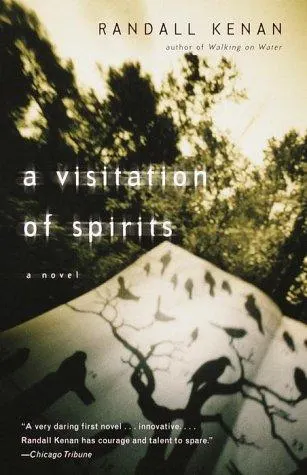
Horace Cross is a brilliant, isolated Black teenager whose sexuality collides with the expectations of his devout North Carolina family. Kenan surrounds his crisis with sermons, memories, arguments, folklore, and the voices of relatives who love him yet cannot—or will not—see him clearly.
Readers who admired Emezi’s shifting perspectives will recognize the moral force of this communal storytelling. Both novels ask how a family can cherish a person while helping create the secrecy that endangers them. But Kenan’s voice is unmistakably his own: biblical, mischievous, furious, and tender. Published in 1989 and increasingly recognized as a landmark of Black queer fiction, A Visitation of Spirits is one of those rediscovered classics that makes you wonder why it was ever allowed to slip from view.
If you loved Pet
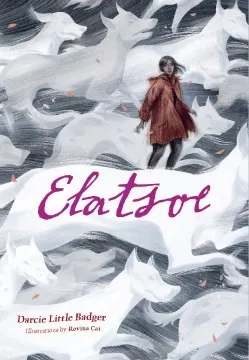
Ellie can raise the ghosts of animals, but her most cherished companion is the ghost of her dog, Kirby. When her cousin appears in a dream and says he was murdered, Ellie’s Lipan Apache family believes her—and helps her pursue the truth.
That trust is the crucial kinship with Pet. Little Badger creates a world where a young person’s knowledge is taken seriously, while asking how respectable people and pleasant towns conceal violence. Ellie’s asexuality is simply part of her, much as Jam’s transness is integral without becoming her problem to solve. Warm, witty, and quietly radical, this widely honored debut offers the rare pleasure of a supernatural mystery in which family love is a source of power rather than an obstacle.
Tavia is a siren in a society that fears and polices sirens—especially Black ones—so she has learned to keep her voice hidden. Her sister-by-choice Effie is confronting a stranger transformation of her own, while a notorious court case makes silence increasingly impossible.
Morrow turns fantasy into a precise examination of who is allowed to speak, who is believed, and whose power gets called dangerous. Readers who loved Jam’s moral courage and the bond between Jam and Redemption will recognize the fierce tenderness here: Tavia and Effie protect one another while the world tries to define them. The novel’s anger is sharp, but its friendship is sharper; its reputation among readers of contemporary Black fantasy is richly deserved.
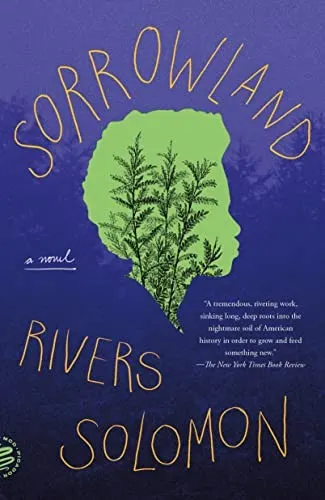
For the darker, more adult answer to Pet, read Sorrowland. Vern, a pregnant Black teenager, escapes the religious compound where she was raised and gives birth alone in the woods. Freedom does not end the compound’s hold on her, and her body soon begins changing in ways she cannot explain.
Solomon takes Pet’s destabilizing question—what if the apparent monster is the one exposing the real monsters?—and pushes it into ferocious Gothic territory. The prose is lush and bodily where Emezi’s is spare, but both novels understand that institutions survive by controlling language, memory, and belief. Solomon’s acclaimed work has earned devoted readers for precisely this combination of queer tenderness, imaginative audacity, and fury at buried violence. Sorrowland is harrowing, but it feels revelatory rather than merely bleak.