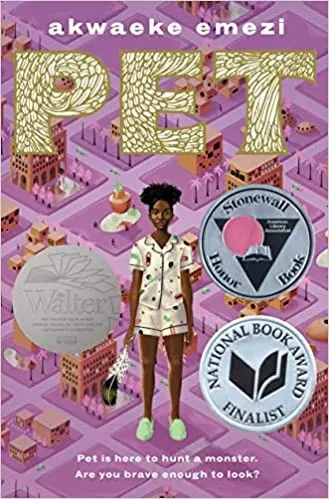
Books like Pet
You’ll find Pet’s deepest magic in stories that trust young people, question who gets labeled monstrous, and refuse to let comfortable communities look away from harm.
If you liked Pet, you’ll love these
Not lookalikes — kindred books. Each one shares something essential with Pet, and we tell you exactly what.
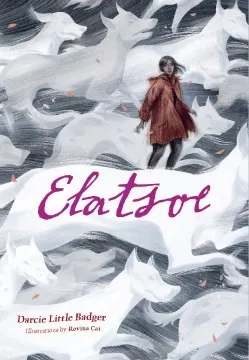
Ellie can raise the ghosts of animals, but her most cherished companion is the ghost of her dog, Kirby. When her cousin appears in a dream and says he was murdered, Ellie’s Lipan Apache family believes her—and helps her pursue the truth.
That trust is the crucial kinship with Pet. Little Badger creates a world where a young person’s knowledge is taken seriously, while asking how respectable people and pleasant towns conceal violence. Ellie’s asexuality is simply part of her, much as Jam’s transness is integral without becoming her problem to solve. Warm, witty, and quietly radical, this widely honored debut offers the rare pleasure of a supernatural mystery in which family love is a source of power rather than an obstacle.
Tavia is a siren in a society that fears and polices sirens—especially Black ones—so she has learned to keep her voice hidden. Her sister-by-choice Effie is confronting a stranger transformation of her own, while a notorious court case makes silence increasingly impossible.
Morrow turns fantasy into a precise examination of who is allowed to speak, who is believed, and whose power gets called dangerous. Readers who loved Jam’s moral courage and the bond between Jam and Redemption will recognize the fierce tenderness here: Tavia and Effie protect one another while the world tries to define them. The novel’s anger is sharp, but its friendship is sharper; its reputation among readers of contemporary Black fantasy is richly deserved.
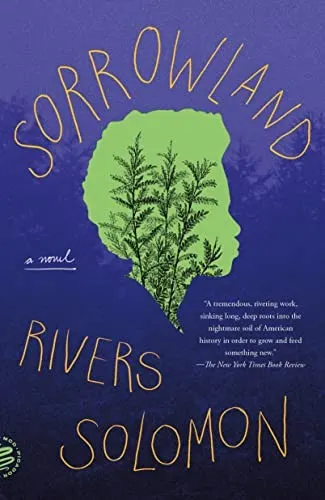
For the darker, more adult answer to Pet, read Sorrowland. Vern, a pregnant Black teenager, escapes the religious compound where she was raised and gives birth alone in the woods. Freedom does not end the compound’s hold on her, and her body soon begins changing in ways she cannot explain.
Solomon takes Pet’s destabilizing question—what if the apparent monster is the one exposing the real monsters?—and pushes it into ferocious Gothic territory. The prose is lush and bodily where Emezi’s is spare, but both novels understand that institutions survive by controlling language, memory, and belief. Solomon’s acclaimed work has earned devoted readers for precisely this combination of queer tenderness, imaginative audacity, and fury at buried violence. Sorrowland is harrowing, but it feels revelatory rather than merely bleak.