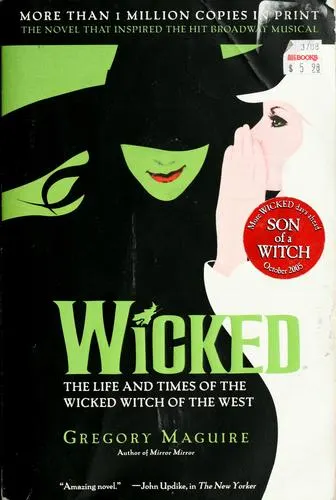
Books like Wicked
Grendel claws his way out of a heroic story that has condemned him; Lavinia speaks from the silence where an epic barely allowed her to exist. Between those extremes, these three novels offer the moral reversals, political intelligence, and fiercely imagined inner lives that make Wicked so enduring.
If you liked Wicked, you’ll love these
Not lookalikes — kindred books. Each one shares something essential with Wicked, and we tell you exactly what.
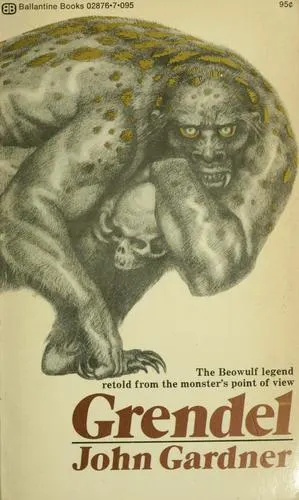
If Elphaba made you question who gets branded wicked—and who profits from the branding—Grendel is essential reading. Gardner gives the monster of Beowulf a searching, sardonic voice and lets him scrutinize the heroic world from outside its flattering songs.
The result is not a simple defense of a misunderstood villain. Grendel can be funny, cruel, lonely, intellectually ravenous, and appalled by the human talent for turning violence into glorious narrative. Gardner’s influential 1971 novel is both compact and inexhaustible: a foundational work of revisionist fiction whose philosophical bite makes every page feel dangerous. Wicked readers will recognize the exhilarating moment when an old moral certainty cracks open and reveals an entire consciousness inside.
Virgil’s Aeneid gives Lavinia scarcely a voice; Le Guin gives her a life rich enough to interrogate the epic that created her. Lavinia knows she is being imagined by a poet, yet the novel never treats that conceit as a game. It becomes a moving inquiry into fate, authorship, duty, and the difference between public legend and private truth.
Like Maguire, Le Guin approaches a canonical world with reverence sharpened by dissent. Her heroine is thoughtful rather than flamboyant, but she has Elphaba’s stubborn moral attention: she watches how prophecy and politics turn people into symbols, then insists on remaining human. Winner of the Locus Award for Best Fantasy Novel, Lavinia is among Le Guin’s most quietly commanding books—lucid, intimate, and haunting long after its final page.
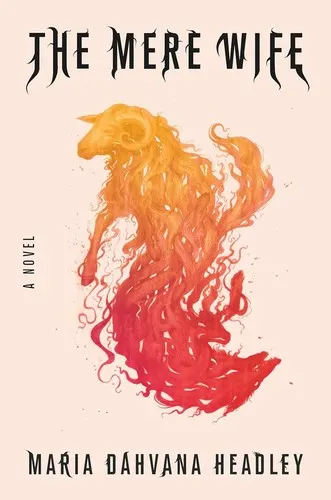
The Mere Wife transforms Beowulf into a ferocious contemporary story about mothers, monsters, inherited violence, and the communities that manufacture outsiders. Behind the gates of an immaculate suburb, respectable people preserve their order by deciding whose fear counts and whose body looks threatening.
What will grip a Wicked reader is Headley’s refusal to distribute innocence neatly. Her women are protective, compromised, furious, and capable of becoming terrifying in the name of love. The prose shifts from hallucinatory intensity to savage social comedy, giving the book some of Maguire’s theatrical energy while replacing Oz’s political machinery with wealth, surveillance, and cultivated respectability. Widely acclaimed on publication, it is the rare retelling that does not merely update its source: it exposes the old story’s machinery and makes it roar again.