Books like Twenty Thousand Leagues Under the Seas
The devoted Verne reader wants adventure to enlarge the mind: ingenious machines, exact observations, sublime natural wonders, and a commanding intelligence whose brilliance shades into danger. These three novels preserve that mixture of discovery, instruction, awe, and unease.
If you liked Twenty Thousand Leagues Under the Seas, you’ll love these
Not lookalikes — kindred books. Each one shares something essential with Twenty Thousand Leagues Under the Seas, and we tell you exactly what.
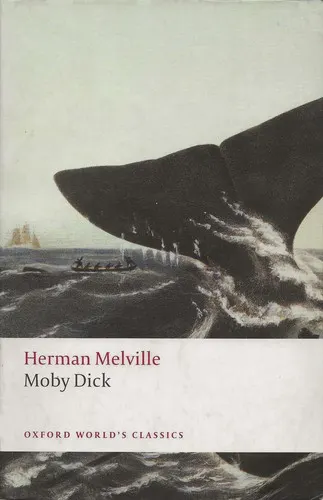
Like Verne, Melville makes the ocean both a physical world to be catalogued and an immensity that defeats explanation. His chapters on whales, ships, tools, and maritime labor are not interruptions but the machinery of the adventure: knowledge accumulates until it becomes wonder.
Captain Ahab is also a magnificent counterpart to Nemo—charismatic, intellectually formidable, wounded, and capable of bending an entire vessel to his private purpose. Yet the book’s exuberant voices and comedy keep it from becoming merely grim. Once neglected, it is now regarded as one of the supreme American novels because its whaling voyage contains science, metaphysics, farce, terror, and poetry. Anyone captivated by the Nautilus should experience the Pequod.

Solaris begins where Verne’s faith in exploration becomes most haunting: what if disciplined observation encounters something it cannot master? Scientists aboard an orbiting station study a planet covered by a seemingly intelligent ocean, but their instruments and theories only deepen the mystery.
Lem gives scientific speculation the texture of a real scholarly field—competing schools, disputed evidence, decades of failed interpretation—while maintaining an atmosphere of intimate psychological dread. This internationally acclaimed classic of philosophical science fiction offers the thrill of discovery without pretending that discovery guarantees understanding. It is the ideal next step for readers who found Nemo’s undersea realm most compelling when beauty, knowledge, and terror became inseparable.
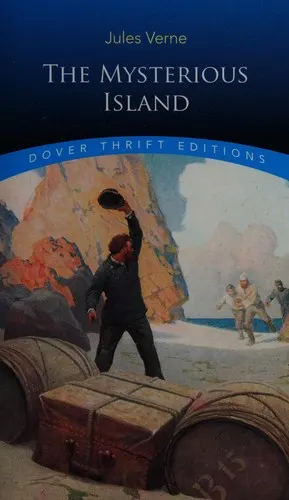
Here Verne turns scientific knowledge into the substance of survival. Five balloon escapees are stranded on an uncharted island, and their progress from near-total destitution to an increasingly sophisticated settlement provides one of fiction’s great celebrations of practical intelligence. Chemistry, engineering, agriculture, and patient observation produce the satisfactions that the Nautilus’s mechanisms do: each achievement feels earned, lucid, and almost miraculous.
But the island refuses to remain merely a problem that ingenuity can solve. Unaccountable interventions suggest a hidden design, giving the methodical adventure an undertow of mystery and moral reckoning. Often counted among Verne’s finest novels, it expands the qualities that make Twenty Thousand Leagues irresistible—and deepens their questions about power, isolation, and what human mastery is for.