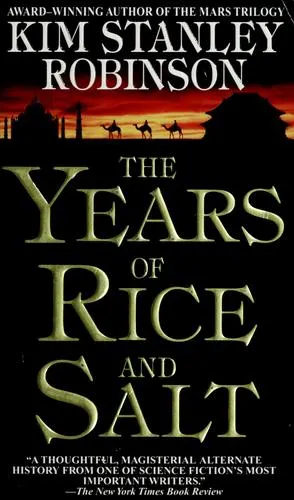
Books like The Years of Rice and Salt
History becomes a braided river here: lives vanish beneath the surface, beliefs change their names, and old struggles reappear centuries downstream in startling new forms.
If you liked The Years of Rice and Salt, you’ll love these
Not lookalikes — kindred books. Each one shares something essential with The Years of Rice and Salt, and we tell you exactly what.
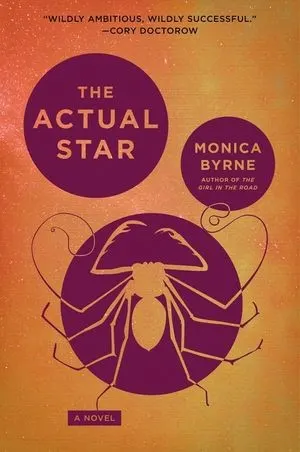
Byrne sets three narratives exactly a thousand years apart: a crisis in the Maya world of 1012, a young woman’s pilgrimage through Belize in 2012, and a post-climate society in 3012. Like Robinson, she treats religion, social organization, and personal identity as forces that evolve together—not as decorative “world-building.”
Its future is especially exhilarating: a genuine attempt to imagine humanity beyond many institutions we take for granted, complete with schisms, sacred texts, and unintended inequalities. The result has the same audacity as The Years of Rice and Salt: history viewed from outside the assumptions of modern Western civilization, with recurrence operating as both narrative architecture and spiritual mystery.
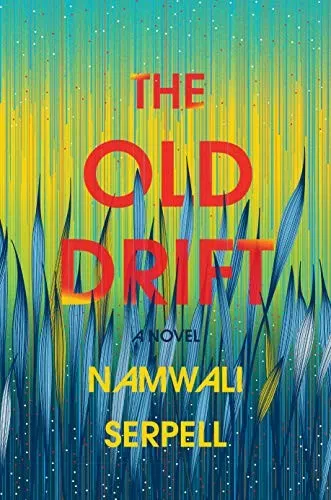
A colonial-era accident sets three Zambian families drifting across generations, while empires, dams, diseases, inventions, and political dreams gather around them. Serpell’s great trick is to make history feel simultaneously engineered and wildly accidental: grand schemes repeatedly collide with appetite, error, vanity, and love.
The novel eventually reaches into speculative futures, but it earns them through a densely inhabited past. Its chorus of mosquitoes, exuberant shifts of style, and fascination with technology give the sweep an irreverent electricity Robinson’s readers should relish. Winner of the Arthur C. Clarke Award, The Old Drift is one of those rare family epics capacious enough to contain an entire nation—and strange enough to question who gets to narrate it.
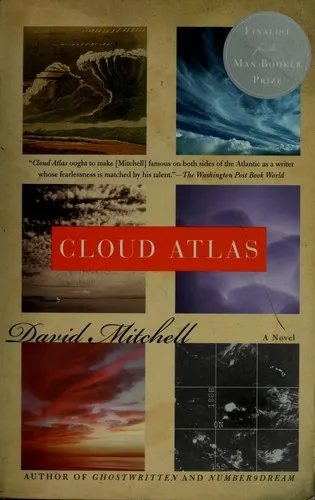
Six narratives open inside one another, moving across centuries and through radically different voices: journal, letters, thriller, comedy, interview, oral history. At first the virtuosity dazzles; gradually a harsher design becomes visible, as systems of predation recur in altered forms and small acts of resistance answer one another across time.
What links it most deeply to Robinson’s novel is its central uncertainty: does humanity progress, or merely teach domination new languages? Mitchell makes that philosophical question intimate, embedding it in endangered documents, compromised witnesses, and echoes of character that suggest continuity without reducing it to a puzzle. Booker-shortlisted and now a modern landmark, Cloud Atlas delivers both the scale of civilizational history and the private pulse that keeps such history from becoming abstraction.