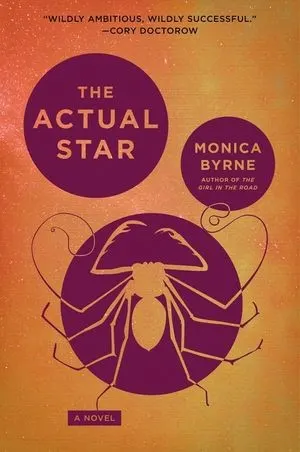
Books like The Actual Star
Readers return to The Actual Star because its three distant eras eventually feel like one urgent meditation on bodies, belief, historical memory, and the possibility of remaking humanity without erasing what made us human.
If you liked The Actual Star, you’ll love these
Not lookalikes — kindred books. Each one shares something essential with The Actual Star, and we tell you exactly what.
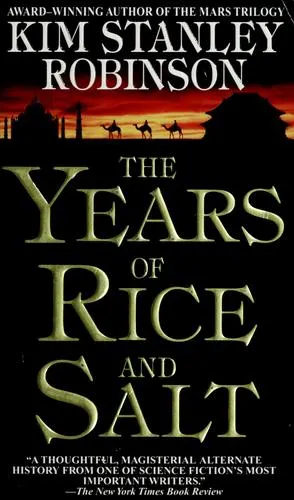
Robinson offers the rare novel with comparable civilizational reach—and makes that reach intimate. Across centuries, a small group of souls repeatedly meet in new bodies and social roles, carrying traces of affection, rivalry, and moral obligation from one life to the next. Reincarnation becomes more than a structural trick: it lets Robinson ask how people change history while history changes what a person can be.
Like Byrne, he treats religion, political organization, gender, science, and utopian thought as inseparable parts of humanity’s long experiment. Yet the book never shrinks into a thesis; its sweep is anchored by recognizable relationships and the moving persistence of imperfect souls. Often regarded as one of Robinson’s boldest novels, it is the book to read if The Actual Star left you craving another immense, humane vision of civilization unfolding across time.
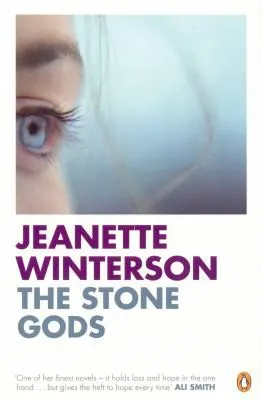
The Stone Gods compresses planetary recurrence into a fierce, glittering love story. Its worlds alter, but certain human impulses return: appetite, domination, self-deception, tenderness, and the dangerous hope that this time we might choose differently. Winterson moves between myth, science fiction, satire, and romance with exhilarating disregard for their borders.
What will particularly speak to Byrne’s readers is the novel’s conviction that desire can be both bodily and metaphysical. Winterson’s lovers encounter one another across changing identities and damaged worlds, while her sharp, aphoristic prose turns ecological catastrophe into something painfully personal. It is shorter and more concentrated than The Actual Star, but its questions reverberate just as far; few novels say so much about repeated endings—and repeated love—with such beauty.
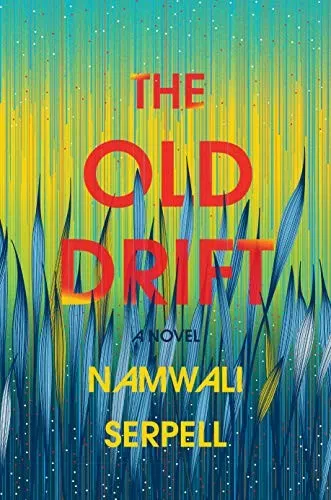
Beginning near Victoria Falls, The Old Drift follows entangled families through generations before pushing audaciously into a technologically transformed future. Serpell’s pleasures are cumulative: grudges migrate through bloodlines, accidents become legends, and private obsessions unexpectedly shape national history. Above it all hovers a strange collective voice that gives the book the atmosphere of myth being made as you read.
This is the match for readers who loved Byrne’s fearless abundance: shifting forms, sensual detail, political argument, speculative invention, and the sense that past and future are secretly composing each other. Serpell can move from intimate embarrassment to biotechnology and mass social change without losing her characters’ humanity. Winner of the Arthur C. Clarke Award, The Old Drift has earned its reputation as a dazzlingly original epic; avoiding it would mean missing one of contemporary speculative fiction’s most exhilarating acts of scale and imagination.