Author
Books like Kim Stanley Robinson
6 books we recommend to Kim Stanley Robinson readers, drawn from The Ministry for the Future and The Years of Rice and Salt — each with the reason why.
If you loved The Ministry for the Future
If Robinson’s panoramic view of climate politics was the attraction, this is the essential next book. Markley follows scientists, activists, officials, strategists, and extremists across an increasingly unstable America, showing how policy, propaganda, money, and mass movements collide.
Where Robinson is cautiously hopeful, Markley is fiercer and more emotionally punishing. Yet the novel shares his gift for making projections and institutional struggles feel like urgent human drama. Its enormous scale and unnerving plausibility have already made it a touchstone of contemporary climate fiction. It is the rare nearly nine-hundred-page novel that feels less excessive than commensurate with its subject.
Older turns governance itself into the machinery of a thriller. In her near future, most of the world has been divided into electoral districts of one hundred thousand people, governments compete for citizens, and a global information service attempts to keep democracy tethered to fact. Then another election begins.
A humanitarian aid worker and sociologist as well as a novelist, Older understands that institutions are never neutral diagrams: they are operated, exploited, defended, and improvised by fallible people. Readers who relished Robinson’s central banks, committees, legal innovations, and policy arguments will find the same pleasure here at a faster, tauter pace. The devoted following around Older’s Centenal Cycle reflects how unusual it is to encounter political science fiction this ingenious—and this exciting.
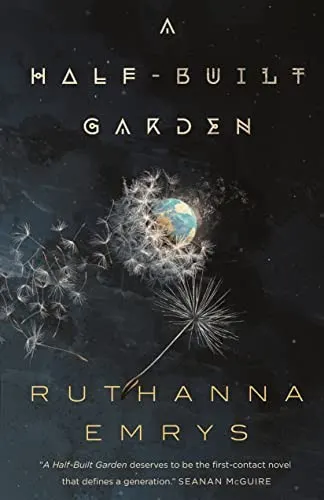
Emrys begins with a community that has already started doing what Robinson asks humanity to attempt: rebuilding damaged ecosystems through local cooperation, shared technology, and new forms of collective decision-making. Then first contact forces its members to defend not merely Earth, but their unfinished experiment in living differently.
This is the warmest recommendation of the three. Its negotiations unfold through families, watershed networks, competing political cultures, and radically different ideas about care. Emrys makes consensus, domestic labor, and ecological stewardship feel intellectually adventurous rather than quaint. Like Robinson, she treats hope not as optimism but as difficult infrastructure—something people must design, maintain, and argue over. Few novels make a still-repairable future feel so tangible.
If you loved The Years of Rice and Salt
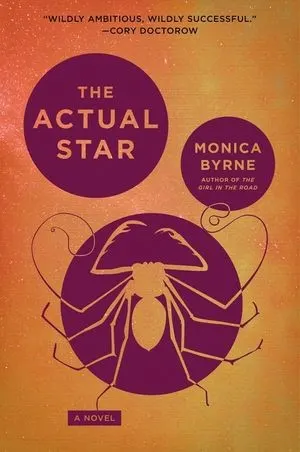
Byrne sets three narratives exactly a thousand years apart: a crisis in the Maya world of 1012, a young woman’s pilgrimage through Belize in 2012, and a post-climate society in 3012. Like Robinson, she treats religion, social organization, and personal identity as forces that evolve together—not as decorative “world-building.”
Its future is especially exhilarating: a genuine attempt to imagine humanity beyond many institutions we take for granted, complete with schisms, sacred texts, and unintended inequalities. The result has the same audacity as The Years of Rice and Salt: history viewed from outside the assumptions of modern Western civilization, with recurrence operating as both narrative architecture and spiritual mystery.
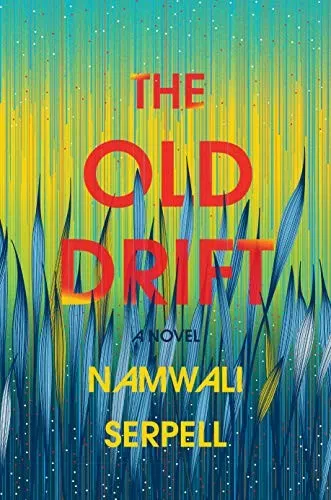
A colonial-era accident sets three Zambian families drifting across generations, while empires, dams, diseases, inventions, and political dreams gather around them. Serpell’s great trick is to make history feel simultaneously engineered and wildly accidental: grand schemes repeatedly collide with appetite, error, vanity, and love.
The novel eventually reaches into speculative futures, but it earns them through a densely inhabited past. Its chorus of mosquitoes, exuberant shifts of style, and fascination with technology give the sweep an irreverent electricity Robinson’s readers should relish. Winner of the Arthur C. Clarke Award, The Old Drift is one of those rare family epics capacious enough to contain an entire nation—and strange enough to question who gets to narrate it.
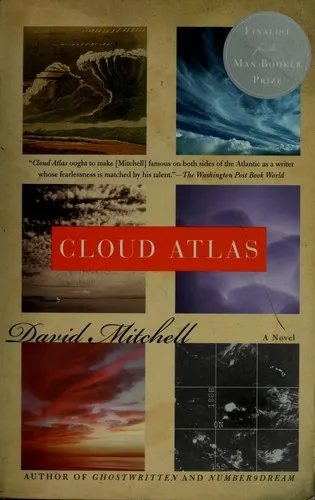
Six narratives open inside one another, moving across centuries and through radically different voices: journal, letters, thriller, comedy, interview, oral history. At first the virtuosity dazzles; gradually a harsher design becomes visible, as systems of predation recur in altered forms and small acts of resistance answer one another across time.
What links it most deeply to Robinson’s novel is its central uncertainty: does humanity progress, or merely teach domination new languages? Mitchell makes that philosophical question intimate, embedding it in endangered documents, compromised witnesses, and echoes of character that suggest continuity without reducing it to a puzzle. Booker-shortlisted and now a modern landmark, Cloud Atlas delivers both the scale of civilizational history and the private pulse that keeps such history from becoming abstraction.