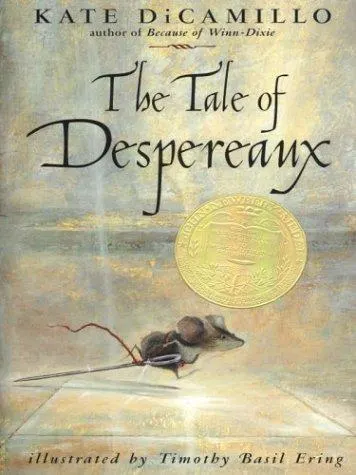
Books like The Tale of Despereaux
Russell Hoban’s clockwork mice travel through a harsher, stranger world than Kelly Barnhill’s moonlit heroine, but both novels share Despereaux’s faith that tenderness can survive cruelty. Kate DiCamillo’s own Edward Tulane then offers the most intimate variation on that idea: a small, unlikely hero learning what a brave heart costs.
If you liked The Tale of Despereaux, you’ll love these
Not lookalikes — kindred books. Each one shares something essential with The Tale of Despereaux, and we tell you exactly what.
A clockwork father-and-son pair can move only when someone winds them, yet they dream of becoming self-winding and finding a real home. That fragile ambition has the same magnificent disproportion as Despereaux’s chivalric hopes: tiny creatures insist on pursuing love and freedom in a world that considers them disposable.
Hoban’s 1967 novel is stranger and more philosophically unsettling than most children’s fiction. Its dangers are genuine, its villain unforgettable, and its tenderness never sentimental. Long cherished as a modern classic, it gives devoted readers what DiCamillo does at her best: sorrow without despair, comedy beside terror, and proof that helplessness is not the opposite of courage.
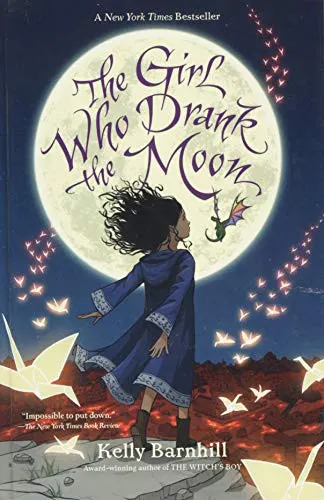
Every year, a sorrowful community abandons a baby as an offering to a witch. The witch, who knows nothing of this bargain, rescues the children—and one year accidentally feeds a baby moonlight instead of starlight. From that luminous opening, Barnhill builds a fairy tale about stories that imprison people, love that liberates them, and grief that changes the shape of a whole world.
A lover of Despereaux will recognize the mixture of darkness, narrative playfulness, grotesque comedy, and radiant moral seriousness. Barnhill’s language makes magic feel both wondrous and emotionally exact, while her characters resist the simple labels of monster, witch, hero, and victim. Winner of the Newbery Medal, this is one of the rare recent fantasies whose acclaim matches its enchantment.
Edward Tulane is an exquisitely made china rabbit who is deeply admired—and almost entirely absorbed in himself. DiCamillo treats that comic vanity with the same clear-eyed compassion she gives Despereaux, Roscuro, and Miggery Sow. Once again, an artificial or seemingly insignificant creature becomes the center of a grave, beautifully told inquiry into love.
The kinship lies especially in DiCamillo’s voice: formal yet intimate, unafraid to address the reader, and able to make a simple sentence land like a bell. The Boston Globe–Horn Book Award winner is more concentrated and piercing than Despereaux, but it shares its conviction that suffering can enlarge rather than extinguish the heart. Readers who love DiCamillo’s blend of fable, sorrow, and hard-won hope should not miss its purest expression.