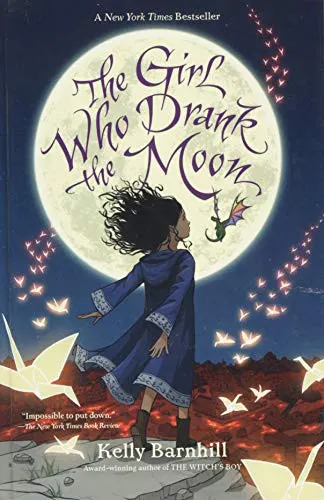
Books like The Girl Who Drank the Moon
You’ll find the same potent mixture here: fairy-tale wonder edged with danger, children confronting the stories adults use to control them, and love powerful enough to remake a wounded world.
If you liked The Girl Who Drank the Moon, you’ll love these
Not lookalikes — kindred books. Each one shares something essential with The Girl Who Drank the Moon, and we tell you exactly what.
Barnhill’s National Book Award finalist is the clearest companion to The Girl Who Drank the Moon—not because it repeats its plot, but because it returns to Barnhill’s deepest question: who benefits when a community believes the wrong story?
In a town curdled by suspicion, a generous ogress and the children of a ramshackle orphanage become unlikely centers of resistance. Barnhill again makes abstract evils tangible: propaganda sounds like gossip, selfishness masquerades as leadership, and kindness accumulates through bread, tools, gardens, and shared work. The narration has her characteristic fireside intimacy and sly humor. If you loved watching Luna’s story expose the machinery of fear, this generous, politically sharp fable is indispensable.
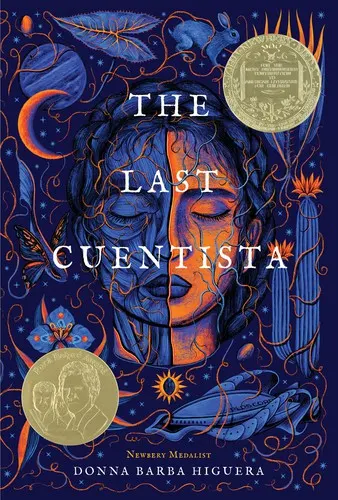
Imagine the power Barnhill gives stories—their ability to preserve truth, distort memory, and defy authority—carried into a haunting science-fiction future. Petra Peña leaves Earth with her family aboard a ship bound for another planet, carrying with her the cuentos told by her grandmother. When she wakes, she discovers a society determined to erase the past and standardize human thought.
Winner of both the Newbery Medal and the Pura Belpré Author Award, The Last Cuentista earns its acclaim through its fierce faith in storytelling. Petra’s tales are not ornamental: they hold identity, danger, improvisation, and hope. The novel is more severe than Barnhill’s, but it shares her conviction that imagination is a form of resistance—and that the stories dismissed as childish may be the ones that save us.
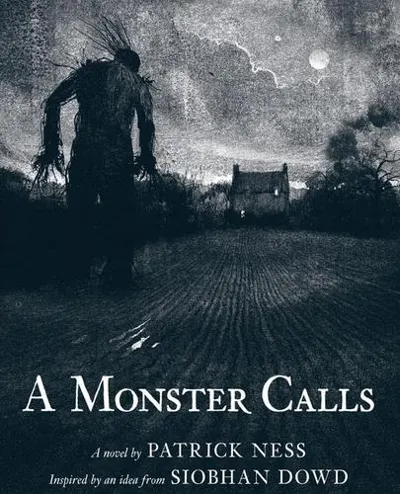
This is the choice for readers most moved by Barnhill’s understanding that children can survive terrible truths, while well-meant lies may harm them. Shortly after midnight, a monster comes to thirteen-year-old Conor and promises to tell him three stories. In return, Conor must eventually tell his own.
Patrick Ness writes with startling clarity about grief, anger, guilt, and the contradictory things a person can feel at once. Like The Girl Who Drank the Moon, the novel uses fantastical storytelling not as an escape from pain but as the only language large enough to contain it. With Jim Kay’s shadowy illustrations, it became the first book whose author and illustrator won the Carnegie and Greenaway Medals in the same year. Its ending is devastating but deeply merciful; many readers finish it in tears and keep it for life.