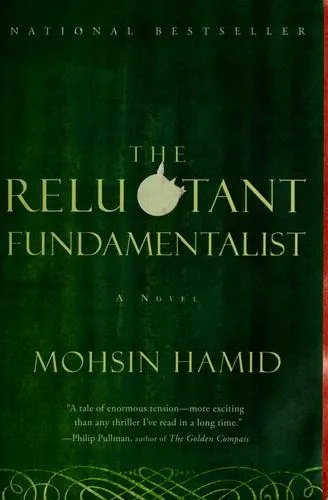
Books like The Reluctant Fundamentalist
When a charming stranger tells you how history remade him, are you hearing a confession, a defense—or a threat? These novels recreate Hamid’s potent mixture of intimacy, political argument, seduction, and doubt.
If you liked The Reluctant Fundamentalist, you’ll love these
Not lookalikes — kindred books. Each one shares something essential with The Reluctant Fundamentalist, and we tell you exactly what.
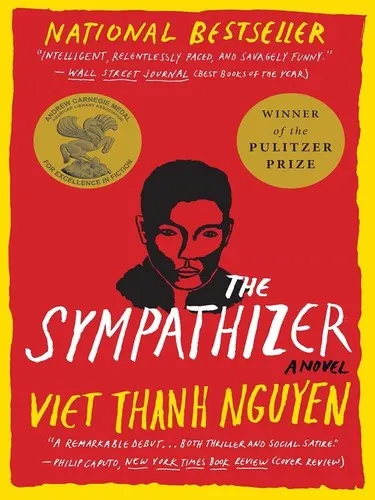
Like Changez, Nguyen’s unnamed narrator is divided not simply between countries but between incompatible versions of himself. A communist double agent embedded in the defeated South Vietnamese regime, he begins his Pulitzer Prize-winning confession with the proud declaration that he is “a man of two minds.” His divided vision makes him both extraordinarily perceptive and dangerously adept at self-justification.
Nguyen combines the intellectual tension of The Reluctant Fundamentalist with savage comedy, espionage, and an assault on the comforting stories America tells about its wars. Every brilliant sentence asks whether eloquence reveals the truth or merely makes deception irresistible. Few novels make political analysis feel this thrillingly personal.

If Hamid’s dramatic address held you captive, meet Balram Halwai. Over seven nights, an Indian chauffeur writes to the Chinese premier, explaining how he escaped servitude and became an entrepreneur. His voice is funny, ingratiating, furious, and morally appalling—often within the same paragraph.
Adiga’s Booker Prize winner shares Hamid’s fascination with the violence concealed inside success stories. Balram understands capitalism from underneath, where ambition requires compromises that respectable beneficiaries prefer not to see. The result is a compulsively readable monologue that recruits you as confidant, judge, and unwilling accomplice.
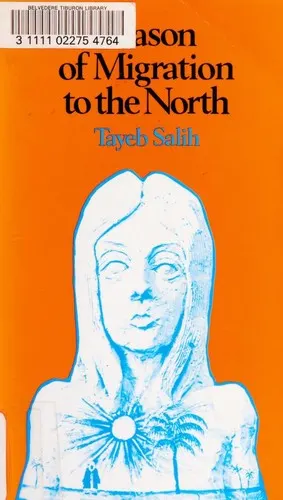
A young Sudanese man returns from Europe to his village on the Nile and becomes fascinated by Mustafa Sa’eed, a reserved newcomer whose cultivated manner hints at a disturbing history abroad. From that encounter, Tayeb Salih builds a short, feverishly intense novel about colonialism’s afterlife in desire, masculinity, and self-invention.
This modern Arabic classic offers the same unnerving reversal that gives Hamid’s novel its force: the West is no longer the neutral observer but the object of scrutiny, fantasy, resentment, and judgment. Salih’s prose is sensuous where Hamid’s is urbane, yet both leave crucial motives suspended in ambiguity. Season of Migration to the North does not resolve its contradictions; it lodges them in the reader, which is why the novel remains so haunting.