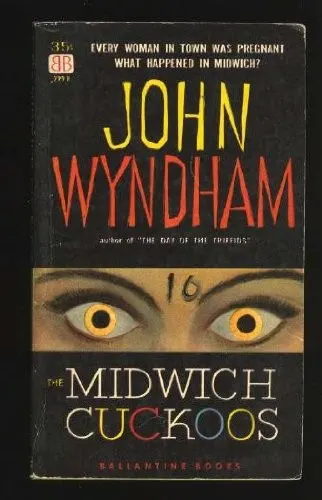
Books like The Midwich Cuckoos
What do decent people owe a new kind of human being when its very existence may make their own impossible? These three novels turn that dilemma in sharply different directions.
If you liked The Midwich Cuckoos, you’ll love these
Not lookalikes — kindred books. Each one shares something essential with The Midwich Cuckoos, and we tell you exactly what.
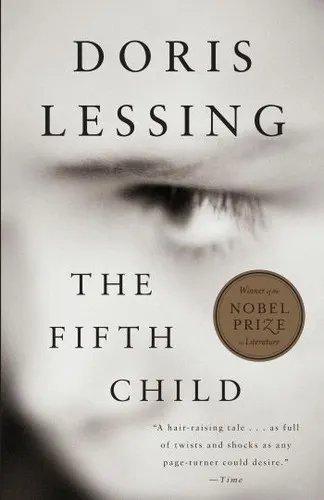
Lessing brings Midwich’s species-level unease inside one family. Harriet and David build an aggressively happy, conventional household, only for their fifth child to seem physically and emotionally beyond every parental expectation. Is he damaged, malevolent, misunderstood—or simply something for which ordinary human love has no language?
The prose is spare and pitiless, exposing how quickly compassion becomes conditional when a child threatens the community built to nurture him. Lessing, a Nobel laureate, never provides the comfort of a clear diagnosis. Few short novels leave such a stubborn moral bruise.
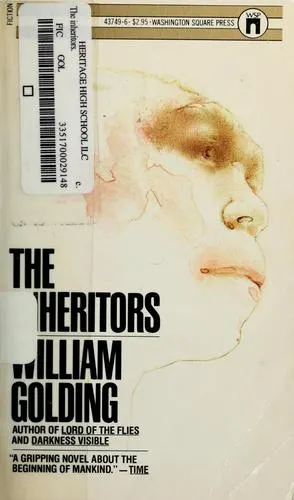
Golding reverses Wyndham’s perspective: instead of watching humanity confront a possible successor, we inhabit the bewildered minds of a people facing creatures more cunning and dangerous than themselves. The result is not conventional prehistoric adventure but a radical experiment in sympathy, perception, and evolutionary terror.
Golding considered it among his finest books, and its strange, sensuous language justifies that confidence. It deepens Midwich’s darkest question: does survival prove a species’ fitness—or merely its capacity for violence?
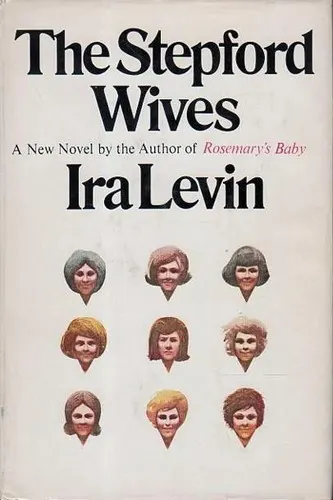
Levin shares Wyndham’s gift for making horror sound almost reasonable. Joanna Eberhart moves to an immaculate suburb whose pleasantness gradually acquires a sinister precision. Like Midwich, Stepford is a self-contained community where social rituals, courteous conversation, and practical organization become instruments of menace.
The novel is lean, witty, and controlled; Levin wastes no scene and rarely raises his voice. Its central idea became part of the language, but the original remains sharper than its countless imitations—a devastating demonstration that civilized normality can conceal barbarism without ever losing its smile.