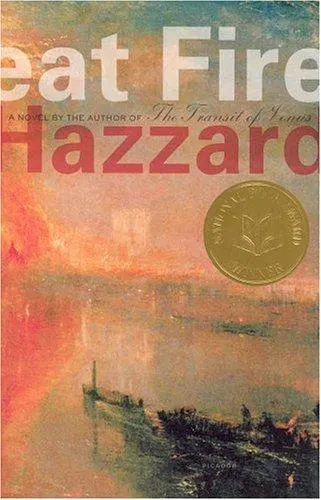
Books like The Great Fire
In The Great Fire, history’s ruins are not scenery: they test whether love can remain honorable when nearly every institution around it has failed.
If you liked The Great Fire, you’ll love these
Not lookalikes — kindred books. Each one shares something essential with The Great Fire, and we tell you exactly what.
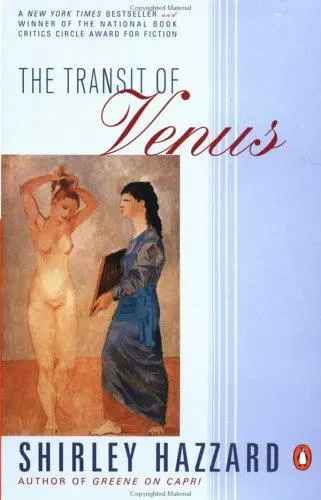
Hazzard’s other great novel is the essential next step—not a rehearsal of The Great Fire, but a darker, more intricately engineered expression of the same moral imagination. Two Australian sisters enter English life carrying very different expectations of love, and Hazzard follows the consequences across decades with astonishing control.
The sentences have the familiar poise and sudden sting, while every polished social encounter conceals a contest over loyalty, power, or self-deception. Winner of the National Book Critics Circle Award and widely regarded as Hazzard’s masterpiece, The Transit of Venus rewards rereading because its apparently casual details prove exact. To love Hazzard’s intelligence and not read this is to miss her at her most formidable.
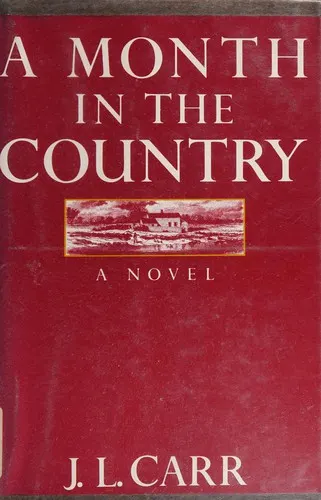
Like Aldred Leith, Tom Birkin has survived a war without escaping it. In the summer of 1920, he comes to a Yorkshire village to uncover a medieval church painting; the patient work, the landscape, and the possibility of companionship begin to restore sensations he thought had been destroyed.
Carr never sentimentalizes recovery. Feeling accumulates through weather, meals, manual labor, and what people cannot quite bring themselves to say. This brief novel—winner of the Guardian Fiction Prize and shortlisted for the Booker—has become a quiet classic because its restraint makes its final emotional force almost unbearable. It offers the same rare pleasure as The Great Fire: beauty made more precious, not less, by an exact knowledge of loss.
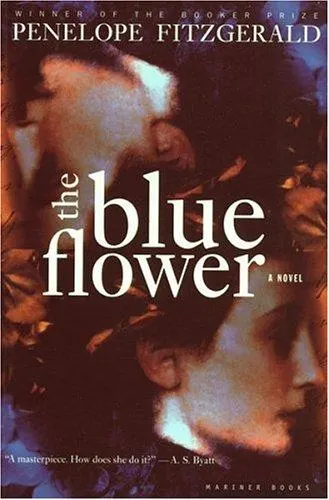
The kinship here lies in the treatment of love as an intellectual and moral mystery. In late-eighteenth-century Germany, the young thinker who will become the poet Novalis decides that the seemingly ordinary Sophie von Kühn is his destiny. Fitzgerald neither explains away his conviction nor turns it into conventional romance; she makes the reader inhabit its strangeness.
Her method is quicker and more comic than Hazzard’s, but equally exact: a household, a philosophy, or a character can spring alive in half a sentence. The historical world feels used, muddy, argumentative, and immediate rather than decoratively reconstructed. The Blue Flower won the National Book Critics Circle Award and is often considered Fitzgerald’s finest novel. Readers drawn to Hazzard’s union of ardor, intelligence, and unsparing judgment will find it indispensable.