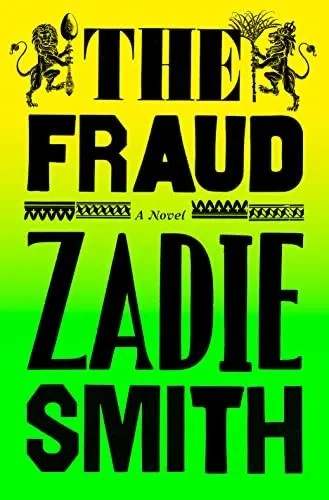
Books like The Fraud
William Ainsworth’s ceiling crashes down, and a respectable Victorian interior abruptly reveals its rotten supports. These three novels share The Fraud’s deeper pleasures: historical ventriloquism, moral comedy, and a fascination with the stories societies tell to conceal their foundations.
If you liked The Fraud, you’ll love these
Not lookalikes — kindred books. Each one shares something essential with The Fraud, and we tell you exactly what.
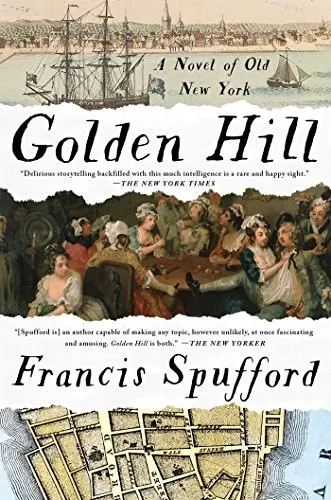
A mysterious young man arrives in 1746 New York carrying an enormous bill of exchange, and everyone must decide whether he is wealthy, dangerous, or simply a fraud. Spufford turns that uncertainty into a wonderfully nimble comedy of money, manners, theatre, and self-invention.
Like Smith, he recreates an earlier literary world without becoming trapped inside pastiche. The language has period exuberance, but the novel’s intelligence is unmistakably modern: it notices whose freedom supports everyone else’s performance and what a supposedly open society prefers not to see. Winner of the Costa First Novel Award, Golden Hill is both an ingenious entertainment and a moral trapdoor—the kind of book whose full design becomes visible only after it has already delighted you.
McBride gives the story of abolitionist John Brown to Henry Shackleford, an enslaved child who survives through disguise, improvisation, and magnificent unreliability. Henry’s voice is fast, shameless, frightened, and extremely funny; history becomes not a solemn procession of important men but a scramble of misunderstandings, appetites, legends, and desperate acts.
A lover of The Fraud will recognize the audacity of using comedy to approach racial violence without diminishing it. McBride dismantles heroic mythology while discovering something genuinely moving inside it, and he makes the marginal witness more compelling than the official record. The novel won the National Book Award, deservedly: few historical novels are this entertaining sentence by sentence, and fewer still make laughter feel like a form of historical correction.
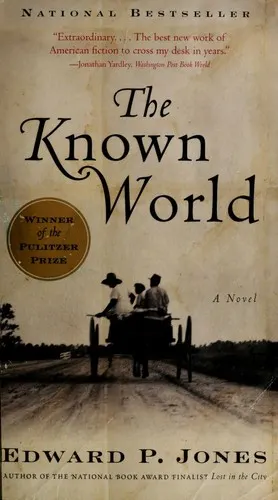
Jones begins with the death of Henry Townsend, a Black slaveholder in antebellum Virginia, then opens outward into the lives bound to his plantation and community. The central contradiction is startling, but Jones refuses to treat it as a clever historical anomaly. Instead, he shows an entire moral system teaching people to mistake ownership, law, and custom for reality.
Where The Fraud questions testimony and public narrative, The Known World quietly undermines the authority of history itself. Its omniscient narrator invokes imaginary maps, censuses, and later scholars, moving through time with an almost biblical assurance while exposing how incomplete every record must be. Jones’s deadpan irony and profound attention to minor lives earned the novel the Pulitzer Prize and enduring critical devotion. It is one of those rare books that seems not merely researched but fully inhabited—a world you cannot forget once you have entered it.