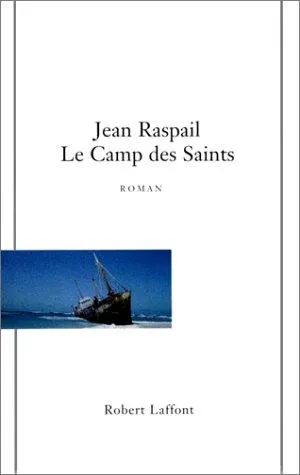
Books like The Camp of the Saints
If Raspail gripped you with his prophetic fury, taboo-breaking satire, and vision of a civilization helping to undo itself, these three novels carry that unsettling energy in richer and sharply contrasting directions.
If you liked The Camp of the Saints, you’ll love these
Not lookalikes — kindred books. Each one shares something essential with The Camp of the Saints, and we tell you exactly what.
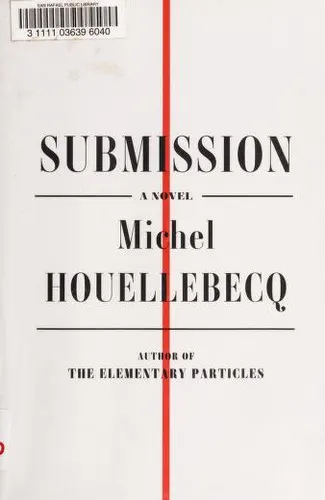
Houellebecq offers the closest match in sheer provocative electricity. His France does not fall through conquest so much as through exhaustion: careerism, loneliness, political bargaining, and a ruling class that can accommodate almost anything except conviction. The narrator, a spiritually vacant academic, makes an ideal witness because his private appetites and evasions mirror the culture around him.
A bestseller whose publication became a major European controversy, Submission is far more ambiguous than its reputation as a tract suggests. Its mordant comedy keeps turning into disquiet, and its most consequential developments arrive not with martial spectacle but with reasonable voices and attractive compromises. If Raspail’s depiction of elite paralysis fascinated you, Houellebecq’s quieter, slyer anatomy of surrender is indispensable.
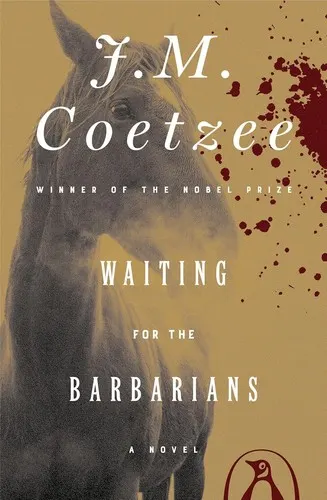
Coetzee begins at a remote imperial outpost where rumors of an approaching enemy give officials permission to abandon restraint. Through the aging magistrate who administers the settlement, the novel asks a devastating question: does a civilization reveal its strength when threatened, or merely expose the brutality it had concealed beneath ceremony and law?
This modern classic has the concentrated force of myth. Coetzee—later awarded the Nobel Prize—writes with icy precision, stripping civilizational panic down to its moral essentials. Readers drawn to Raspail’s siege atmosphere and contempt for institutional self-deception will recognize the pressure, but Coetzee reverses the lens often enough to make every certainty dangerous. It is brief, severe, and almost impossible to shake.
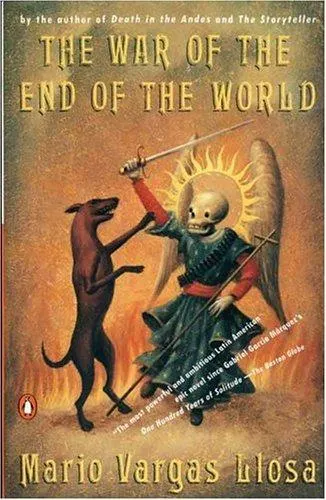
For the apocalyptic sweep of The Camp of the Saints, read Vargas Llosa’s immense novel of Canudos, where religious visionaries, soldiers, landowners, journalists, and political ideologues collide in the Brazilian backlands. Each faction mistakes its own explanation for reality; every attempt to impose order makes catastrophe more likely.
Often regarded as one of the Nobel laureate’s greatest achievements, the novel has the scale of an epic and the momentum of a nightmare. Vargas Llosa does not offer the comfort of a single prophetic viewpoint: he lets incompatible convictions become fully persuasive before smashing them together. The result is a ferocious study of mass belief, civilizational fear, and the lethal vanity of elites—a book that delivers Raspail’s sense of historical emergency while surpassing it in human breadth.