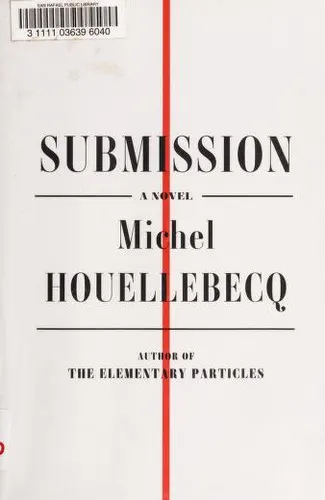
Books like Submission
How much of himself—and of the world he claims to value—will a man surrender in exchange for comfort, status, and freedom from conviction? These three novels pursue that question with the same unsettling mixture of intelligence, comedy, and moral disgust.
If you liked Submission, you’ll love these
Not lookalikes — kindred books. Each one shares something essential with Submission, and we tell you exactly what.
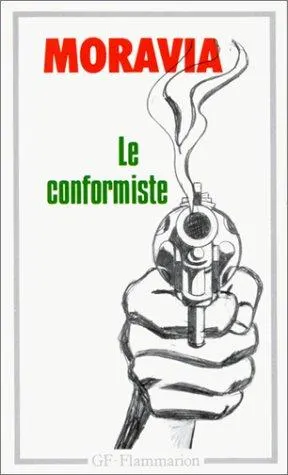
Marcello Clerici does not embrace fascism from passionate belief; he wants the shelter of normality. Respectability, marriage, career, and obedience promise to quiet his sense that something in him is fundamentally wrong. That makes Moravia’s novel a near-perfect companion to Submission: both understand political capitulation as an intimate bargain before it becomes an ideological one.
Moravia’s cool, lucid prose never lets Marcello’s explanations harden into excuses. The result, widely regarded as one of the essential novels of Italian fascism, is less a historical lesson than a ruthless anatomy of accommodation. Bertolucci’s celebrated film is magnificent, but the novel’s access to Marcello’s evasive mind makes it even more disturbing.
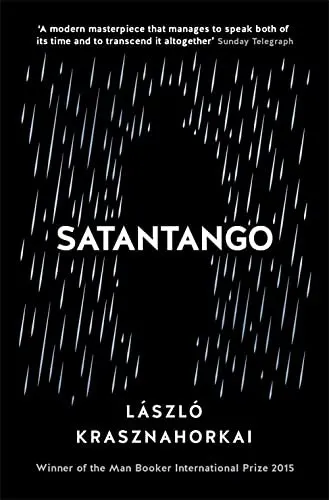
On a ruined Hungarian collective farm, a community sunk in mud, drink, suspicion, and inertia learns that a charismatic man they believed dead may be returning with a plan. Krasznahorkai captures the moment when exhaustion becomes credulity: people who no longer expect happiness will submit eagerly to anyone who can make their surrender feel like hope.
Like Houellebecq, he is ferociously funny about human degradation without offering the reader an easy position of superiority. His long, hypnotic sentences turn social collapse into a kind of infernal dance. Satantango has grown from a cult novel into a modern classic—helped by Béla Tarr’s legendary adaptation and by Krasznahorkai’s international stature—but its real power remains disconcertingly private: it makes you recognize how badly people want to be relieved of freedom.
Peter Kien, a renowned sinologist, has sealed himself inside a vast private library, treating books as more real and manageable than other people. When domestic life breaches his fortress, his erudition proves no defense against vanity, appetite, resentment, or manipulation. Readers drawn to François—the literary specialist whose intelligence chiefly helps him rationalize passivity—will recognize Canetti’s far more grotesque version of the same intellectual failure.
Canetti’s only novel is savage, claustrophobic, and outrageously comic, peopled by characters whose private delusions collide until they resemble an entire diseased society. Written before Europe’s catastrophe and later overshadowed by Canetti’s Nobel-winning reputation as an essayist, it now reads like one of the twentieth century’s fiercest warnings that culture possessed is not the same as culture lived.