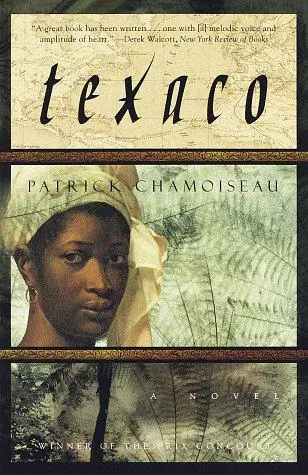
Books like Texaco
Texaco knows that a neighborhood can be an archive, a woman’s voice a counter-history, and language itself the ground on which conquest is resisted.
If you liked Texaco, you’ll love these
Not lookalikes — kindred books. Each one shares something essential with Texaco, and we tell you exactly what.
On Trinidad’s Calvary Hill, Aldrick devotes himself to creating the dragon costume he will wear at Carnival. Lovelace treats that performance not as local color but as a vessel for rage, pride, memory, and the precarious dignity of an impoverished community.
Like Texaco, this beloved Caribbean classic makes collective life its true protagonist. Its speech has rhythm without becoming decorative, and its neighbors are rendered with unsentimental intimacy: comic, vain, wounded, inventive. Lovelace asks what happens when resistance becomes ritual—and whether ritual can still change the world. The result is leaner than Texaco but carries the same conviction that people pushed to the margins can create a culture powerful enough to answer history.
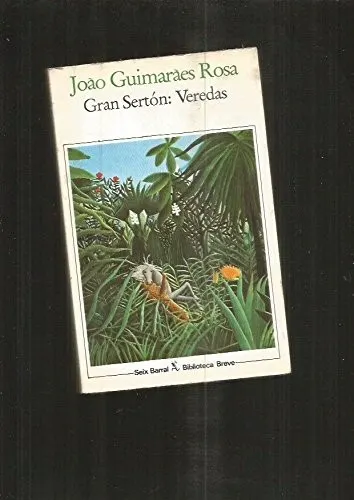
Riobaldo, a former jagunço, tells his life to a silent visitor in a voice that seems to invent its language as it goes. Syntax twists, proverbs mutate, philosophy erupts from remembered violence: the telling is not a container for experience but the experience itself.
That makes Guimarães Rosa’s masterpiece an extraordinary next book after Texaco. Both novels transform supposedly peripheral territory into the imaginative center of a nation, and both distrust any polished official language that claims to explain the lives found there. Yet Rosa’s backlands are stranger and more metaphysical, haunted by one question Riobaldo cannot stop circling. Regarded as a summit of Brazilian literature, it is the rare novel whose linguistic audacity can make even Chamoiseau’s admirers feel they have discovered new possibilities for fiction.
During Carnival, the great oral storyteller Solibo collapses before his audience, and the authorities arrive determined to force what happened into their own crude categories. From that opening, Chamoiseau builds a mischievous collision between living speech, bureaucratic language, police power, and the writer’s impossible desire to preserve a voice on the page.
Solibo Magnificent is more compact and sharply comic than Texaco, but it exposes the artistic problem beneath the later novel: how can writing honor an oral culture without embalming it? Chamoiseau’s answer is a book full of interruptions, competing accounts, Creole energies, and verbal play. Read after Texaco, it feels less like a minor companion than a key placed in your hand—the novel that lets you see more clearly what Chamoiseau risked, and achieved, in his masterpiece.