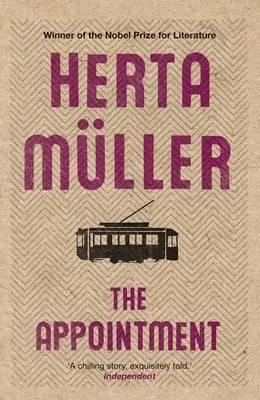
Books like The Appointment
Thursday at ten sharp waits at the end of a tram ride, while every jolt of the carriage shakes loose another dangerous memory.
If you liked The Appointment, you’ll love these
Not lookalikes — kindred books. Each one shares something essential with The Appointment, and we tell you exactly what.
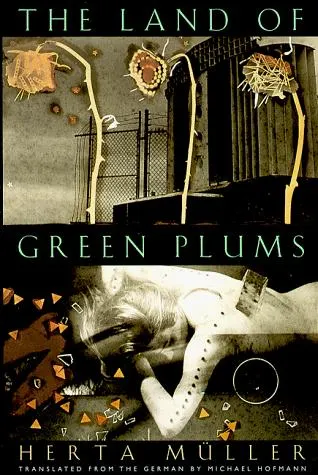
Here Müller expands the solitary dread of The Appointment into the story of several young friends learning that dictatorship contaminates friendship, desire, language, and even perception. Everyday things—belts, handkerchiefs, fruit—acquire the menace of evidence. Her clipped, uncanny images again make fear feel physical without reducing anyone to a political symbol.
Winner of the International Dublin Literary Award, this is among Müller’s defining novels. If The Appointment showed you how an interrogation can occupy an entire consciousness, The Land of Green Plums shows how a regime can occupy a whole circle of lives.

A single refusal—spoken by a Jewish writer when asked whether he wants a child—opens into a furious, circling monologue about marriage, survival, and the afterlife of historical violence. Like Müller, Kertész understands that oppression does not remain in government offices: it enters syntax, reflexes, love, and the stories people tell about themselves.
Where Müller’s sentences cut like shards, Kertész’s gather into breathless waves, repeatedly returning to the same wound and finding it altered. The moral intensity that later helped earn him the Nobel Prize is concentrated here in a short novel whose voice is almost impossible to escape once it begins.

The novel begins with a confession: the narrator believes she killed Emerence, the formidable housekeeper who governed her own life with absolute secrecy. From there Szabó constructs an intimate contest of loyalty, pride, dependence, and betrayal. A locked door becomes as charged as Müller’s tram or summons—not a mere symbol, but an object around which fear and power continually rearrange themselves.
The Door replaces the interrogation room with a relationship, yet it produces the same agonizing uncertainty about what one person owes another under pressure. Widely regarded as Szabó’s masterpiece, it won the Prix Femina étranger and became the book through which many English-language readers discovered one of Hungary’s great novelists. Its final judgment on love and good intentions is devastating.