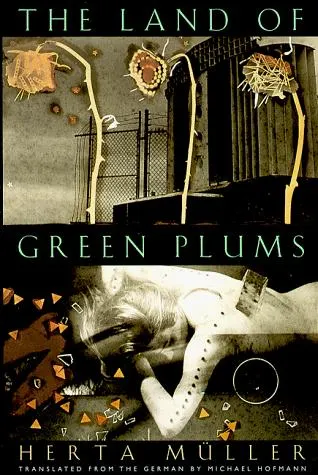
Books like The Land of Green Plums
After Müller’s clipped, hallucinatory sentences, ordinary realism can feel too safe: what one craves is fiction in which friendship is tested by fear, objects become witnesses, and power infiltrates the grammar of private life.
If you liked The Land of Green Plums, you’ll love these
Not lookalikes — kindred books. Each one shares something essential with The Land of Green Plums, and we tell you exactly what.

On an unnamed island, objects periodically vanish—and soon the inhabitants can no longer remember what those objects meant. Ogawa turns erasure into something eerily tangible: drawers, photographs, rooms and bodies acquire the same ominous charge that hair, belts and green plums carry in Müller.
Yet this International Booker–shortlisted novel is no schematic political allegory. Its terror lies in how quietly people accommodate the impossible, and in the fragile trust among those trying to preserve what power has declared nonexistent. Ogawa’s lucid, restrained prose creates a different music from Müller’s jagged lyricism, but it produces the same haunting sense that language may be both the regime’s first casualty and the last refuge against it.
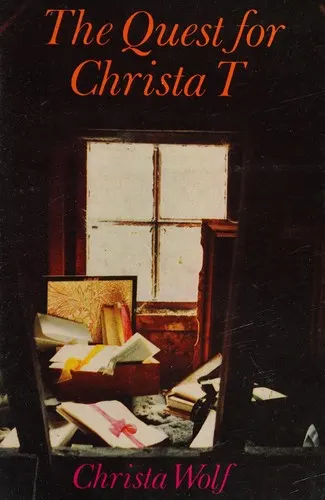
A narrator tries to recover a dead friend through notebooks, letters, recollections and gaps. The resulting portrait is deliberately incomplete: Christa T. keeps slipping free of every approved identity that East German society offers her. Readers who loved Müller’s fractured account of a group held together—and damaged—by surveillance will recognize the moral force of this form. Fragmentation becomes a refusal to falsify another person.
Published in 1968, the novel became one of East Germany’s defining and most fiercely debated works, precisely because Wolf located political resistance inside temperament, speech and private longing rather than heroic action. It is intimate, questioning and quietly radical: a book about how difficult it is to preserve an uncategorizable self when conformity has learned to sound reasonable.

Szabó begins with a confession of betrayal. A celebrated writer recalls her long, combative relationship with Emerence, the formidable housekeeper who enters her home but guards her own behind a permanently closed door. From that premise Szabó builds an extraordinary contest of love, pride, dependence and secrecy.
The dictatorship is less visibly present than in Müller, yet history has trained both women in concealment, judgment and self-protection. Admirers of The Land of Green Plums will recognize its most painful question: when fear and unequal power deform intimacy, what does loyalty actually require? The door itself becomes a symbol as concentrated and inexhaustible as any of Müller’s recurring objects. Winner of France’s Prix Femina étranger and now regarded as Szabó’s international masterpiece, this is the rare novel whose opening admission of guilt only makes its final moral reckoning more devastating.