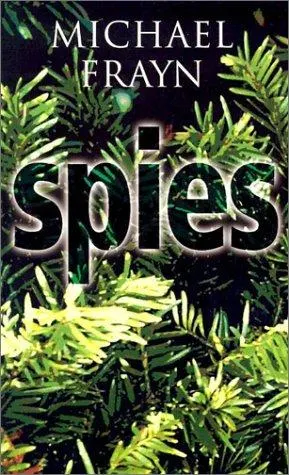
Books like Spies
When we return to childhood, are we recovering what happened—or discovering how thoroughly we misunderstood it? These three novels share Spies’ most compelling qualities: memory as an investigation, youthful certainty colliding with adult secrecy, and suspense sharpened by hindsight.
If you liked Spies, you’ll love these
Not lookalikes — kindred books. Each one shares something essential with Spies, and we tell you exactly what.
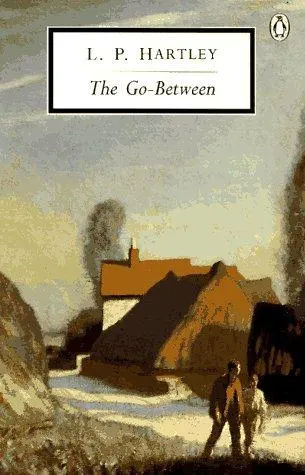
This is perhaps Spies’ closest literary relative—not simply because a boy becomes entangled in adult secrets, but because Hartley makes innocence itself dangerous. An elderly man opens an old diary and is drawn back to the summer of 1900, when his younger self carried messages between adults whose motives he could not comprehend.
Like Frayn, Hartley lets the adult reader perceive what the child cannot, creating an exquisite double vision: every misunderstanding is funny, ominous and painful at once. Class distinctions are encoded in houses, clothes and manners; ordinary errands acquire the pressure of espionage. The famous first sentence—“The past is a foreign country”—has entered the language, but the novel surrounding it is even better: elegant, suspenseful and emotionally devastating.
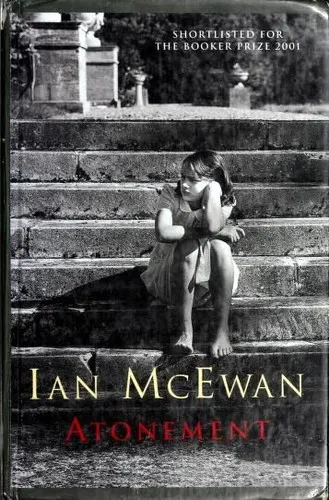
Briony Tallis, a fiercely imaginative thirteen-year-old, sees fragments of an encounter between her older sister Cecilia and Robbie Turner. Her gift for turning life into stories gives those fragments a persuasive shape—but is that shape true?
A lover of Spies will recognize the intoxicating mixture of childish surveillance, social embarrassment and catastrophic interpretation. McEwan is especially brilliant at revisiting the same moment through different minds, showing how a gesture can mean one thing to its participants and something entirely different to its observer. Yet Atonement expands that problem into a grander inquiry: whether storytelling can repair the damage storytelling has done. Booker-shortlisted and widely regarded as McEwan’s masterpiece, it combines formal ingenuity with the urgency of a novel you cannot put down.
Tony Webster believes his past is settled: school friends, first love, a few sour memories, then an ordinary adult life. A legacy arrives, and the tidy account he has told himself begins to look less reliable.
This compact Booker Prize winner shares Spies’ most unsettling achievement—the gradual exposure of a narrator’s blindness to his own history. Barnes works through omission, repeated phrases and tiny discrepancies rather than melodrama; each apparently casual recollection becomes evidence. The pleasure is forensic, but the final effect is moral and intimate: Tony is not merely trying to remember what he did, but to understand why he has remembered it in this particular way. Few novels so short leave such a long afterimage.