Books like Speedboat
Readers return to Speedboat because its fragments never settle into a single meaning: the jokes sharpen, the omissions grow louder, and Adler’s seemingly casual observations keep revealing whole systems of vanity, fear, and power.
If you liked Speedboat, you’ll love these
Not lookalikes — kindred books. Each one shares something essential with Speedboat, and we tell you exactly what.

Hardwick’s great, unclassifiable novel turns memory into a glittering collage: rented rooms, vanished friends, overheard remarks, Billie Holiday, New York streets. Like Adler, she distrusts the smooth explanatory arc. What matters is the charged detail—a gesture or sentence that exposes a life more completely than conventional biography could.
Hardwick’s prose is more elegiac than Adler’s, but no less exact or unsentimental. Each paragraph seems independently polished, yet the fragments accumulate into something hauntingly coherent. Long admired by writers and restored to prominence by its New York Review Books edition, Sleepless Nights is one of the essential American experiments in making consciousness itself the form of a novel.
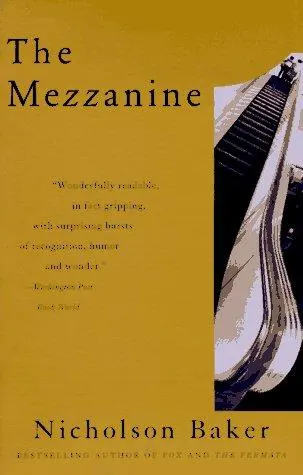
The ostensible event is almost comically small: during a lunch hour, a man rides an escalator and thinks. Baker makes that sliver of time inexhaustible, following thoughts about shoelaces, drinking straws, paper towels, escalator engineering, and the miniature rituals of office life.
A Speedboat reader will recognize the governing insight: nothing is inherently too trivial for serious attention, and digression can be more truthful than plot. Baker’s famous footnotes keep opening trapdoors beneath ordinary objects; the result is intimate, obsessive, and extremely funny. The Mezzanine became a cult classic because it permanently alters the texture of daily life—you may never again perform some banal task without noticing how strange it is.

Offill writes in compressed bursts: jokes, quotations, domestic observations, scientific curiosities, and flashes of dread. Her unnamed narrator once imagined becoming an “art monster,” and the tension between artistic hunger and everyday obligation gives every fragment pressure. The white space does not merely separate thoughts; it records what cannot be said directly.
This is the clearest modern heir to Adler’s velocity and selective silence, but Offill’s emotional register is distinctly her own—tender, caustic, panicked, and unexpectedly buoyant. Dept. of Speculation earned fervent critical and readerly devotion by proving how much a short novel can hold. Its sentences are so portable that readers quote them compulsively, yet their full force comes from the intricate constellation they form together.