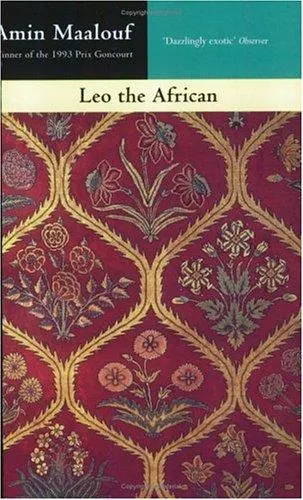
Books like Leo Africanus
History is a crowded quay: empires raise their flags, faiths argue in several languages, and one displaced witness tries to preserve the human faces before the tide carries them away.
If you liked Leo Africanus, you’ll love these
Not lookalikes — kindred books. Each one shares something essential with Leo Africanus, and we tell you exactly what.
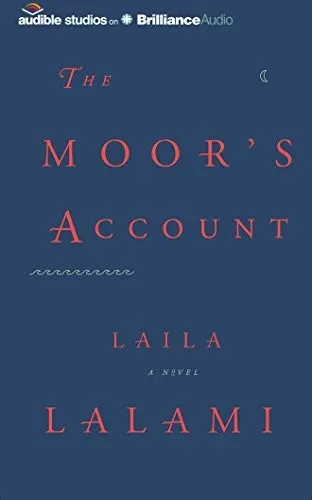
Mustafa al-Zamori—enslaved, renamed Estebanico, and omitted from the official record—joins a disastrous Spanish expedition to Florida. Lalami lets him reclaim the story in a voice at once shrewd, wounded, and alert to the ironies of “civilization.”
Like Leo Africanus, this Pulitzer finalist turns a historical footnote into a fully inhabited consciousness. Mustafa survives by reading people and crossing boundaries of language, religion, and allegiance; every new identity protects him while threatening to erase the man beneath it. Lalami’s austere, lucid prose gives his testimony the force of recovered history. If Maalouf made you cherish the intimate voice caught inside imperial ambition, this is the essential companion novel.
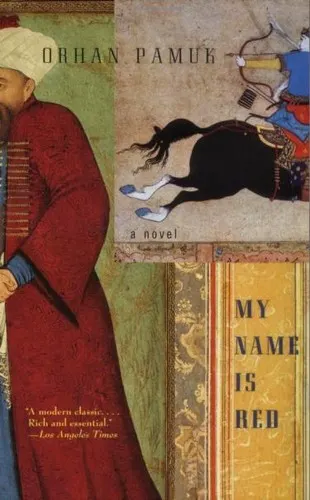
In sixteenth-century Istanbul, miniature painters working on a secret manuscript confront a dangerous question: can they borrow the Europeans’ way of seeing without betraying their own tradition? Even colors, paintings, and the dead take turns speaking in Pamuk’s exuberant chorus of voices.
The kinship with Maalouf lies in its refusal to make East and West into simple opposites. Artistic styles become rival ideas about individuality, faith, beauty, and power; philosophical disputes feel sensuous and urgently personal. Winner of the International Dublin Literary Award and a defining novel in Pamuk’s Nobel-crowned career, it is simultaneously a murder mystery, a love story, and a dazzling argument about how cultures transform one another. Few historical novels make intellectual conflict feel so alive.
A stone bridge over the Drina becomes the fixed point around which centuries of Bosnian life accumulate: merchants linger, children play, rulers change, rebellions flare, and communities learn—sometimes successfully, sometimes tragically—to live beside one another.
Where Leo Africanus gives history the body of a traveler, Andrić gives it a bridge. His great achievement is scale without abstraction: imperial decrees arrive as altered routines, fresh fears, jokes, grudges, and losses among ordinary people. Andrić, a Nobel laureate, is inseparable from this masterpiece, whose calm authority and unforgettable set pieces have made it one of the enduring chronicles of life between civilizations. It offers the same melancholy pleasure of watching a plural world survive history—until history demands too much.