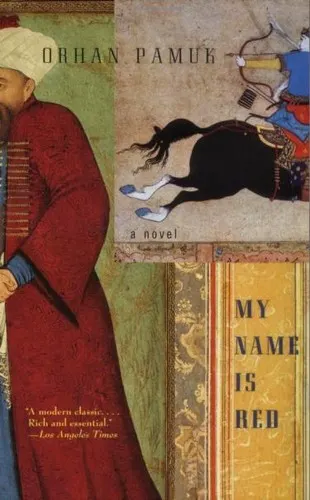
Books like My Name Is Red
In My Name Is Red, every painted horse, fleck of gold, and disembodied voice becomes evidence in a quarrel over beauty, faith, desire, and how the world should be seen.
If you liked My Name Is Red, you’ll love these
Not lookalikes — kindred books. Each one shares something essential with My Name Is Red, and we tell you exactly what.
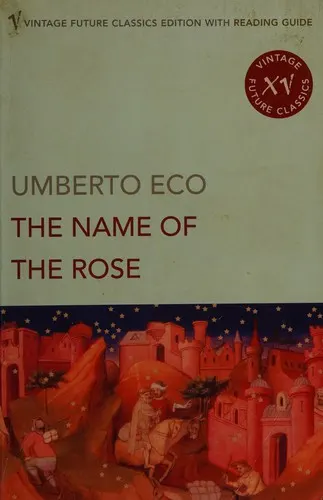
Eco’s celebrated debut offers the same rare pleasure of watching an ingenious murder mystery become a battle over interpretation. In a fourteenth-century monastery, William of Baskerville investigates suspicious deaths while monks dispute poverty, heresy, laughter, and the dangerous authority of books. Clues matter, but so do the assumptions that determine whether anyone can recognize a clue at all.
Like Pamuk, Eco turns historical scholarship into sensuous atmosphere and intellectual suspense: libraries, pigments, marginalia, and theological niceties feel physically consequential. Winner of Italy’s Strega Prize and beloved far beyond literary circles, it is the essential next book for anyone thrilled by a mystery in which ideas can kill.
If the competing narrators of My Name Is Red made truth feel like a mosaic assembled from incompatible pieces, Pavić pushes that experience to a dazzling extreme. His cult classic is arranged as three interlocking lexicons—Christian, Islamic, and Jewish—whose entries offer contradictory accounts of a vanished people and their ruler’s conversion.
This is not formal trickery for its own sake. Dreams migrate between strangers; objects and stories recur with altered meanings; certainty dissolves into the pleasures of comparison. The reader becomes investigator, miniaturist, and heretic, joining fragments into a picture that may change whenever viewed from another tradition. Few novels make reading itself feel so much like entering an illuminated labyrinth.
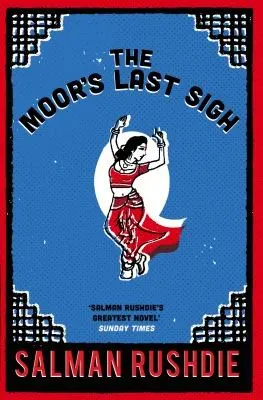
Rushdie begins with Moraes Zogoiby—called Moor—telling the turbulent history of a spice-trading family whose private feuds become inseparable from India’s public passions. At the story’s center is his mother, Aurora, a formidable painter who transforms family secrets, political violence, and cultural inheritance into a vast alternative world on canvas.
A lover of Pamuk will recognize the urgency behind the exuberance: both novels ask whether art preserves reality, falsifies it, or creates the only reality capable of surviving fanaticism. Rushdie’s language is comic, baroque, punning, and wounded, while the book’s layered Indian, Jewish, Muslim, and Iberian inheritances resist every demand for purity. Winner of the Whitbread Novel Award and shortlisted for the Booker, it is one of Rushdie’s richest achievements—a family chronicle painted in colors too vivid to remain safely decorative.