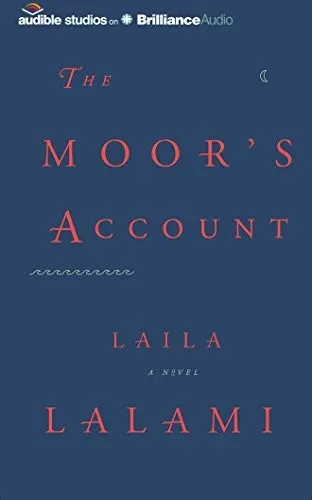
Books like The Moor's Account
Paul Kingsnorth’s The Wake travels to eleventh-century England, yet its fierce, self-authorizing voice makes it an unusually close companion to Lalami’s novel. All three choices reclaim lives that official history has flattened, while refusing to make the dispossessed simple heroes.
If you liked The Moor's Account, you’ll love these
Not lookalikes — kindred books. Each one shares something essential with The Moor's Account, and we tell you exactly what.
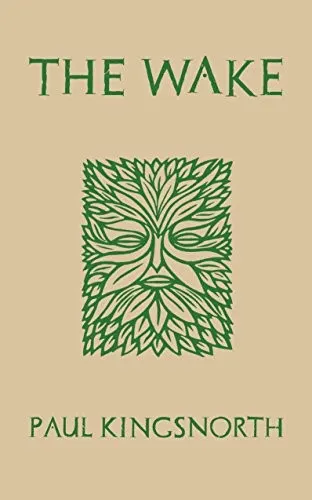
In the aftermath of the Norman invasion, a landowner named Buccmaster narrates his resistance in an invented “shadow tongue”: recognizably English, but roughened into something older and estranged. As with Mustafa in The Moor’s Account, language itself becomes an act of defiance against the conqueror’s version of events.
Booker-longlisted and winner of the Gordon Burn Prize, The Wake is no dutiful historical reconstruction. Its narrator is proud, wounded, mesmerizing, and dangerously unreliable; the intimacy of his voice forces you to inhabit both dispossession and self-deception. Once its language catches hold, the novel feels less like reading history than hearing a buried consciousness speak.
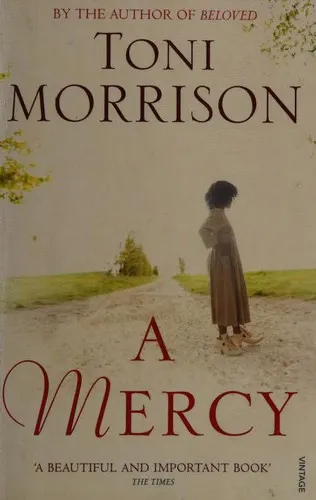
Morrison returns to seventeenth-century North America, when slavery, race, religion, and ownership have not yet settled into the forms later generations will treat as inevitable. A young enslaved woman named Florens is transferred to an Anglo-Dutch trader, but Morrison opens the narrative outward to servants, settlers, Indigenous displacement, and women whose survival depends on bargains they did not design.
What links it most powerfully to Lalami is its understanding that history is made through acts of naming: who is called servant, savage, Christian, property, free. Morrison’s shifting voices are compressed and luminous, giving each person an interior life the historical record would barely acknowledge. One of her finest late novels, A Mercy achieves in under two hundred pages the moral and historical amplitude of an epic.
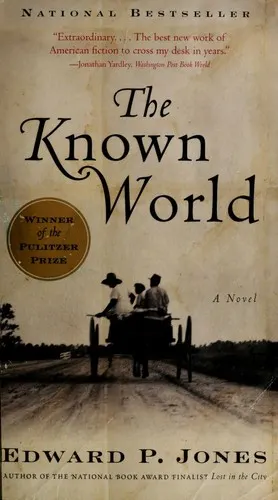
Jones’s Pulitzer Prize–winning novel begins with the death of Henry Townsend, a formerly enslaved Black man who became a slaveholder in antebellum Virginia. From that contradiction, Jones constructs an entire community in which bondage corrupts affection, law, memory, and even the imagination of freedom.
Where The Moor’s Account writes against one triumphant chronicle, The Known World quietly dismantles the authority of archives altogether. Its omniscient narrator moves across decades and among people whom conventional history would reduce to categories, sometimes citing invented records with such confidence that fact and fabrication become impossible to separate. The result is humane without being consoling and expansive without losing intimacy—a modern American masterpiece that permanently complicates how one thinks about who owns a life, and who gets to record it.