
Books like Intimacies
You were likely held by Kitamura’s cool precision: the sense that language can clarify experience while also concealing guilt, desire, and power. These novels create that same quiet but unnerving pressure.
If you liked Intimacies, you’ll love these
Not lookalikes — kindred books. Each one shares something essential with Intimacies, and we tell you exactly what.
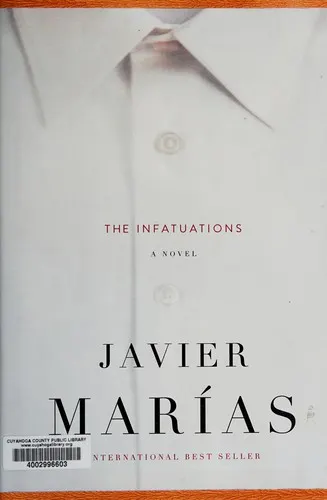
María watches an apparently perfect couple at a Madrid café; after the husband’s death, curiosity draws her toward the widow. What begins as distant observation becomes an inquiry into how desire edits reality.
Like Kitamura, Marías understands that intimacy is an act of interpretation—and that interpretation may be self-serving. His long, hypnotically recursive sentences continually reopen questions that seemed settled, turning conversation into suspense. Margaret Jull Costa’s superb translation preserves the elegance that made Marías’s readers so devoted to him. Few novels are so intellectually seductive while making certainty feel so dangerous.
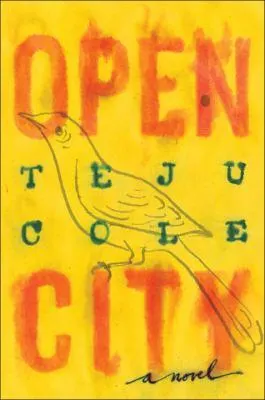
Julius, a psychiatry fellow, walks through New York while reflecting on music, history, migration, and the lives disclosed to him by others. His cultivated, measured voice recalls Kitamura’s interpreter: both narrators observe brilliantly while revealing themselves only obliquely.
Cole makes consciousness itself suspenseful. Casual encounters open onto buried histories of violence, yet the narrator’s composure never allows an easy moral response. Winner of the PEN/Hemingway Award, Open City has the rare authority of a book whose beauty and intelligence cannot be separated from its unease. It will make you scrutinize not only Julius’s perceptions but your own willingness to trust eloquence.
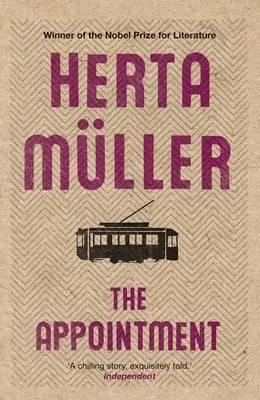
A woman rides a tram toward another interrogation by Romania’s secret police, while memories and apprehensions crowd into the journey. Müller renders institutional terror not through spectacle but through minute distortions of ordinary life: clothes, gestures, streets, and stray objects become charged with menace.
Where Kitamura’s restraint is glassy, Müller’s is jagged and hallucinatory, but both show how authoritarian power colonizes private thought. The Nobel laureate’s images are startlingly exact, and the novel’s compressed form gives every sentence the pressure of something that cannot safely be said aloud. It is a small book with an enormous atmosphere—one that follows you long after the tram ride ends.