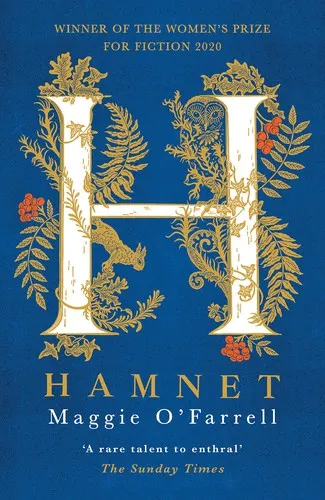
Books like Hamnet
Sorrow moves through these novels like weather through an open house: stirring the trees outside, lifting old memories from the floorboards, and making the living feel the pressure of the absent.
If you liked Hamnet, you’ll love these
Not lookalikes — kindred books. Each one shares something essential with Hamnet, and we tell you exactly what.

Like Hamnet, Lanny understands that a child can be both utterly ordinary to his family and almost mythic to everyone watching him. Its English village is rendered as a living chorus of gossip, birdsong, buried history and half-heard fears, while the ancient figure Dead Papa Toothwort listens to human voices as though they were music.
Porter’s daring typography and shifting voices never feel ornamental; they capture how love makes perception feverishly alert. Booker-longlisted and fervently admired for its formal originality, Lanny is brief enough to read in a sitting but strange and resonant enough to haunt you for years.
Robinson’s modern classic shares Hamnet’s deepest subject: not death itself, but the shapes absence forces the living to inhabit. In a remote lakeside town, sisters Ruth and Lucille grow up in a family repeatedly rearranged by loss. Houses, water, cold and darkness carry emotional weight; the physical world seems to remember what the characters cannot comfortably say.
Winner of the PEN/Hemingway Award and now regarded as one of the great American debut novels, Housekeeping possesses the same rare combination of sensuous exactness and metaphysical reach. Robinson can make an abandoned room or a flooded orchard feel like evidence of an entire hidden order. Missing it means missing one of literature’s most beautiful accounts of grief becoming a way of seeing.
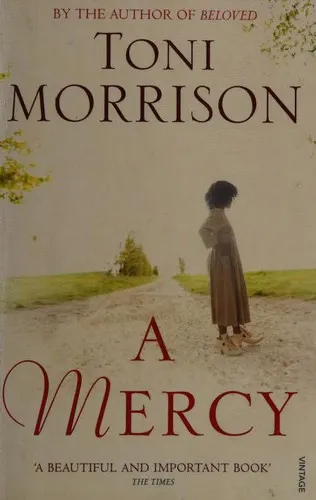
Readers drawn to the way Hamnet restores full, bodily life to people history barely recorded should read A Mercy. In seventeenth-century America, Morrison gathers several voices around a precarious household, allowing servants, enslaved people and displaced women to speak from the dangerous margins of the official story.
Its kinship with Hamnet lies especially in its treatment of women’s knowledge: knowledge carried through touch, plants, illness, childbirth, fear and fiercely misunderstood acts of love. Morrison’s prose is more compressed and incantatory than O’Farrell’s, but equally alive to mud, blood, weather and breath. A Mercy is a small novel with the force of a much larger one—Morrison at her most concentrated, turning historical silence into something intimate, polyphonic and devastating.