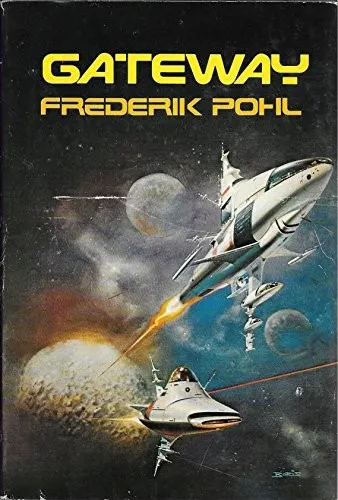
Books like Gateway
A sealed hatch opens onto a treasure that may be worthless, miraculous, or fatal—and the person stepping through carries a danger more intimate than anything waiting beyond it. These novels make wonder inseparable from fear, guilt, and human need.
If you liked Gateway, you’ll love these
Not lookalikes — kindred books. Each one shares something essential with Gateway, and we tell you exactly what.
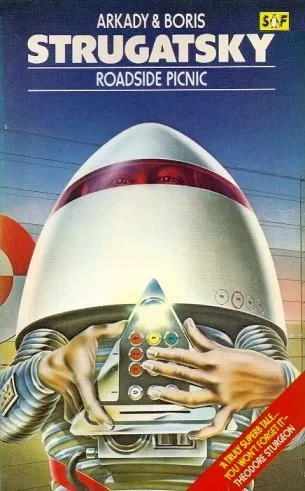
Red Schuhart enters the Zone to retrieve objects abandoned after an alien visitation—objects humanity can exploit but cannot truly understand. As in Gateway, contact has produced not enlightenment but a hazardous economy: workers risk their bodies while institutions, scientists, and profiteers turn incomprehensible technology into money.
What makes this indispensable is its moral grime. Red is canny, angry, compromised, and painfully alive; every trip into the Zone exposes both physical peril and the damage done by wanting too much. The novel became a science-fiction landmark and inspired Tarkovsky’s Stalker, but its lasting power lies in its merciless question: what if the universe’s greatest gifts mean nothing to those who left them? Gateway readers will recognize that chill immediately.
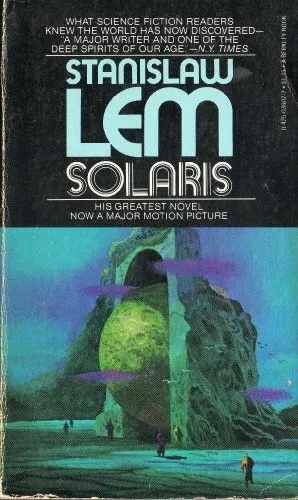
Lem takes the most haunting implication of Gateway—the possibility that alien intelligence may remain permanently beyond human interpretation—and builds an entire masterpiece around it. Psychologist Kris Kelvin arrives at a research station orbiting Solaris, where scientific inquiry has collapsed into dread and the planet appears to be reaching into its observers’ most private memories.
The suspense here is intellectual and brutally personal. Every hypothesis about Solaris reveals more about the humans proposing it, while Kelvin’s buried grief becomes impossible to keep abstract. Widely regarded as one of the defining novels of first contact, Solaris offers no comforting fantasy that intelligence guarantees mutual understanding. It makes the unknown feel vast, intimate, and accusatory.
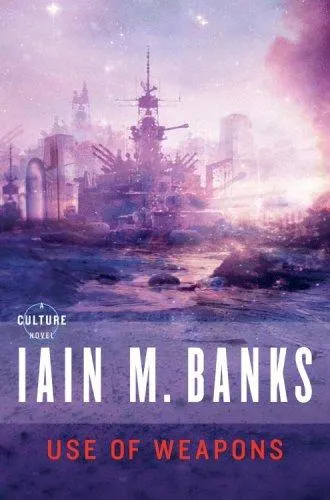
If Gateway’s sharpest hook was not the Heechee machinery but Robinette Broadhead’s evasive, self-justifying mind, read Use of Weapons. Banks follows Cheradenine Zakalwe, a gifted mercenary employed by the Culture, through a narrative whose alternating strands move in opposite directions through his life. The structure turns chronology into psychological excavation: each success raises the pressure of whatever he refuses to face.
Banks writes action with exhilarating clarity, yet the novel’s real weapon is its control of sympathy. Zakalwe can be funny, resourceful, appalling, and wounded in the same scene. Often singled out as one of the Culture sequence’s most formally audacious books, it delivers the same rare combination as Gateway: large-scale adventure powered by a hidden chamber of guilt.